

VAROPreem marks 60 years of Cressier manufacturing hub at the heart of Switzerland’s energy system
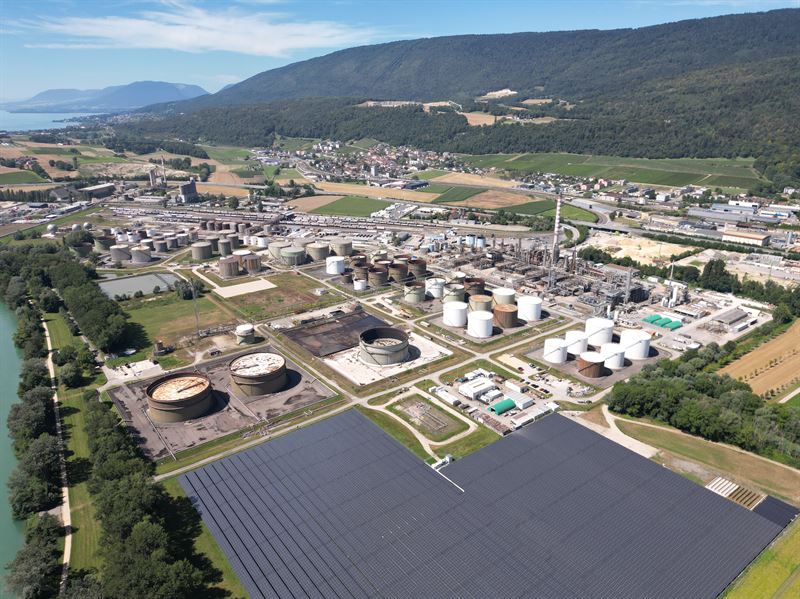
Zug, 6 October 2026: VAROPreem today marks the 60th anniversary of its Cressier manufacturing hub, celebrating six decades at the heart of Switzerland’s energy system and its continued commitment to invest in the refinery to meet the country’s changing energy needs.
Key highlights
• Critical to national energy security: Cressier has supported Switzerland’s energy system for 60 years and, as the country’s only refinery, strengthens national supply security and resilience through safe, reliable and responsible operations.
• Decades of reliable supply for Switzerland: Cressier has continually evolved its manufacturing capabilities to meet Switzerland’s needs over the decades while improving energy efficiency and introducing lower-carbon energy solutions.
• Investing in Cressier’s future decades: New co-processing capabilities will enable Cressier to use renewable and conventional feedstocks together to produce biofuels. From 2027, the site will process around 40,000 tonnes of renewable feedstock a year, reducing CO₂ emissions by around 90,000 tonnes annually, equivalent to 20,000 cars being taken off the road.
Since opening in 1966, Cressier has been central to the security of Switzerland’s energy system and today supplies around 30% of the country’s fuel demand. Today, as the nation’s only refinery, it is critical to producing essential fuels for Switzerland including diesel and jet fuel. Its independent crude supply by pipeline, together with its production and logistics capabilities, provides flexibility to support supply without relying on traditional import routes like the Rhine.
VAROPreem has continued to invest in Cressier’s core manufacturing capabilities. It became the first manufacturing hub in Switzerland to blend bioethanol and biodiesel at industrial scale in 2014. From 2020, the company’s investment has increased distillation capacity and yield while enabling the processing of a broader range of lighter crudes to support diversified supply. In 2023, VAROPreem commissioned a 7.7 MW solar farm with Groupe E, followed in 2024/25 by district heating using residual heat from the manufacturing hub.
Safety, environmental responsibility and strong local relationships remain fundamental to Cressier’s operations. Maintaining the safety and reliability of Cressier’s operations is the priority, alongside improved environmental performance and greater biodiversity. This is only possible through the expertise of its highly qualified staff and long-standing relationships with the local community. VAROPreem has also made the decision to invest in a new co-processing project, representing the next step in Cressier’s evolution towards producing cleaner fuels from a broader range of renewable and conventional feedstocks. From 2027, this new plant, alongside Cressier’s existing infrastructure, will enable the site to use renewable and conventional feedstocks together to produce biofuels.
By connecting feedstock sourcing, co-processing expertise, Cressier’s manufacturing and logistics capabilities and customer demand, the project demonstrates VAROPreem’s integrated business model and twin-engine strategy in action: maintaining secure and reliable energy supply while scaling the sustainable energy solutions customers need.
Dev Sanyal, Group Chief Executive Officer of VAROPreem, said:
“Cressier is critical infrastructure for Switzerland, and we continue to invest in its future so that it can serve the country’s energy needs of today and the evolving energy needs of tomorrow. This latest investment builds on the strength of Cressier’s industrial capabilities and brings together expertise from across VAROPreem, including decades of experience in co-processing at our manufacturing hubs in Sweden. Through this landmark investment on our 60th anniversary, we continue to strengthen a vital conventional energy asset for Switzerland while expanding its role in the production of sustainable energies. I would like to thank all our team – past and present – for their dedication and commitment as we celebrate this important milestone.”
Pierre-André Page, President of the National Council of Switzerland, said:
“The 60th anniversary of the Cressier refinery is a remarkable milestone that reflects its ability to adapt to changing market needs, as demonstrated by its new co-processing unit. As a strategic asset for Switzerland’s energy supply, the Cressier refinery has remained firmly committed to its core priorities: safety and environmental responsibility.”
Enrique Espin, VP Manufacturing Switzerland, said:
“Cressier’s future is about combining security of supply with the energy transition. Co-processing will allow us to produce renewable fuels here in Switzerland, for the Swiss market, using our existing manufacturing and logistics infrastructure. From 2027, we expect to process around 40,000 tonnes of renewable feedstock annually and reduce CO₂ emissions by around 90,000 tonnes per year. It is a very concrete example of how an existing industrial asset can evolve and contribute to Switzerland’s transition while continuing to fulfil its essential role in energy supply.”
For further information, please contact
VAROPreem Communications
Angela Nemeth (Zug) / Mattias Holmqvist (Stockholm/Lysekil)
Phone: +41795129421 / +46722245855
Email: angela.nemeth@varopreem.com / mattias.holmqvist@varopreem.se
Brunswick Group
Will Medvei and Scott Durant
Phone: +44 (0)20 7404 5959
Email: varopreem@brunswickgroup.com
About VAROPreem
VAROPreem is a leading energy company formed through the combination of VARO and Preem. It operates across manufacturing, trading and logistics with a balanced portfolio spanning conventional and sustainable fuels. With seven manufacturing hubs, access to more than 120 terminals, and serving business customers in 33 countries, VAROPreem plays a key role in delivering energy security and lower carbon solutions for its customers.
About Cressier
Cressier is Switzerland’s only conventional fuel manufacturing facility, capable of producing around 70,000 barrels of refined products every day. It supplies approximately 30% of the national fuel market and is critical infrastructure for national supply. The Cressier production centre employs 280 highly qualified staff.