

Tokyo-based O-ID raises $1.2M to build fully modular humanoid robots as industries brace for a shortage of millions of workers
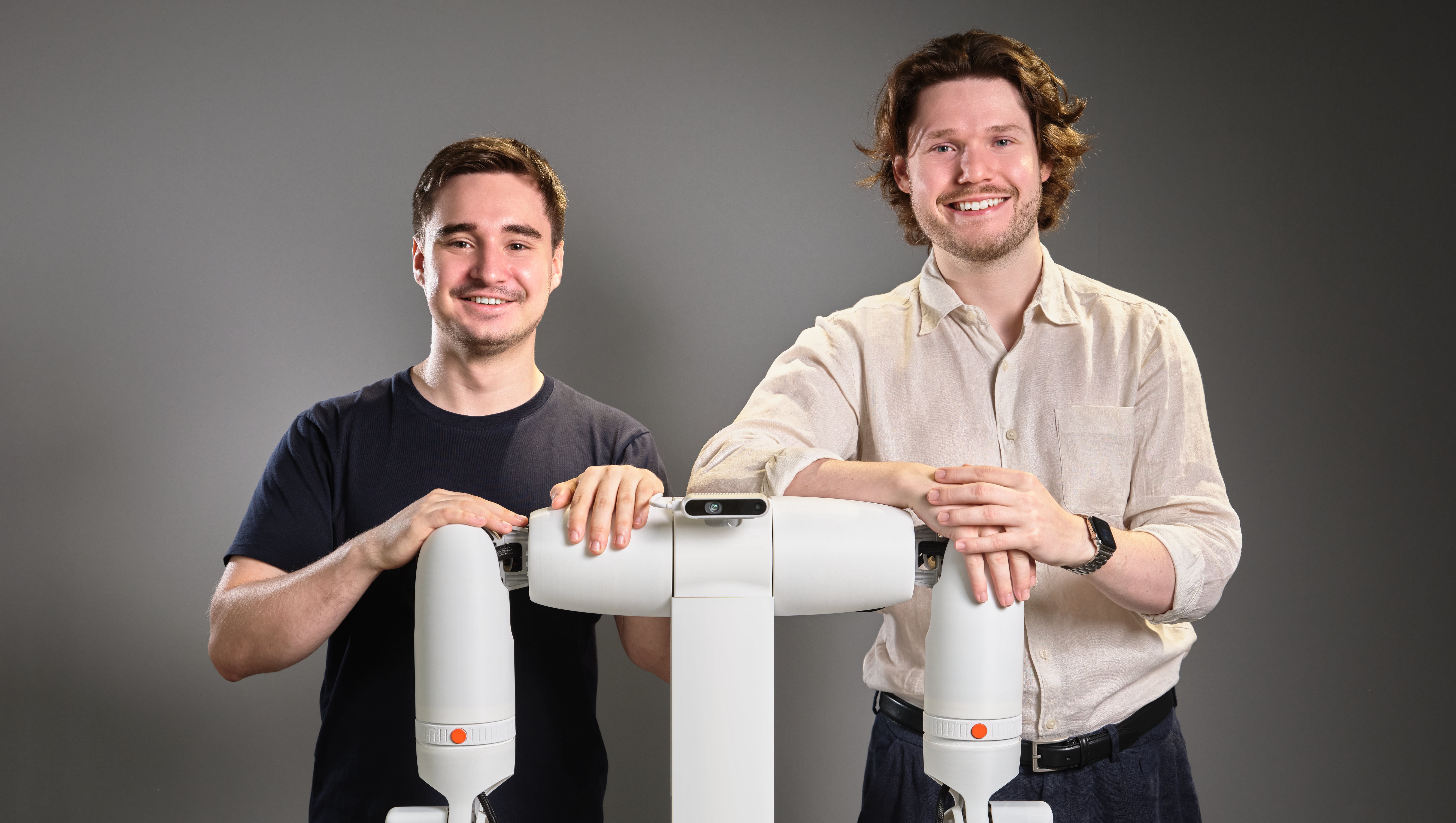
With worker shortages projected to hit 11 million in Japan by 2040 and 1.9 million in US manufacturing by 2033, Tokyo-based O-ID has secured funding to become one of the world's first robotics companies to build fully modular humanoid robots that slot into existing factory lines and can be repaired on the spot.
Tokyo, Japan (September 24th, 2026) — O-ID, a Tokyo-based company building one of the world’s first fully modular humanoid robots for industrial manufacturing and logistics, has raised $1.2million in pre-seed funding. The round was led by Chicago-based TAWANI Ventures, with participation from Hustle Fund, Techstars, and angel investors — including the founders of Humanoid Guide, who were early investors in robotics company 1X. The company will use the funding to move its first robot from prototype to production as it prepares to place robots on Japanese factory floors.
As its population ages, Japan’s workforce is projected to shrink, leading to a shortage of over 11 million workers by 2040, with factory workers retiring and going unreplaced. At the same time, robotics is a national priority: Japan announced in June 2026 that it is targeting ¥10.5 trillion ($65.1 billion) in public and private investment for "physical AI" (AI that controls robots and machinery), aiming to deploy 10 million AI-equipped robots by 2040. Meanwhile in the US, manufacturers could need 3.8 million new workers by 2033, and as many as 1.9 million of those jobs could go unfilled if the labor gap isn't closed.
Existing industrial robots are rigid, and retooling a factory around them requires significant capital investment and time. General-purpose humanoids are more flexible, but a single failed component can put the whole robot out of commission for months. For large automotive plants, for instance, the stakes are steep:an hour of downtime now costs $2.3 million.
O-ID's robots fit into a factory's existing layout with no rebuild required, and meet current industrial safety standards for immediate deployment. Their modular architecture with hot-swappable joints, limbs, and compute units means a worn part can be replaced on-site in minutes. Onboard AI sensors continuously monitor component wear and flag parts approaching failure, allowing O-ID to ship a replacement before downtime occurs.
O-ID was founded in Tokyo in 2025 by CEO Stian Jakobsen from Norway and CTO Simon Gormuzov from the Netherlands, who met at Waseda University. Stian previously worked in cyber defense, and Simon, a mechanical robotics engineer, spent years in industrial robotics before the two decided to build O-ID together.
"When enough factory roles go unfilled at once, entire supply chains are at risk. O-ID's robots are built to work alongside the people still on the floor, closing those gaps before they become a crisis for a single factory and for the industries Japan depends on,” said CEO Stian Jakobsen.
O-ID has signed a letter of intent with Sumitomo Electric Industries, Ltd. to begin discussions on the potential application of Sumitomo Electric’s technologies to humanoid robot wire harnesses.
“Japan and Chicago share a robust role and history as lynchpins of the global manufacturing ecosystem. Stian and Simon have impressed us with their ability to work and to innovate within this space. Modular humanoids are a generational opportunity to expand industrial productivity just as labor force declines present unprecedented challenges. O-ID will lead the transfer of decades of Japanese robotics expertise, learnings, and supply chain into an AI-native, adaptable platform,” said William Pritzker, Partner at TAWANI Ventures.
“I originally selected Stian and Simon not simply because of their brilliant minds, but because they are building something truly unique,” said Yuki Shirato, Managing Director at Techstars.
“O-ID humanoid robots will be modular, designed for mass production and repairs, and made entirely in Japan. They have made tremendous progress since then, and this fundraise and joint research with Japanese manufacturers mark an important step forward in their mission of reshaping how we live,” he added.
O-ID's initial focus is automotive manufacturing and logistics in Japan, with plans to expand into additional industries and the US market over time. It has also filed a provisional U.S. patent for its modular connector technology. Built and manufactured in Japan, O-ID is designed to meet U.S. National Defense Authorization Act (NDAA) requirements as it looks toward shipping robots to the United States.
ENDS
For additional information:
Media kit with pictures
Sunshine Burri,
Marketing Lead, O-ID

O-ID builds modular humanoid robots for manufacturing that are designed and produced in Japan and built to be repaired on-site in minutes rather than shipped out for weeks of servicing. Founded in Tokyo in 2025, O-ID joined Techstars Tokyo the same year and is backed by TAWANI Ventures, Hustle Fund and Techstars. O-ID, Inc., the company's Delaware parent, oversees fundraising and international corporate activity, while O-ID's Japanese operating entity leads R&D, manufacturing and deployment. For more information, visit o-id.net.
—--------------------------------------------------------------------