
The Swiss are confident about the future despite acknowledging some areas of concern
Media information
Basel, 14 July Year
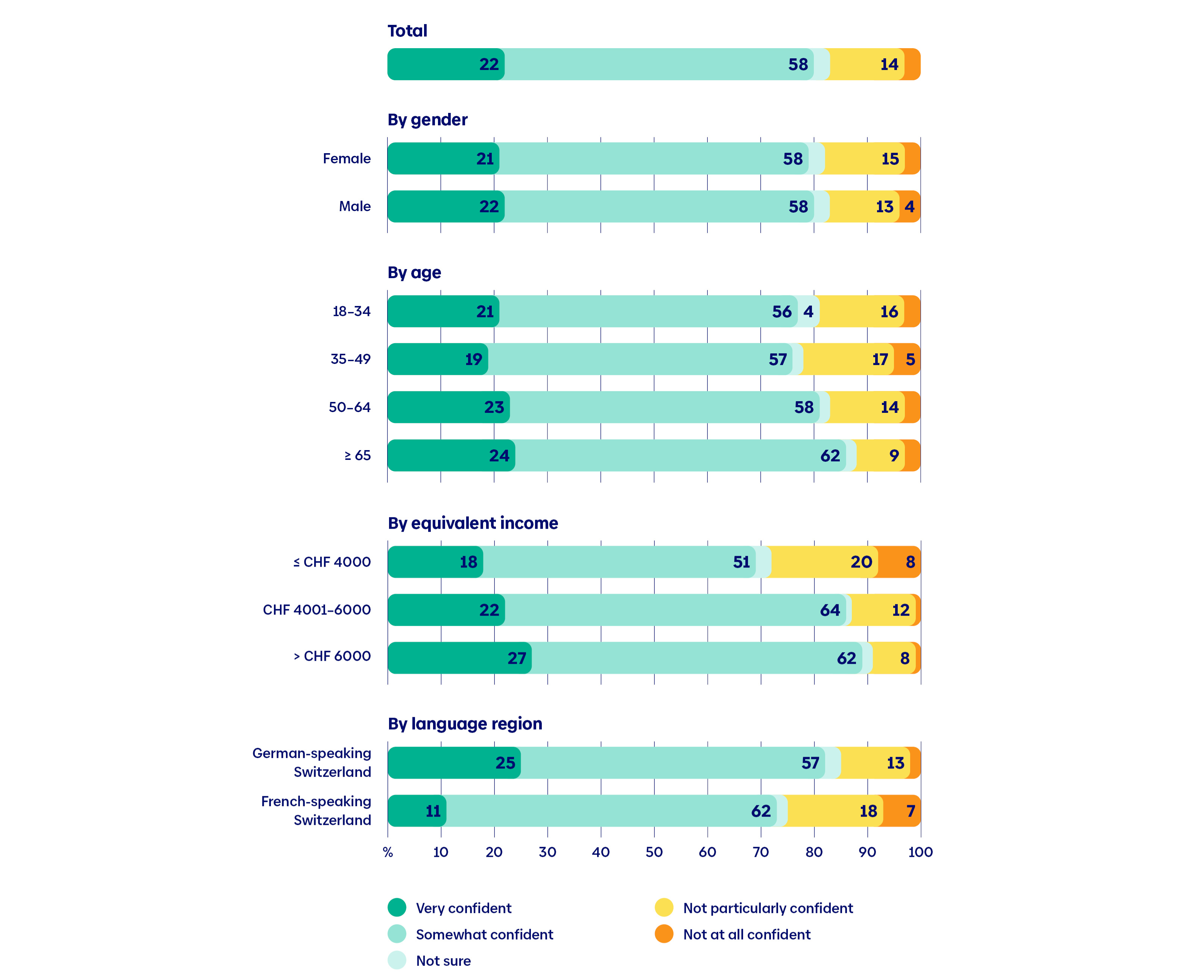
“There have been numerous studies on the concerns of the Swiss population. Together with Helvetia, we deliberately turned the viewpoint around and wanted to find out how confident people are”, says Michael Hermann of Sotomo, referring to the representative survey of 1,866 adults in German- and French-speaking Switzerland. The results show that 80% of the Swiss population aged over 18 is optimistic about the coming year (Figure 1). Gender plays hardly any role in this, but age certainly does: while three-quarters (76%) of those under 50 are optimistic about the near future, the figure is 86% among those over 65. It also appears that as income rises, confidence becomes more widespread. For example, only two-thirds of people with an equivalent monthly income of less than CHF 4,000.00 are optimistic about the coming year (69%), whereas the proportion is significantly higher – at 89% – among those with an equivalent monthly income of over CHF 6,000.00. There are also differences between the language regions: in German-speaking Switzerland, 82% are optimistic about the coming year, compared with 73% in French-speaking Switzerland.
Figure 1: Optimism for the coming year on a personal level
“How confident are you about your personal life in the coming year?”
Social relationships in particular, but also financial security, give people confidence
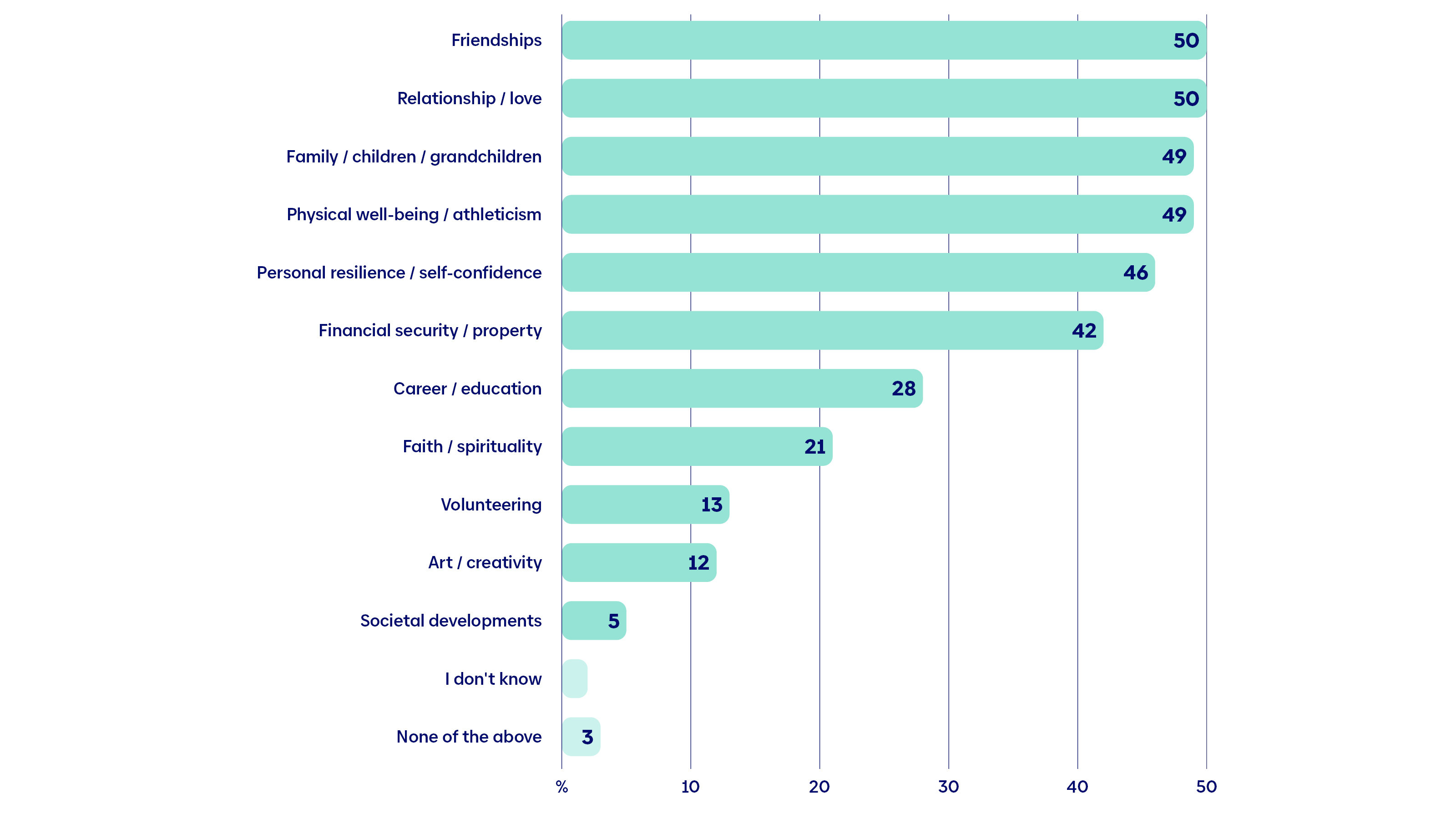
The population derives its confidence primarily from social relationships: Friendships (50%), relationships (50%) and family (49%) are referenced most often (Figure 2). However, health (49%), self-confidence (46%) and financial security (42%) are also among the most important sources of personal confidence. “Our study shows that confidence does not emerge in a vacuum. It flourishes where people feel supported, connected, encouraged and financially secure”, says Markus Bucheli, Head of Marketing & Market Communication at Helvetia Switzerland.
Figure 2: Sources of personal confidence
“What gives you confidence in your personal life?”
High levels of confidence, except when it comes to ageing in good health and financial prosperity
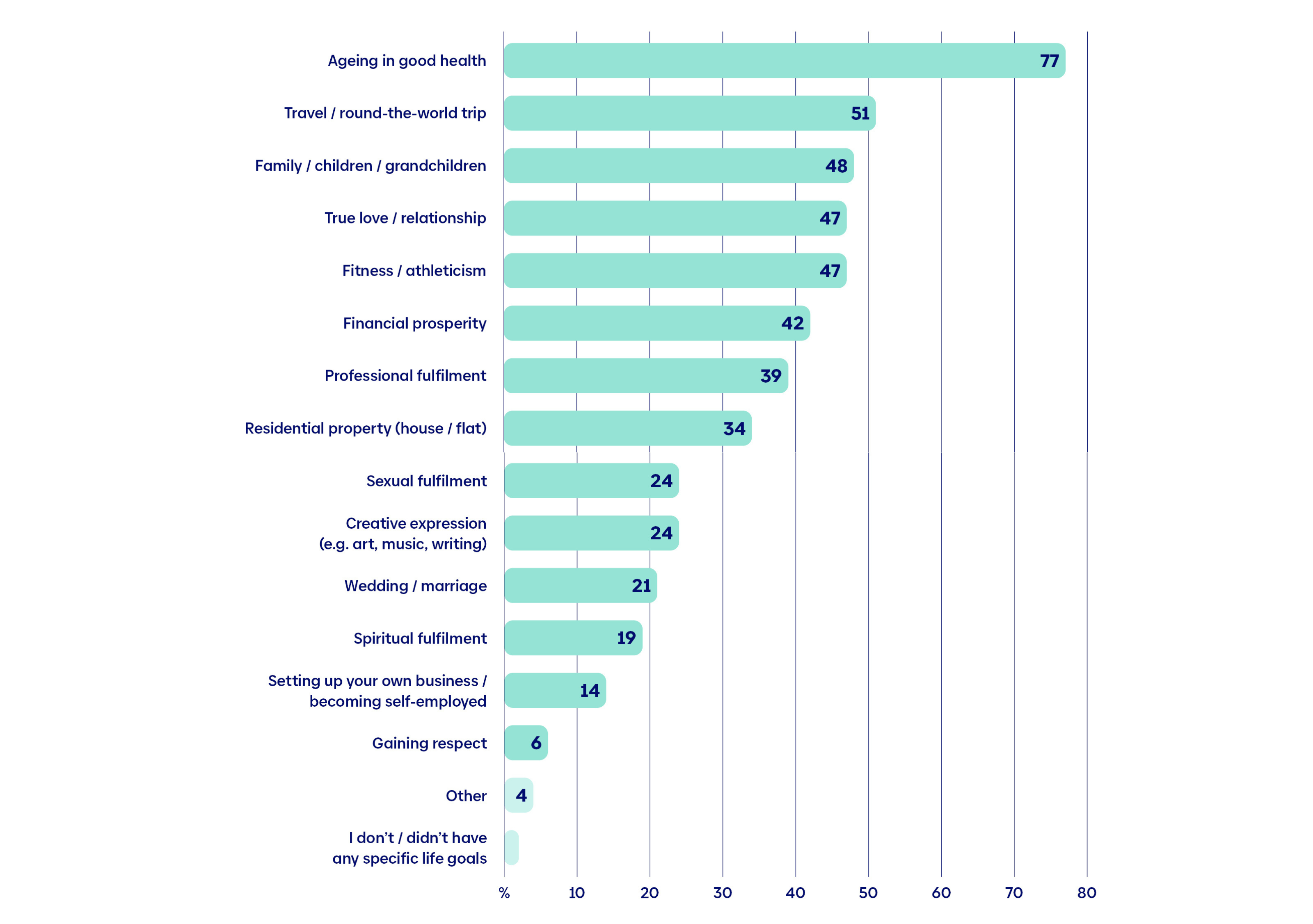
Almost everyone in Switzerland has life goals (98%) which are as varied as life itself (Figure 3). The top priority is the desire to grow old in good health (77%). This is followed by travel and roundthe-world trips (51%), family – e.g. children or grandchildren (48%), true love (47%), fitness and sport (47%) and financial prosperity (42%). However, professional fulfilment (39%) and the dream of owning a home (34%) also play an important role for many people.
Figure 3: Life goals
“What are some of the life goals you have achieved or have yet to achieve? (Tick all applicable responses)”
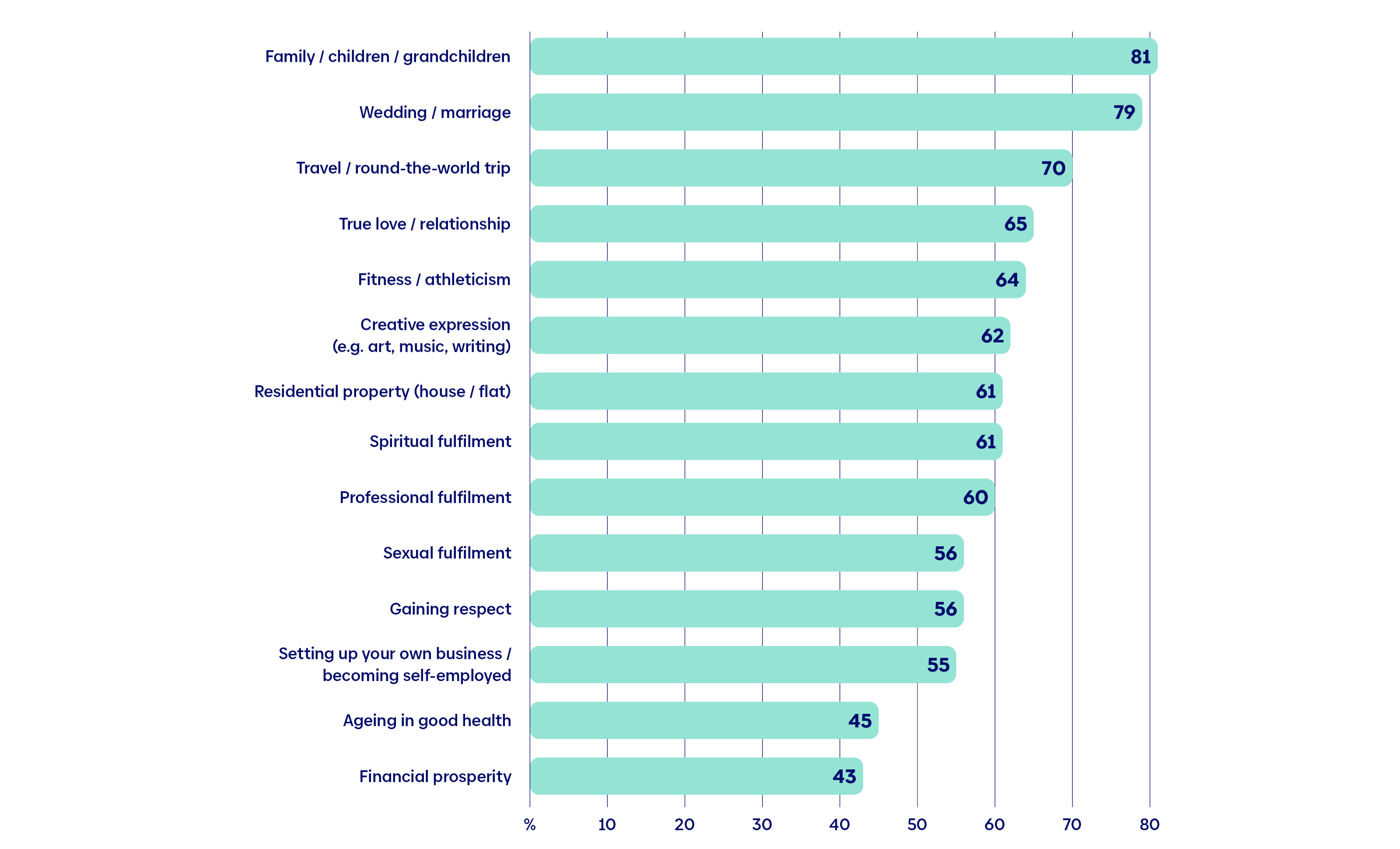
Overall, confidence in achieving life goals is high – and is particularly pronounced when it comes to family and marriage (Figure 4). 81% of all those who would like to start a family believe they will achieve this goal or have already done so. The figure for marriage is 79%. Residential property (61%) and professional fulfilment (60%) rank in the mid-field, while ageing in good health (45%) and financial prosperity (43%) are the greatest causes for concern.
Figure 4: Confidence in achieving life goals
“And what do you think: which of the life goals you have mentioned do you expect to achieve (or have you already achieved) in your life? (Tick all applicable answers)” – only the life goals which the specific individual had chosen were presented as a possible response
Financial resources make life goals possible
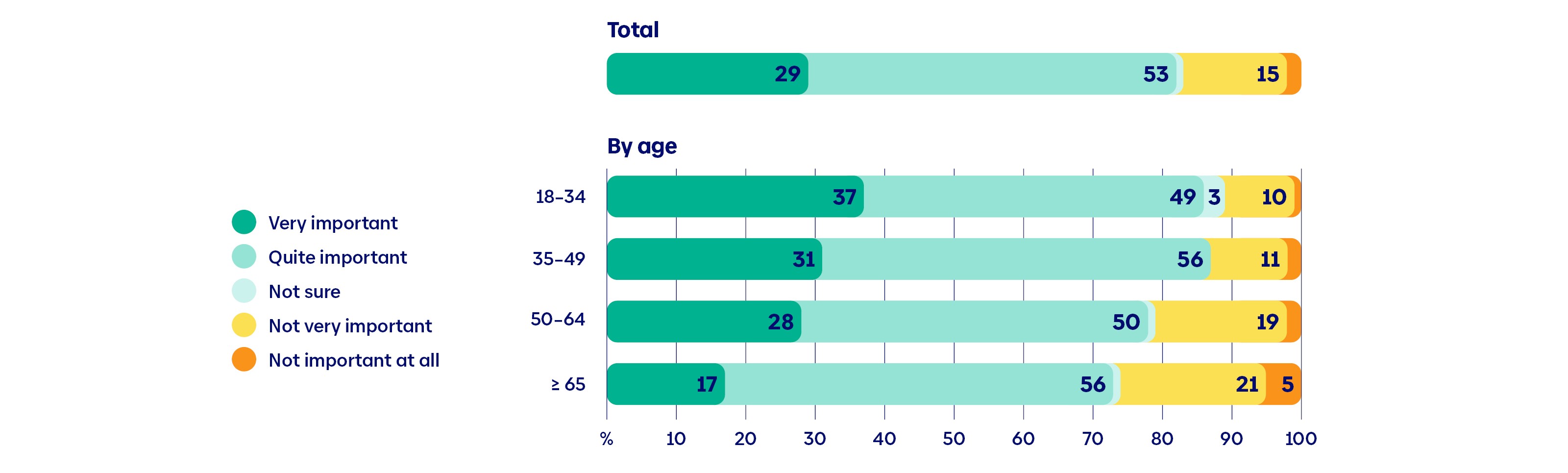
A lack of financial resources (40%) and factors beyond one’s control (40%), such as health and fate, are seen as the biggest obstacles to achieving life goals (Figure 5). 82% of respondents also state that financial resources are a very important (29%) or fairly important (53%) prerequisite for achieving their life goals (Figure 6). The younger the respondents, the greater the importance attached to financial resources. For example, 86% of 18 to 34-year-olds consider financial resources very important (37%) or somewhat important (49%) in terms of achieving their life goals. By contrast, among those aged 65 and over, the figure is only 73%.
Figure 5: Obstacles to achieving life goals
“What do you think is, or has been, preventing you from achieving your life goals? (Several answers possible)”
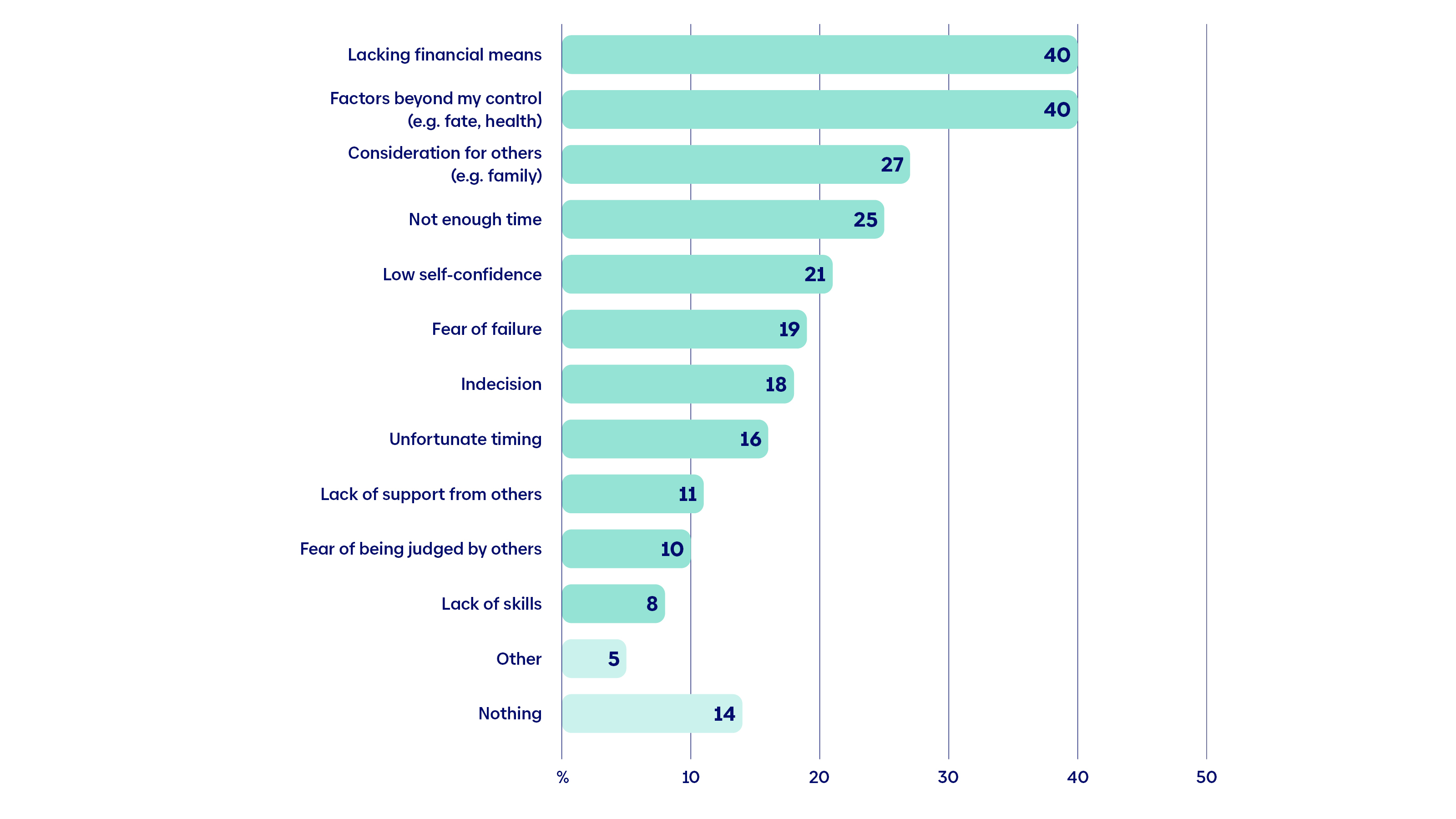
Figure 6: The importance of financial resources for life goals
“How important are, or were, financial resources to you in achieving your life goals?”
Men feel more pressure than women when it comes to finances and property
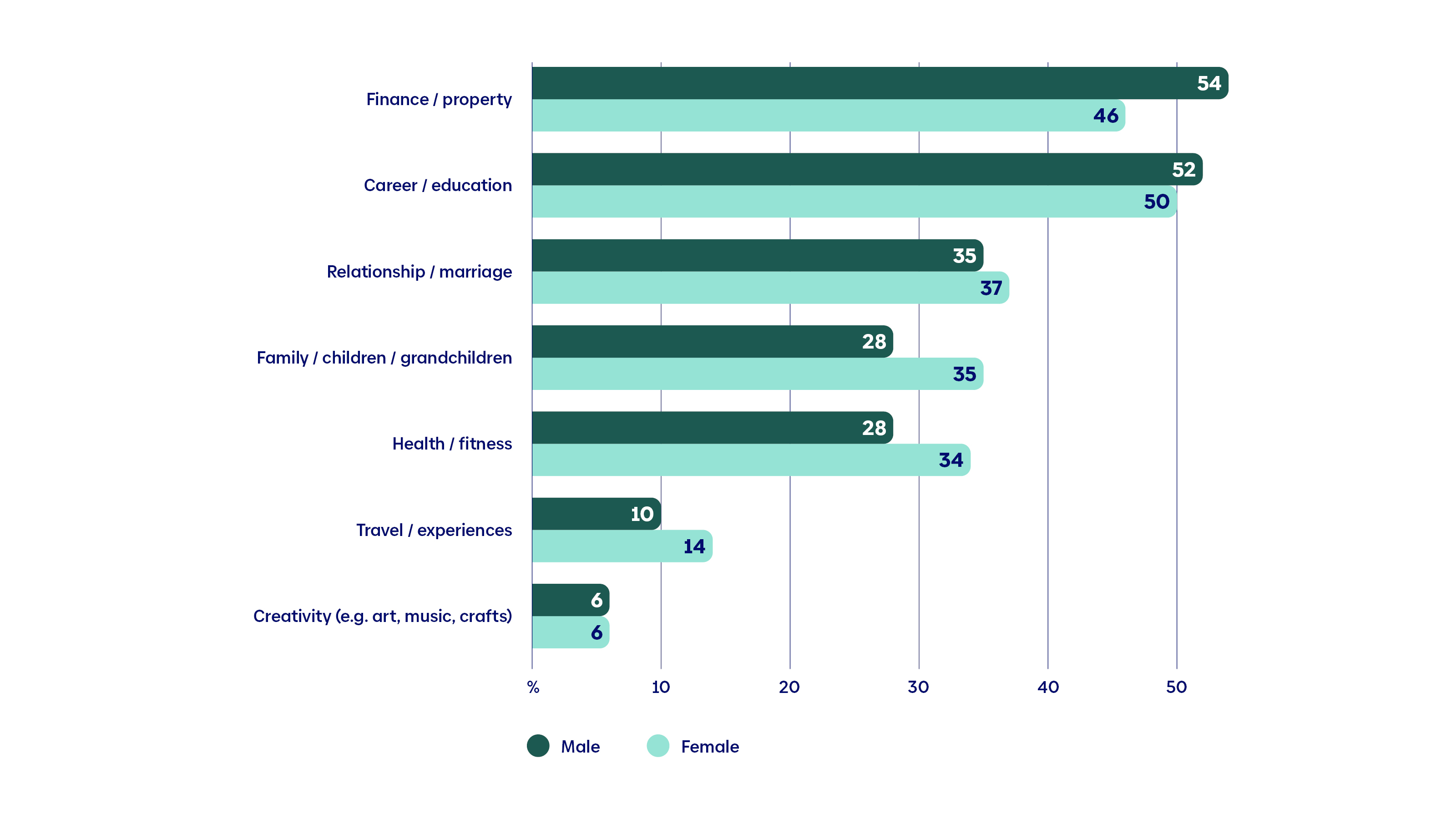
With regard to finances and property, more men (54%) feel pressure to achieve their life goals than women (46%). Similarly, 52% of men report putting themselves under pressure to achieve their career goals. For women, on the other hand, pressure to achieve career goals (50%) is more common than in the area of finances and property (46%). “A new career, a longer period of training, starting a family, purchasing residential property or taking early retirement – these are the opportunities we want to make possible for our customers. To achieve this, we take a holistic view of insurance, pension provision, assets and owning a home and show people how financial planning can help them achieve their life goals”, says Simon Weiner, Head of Sales Network & Market Development at Helvetia Switzerland.
Figure 7: Pressure to achieve life goals in specific areas – by gender
“In which areas do you feel pressure to achieve certain life goals? (Several answers possible)”
About the survey
The data was collected between 9 and 18 June 2026. Data from 1,866 people was included in the analysis. The weighted sample is representative of the resident population of Switzerland in terms of key socio-demographic characteristics.
|
Media Telefon: +41 (0)58 280 50 33 |
|
Analysts Telefon: +41 (0)58 280 89 91 |
About Helvetia Baloise
Helvetia Baloise is Switzerland’s largest multi-line insurer and one of Europe’s leading insurance groups. Every day, around 22,000 employees work hard to support around 13 million customers with insurance, pension, and financial solutions. These customers range from individuals and small to medium-sized enterprises (SMEs) through to international customer groups, which also benefit from areas such as specialty insurance and reinsurance. Headquartered in Basel, Switzerland, Helvetia Baloise operates in eight European markets as well as in global specialty markets, combining its strong Swiss roots with a clear international focus. Helvetia Baloise creates safety and security and opens up opportunities, both today and in the future. Through profitable growth and business operations geared towards long-term stability, we create tailored solutions for our customers, provide an attractive and reliable investment for our shareholders, promote strong partnerships and offer rewarding career prospects for our employees. Helvetia Baloise Holding Ltd shares (HBAN) are listed on the SIX Swiss Exchange.
Disclaimer
This document has been produced by the Helvetia Baloise Group, and the recipient is not entitled to copy or modify, offer, sell or otherwise pass it to third parties without the consent of the Helvetia Baloise Group. The English version of the document is authoritative and binding. Versions of the document in other languages are for information only. Every reasonable effort has been made to ensure that the facts and opinions presented in this document are fair and reasonable. It should not be assumed that information and figures quoted from external sources have been verified or confirmed by the Helvetia Baloise Group. Neither the Helvetia Baloise Group as such nor its decision-making bodies, senior managers, employees and advisors or other persons accept any liability for losses arising directly or indirectly from the use of this information. The facts and information presented in this document are as up to date as possible, but may change in the future. Both the Helvetia Baloise Group as such and its decision-making bodies, senior managers, employees and advisors or other persons reject any explicit or implied liability or warranty for the accuracy or completeness of the information contained in this document.
This document may contain forecasts or other forward-looking statements relating to the Helvetia Baloise Group that, by their nature, involve general and specific risks and uncertainties, and there is a danger that the forecasts, predictions, plans and other explicit or implied content of forward-looking statements may turn out to be incorrect. We would point out that a number of important factors may contribute to the actual outcomes varying greatly from the plans, objectives, expectations, estimates and intentions expressed in such forward-looking statements. These factors include: (1) changes to the general economic situation, particularly in the markets in which we operate, (2) developments in the financial markets, (3) interest-rate changes, (4) exchange-rate fluctuations, (5) changes to laws and regulations, including accounting principles and financial reporting practices, (6) risks associated with the implementation of our business strategies, (7) the frequency, scope and general level of claims, (8) mortality and morbidity rates, (9) policy renewal and lapse rates and (10) the extent to which economies of scale and scope can be realised. In this context, we would point out that the above list of important factors is not exhaustive. When assessing forward-looking statements, you should therefore examine the named factors and other uncertainties carefully. All forward-looking statements are based on information available to the Helvetia Baloise Group on the date of their publication. The Helvetia Baloise Group is only obliged to update such statements when required to do so by applicable law.