

The science that brought green back to China’s Loess Plateau awarded the 2026 Volvo Environment Prize
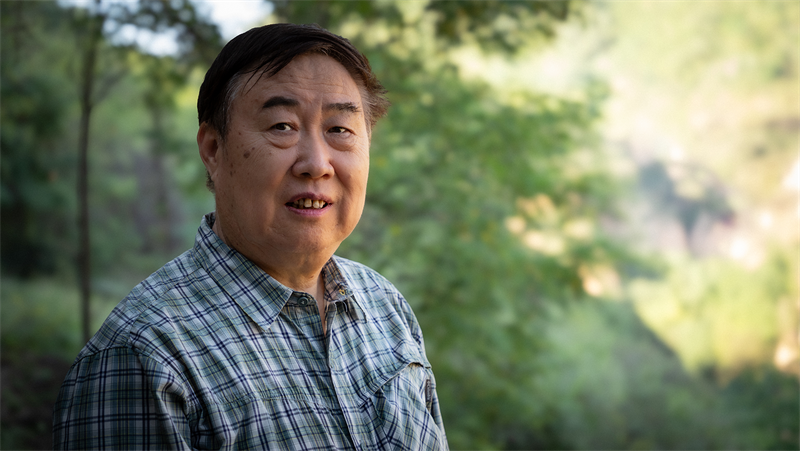
Once stripped of vegetation and scarred by some of the world’s most severe soil erosion, China’s Loess Plateau has undergone a remarkable ecological transformation. Professor Bojie Fu, one of the scientists who helped make that recovery possible, is the recipient of the 2026 Volvo Environment Prize.
The Loess Plateau was a major cradle of early Chinese civilization. But centuries of intensive cultivation and overgrazing pushed this huge area towards ecological collapse. Vegetation disappeared, soil was swept away, and vast quantities of sediment poured into the Yellow River. The landscape became a stark symbol of unsustainable land use.
Today, large areas of the plateau are green again.
Behind this dramatic revival lies one of the world’s most ambitious landscape-restoration efforts—and decades of scientific research into how damaged ecosystems can be rebuilt without exhausting the scarce resources on which both nature and people depend.
Professor Bojie Fu has played a decisive role in that work. Through extensive field studies and landscape-scale analysis, he and his team have investigated the complex relationships between land use, vegetation, water, soil, biodiversity, and local livelihoods.
Fu is a Professor of Geography and Landscape Ecology at the Research Center for Eco-Environmental Sciences at the Chinese Academy of Sciences. He and his research team revealed both the potential and the risks of ecological restoration. More vegetation can hold soil in place, capture carbon, and revive biodiversity—but planting the wrong species, or planting too densely, can deepen water scarcity and threaten the long-term survival of the restored landscape.
This evidence helped shift restoration strategies away from mass planting campaigns and towards carefully adapted, sustainable land management. It provided practical guidance on which species to plant, where they could thrive, and how to balance restoration with agriculture and local communities’ needs.
One major obstacle to restoration was resistance from farmers who feared for their livelihoods if they could no longer keep livestock or cultivate the land as before. The project, dubbed Grain for Green, helped overcome this resistance by compensating local communities and farmers.
The Prize Jury recognizes Professor Fu’s pioneering contributions to social-ecological systems and sustainability science, as well as his exceptional ability to connect local restoration with global sustainable development. The Jury particularly highlights how his work on the Loess Plateau has created science-based pathways for ecological recovery, human well-being, and effective policy across the Global South.
The plateau’s revitalization was neither simple nor swift. It was a complex, long-term undertaking involving local communities, government agencies, researchers, and international partners. Early demonstration projects received World Bank funding, while most subsequent investment came from the Chinese government.
Its success depended not only on sustained financial and political commitment, but also on continuous scientific monitoring and a willingness to adapt when evidence showed that established approaches were not working.
Professor Fu’s research demonstrates how science can turn restoration ambitions into lasting environmental change—and how a landscape once considered devastated can be given a future.
The Volvo Environment Prize has been awarded annually since 1990 and is regarded as one of the scientific world’s most respected environmental prizes. Presented by an independent foundation, the award consists of a hand-crafted diploma, a glass sculpture, and SEK 1.5 million.
Professor Bojie Fu will receive the Volvo Environment Prize at a ceremony in Stockholm, Nov 2, 2026.
More information about the laureate and the prize: www.environment-prize.com
September 23, 2026
Journalists wanting further information, please contact:
Claes Eliasson, Head of Media Relations
+46 76 553 7229
press@volvo.com
For more information, please visit volvogroup.com
For frequent updates, follow us on LinkedIn
The Volvo Group drives prosperity through transport and infrastructure solutions, offering trucks, buses, construction equipment, power solutions for marine and industrial applications, financing and services that increase our customers’ uptime and productivity. Founded in 1927, the Volvo Group is committed to shaping the future landscape of sustainable transport and infrastructure solutions. The Volvo Group is headquartered in Gothenburg, Sweden, employs almost 100,000 people and serves customers in almost 180 markets. In 2025, net sales amounted to SEK 479 billion (EUR 43 billion). Volvo shares are listed on Nasdaq Stockholm.