

Swedes Treated for Prostate Cancer in Italy – A Method Associated with Fewer Side Effects
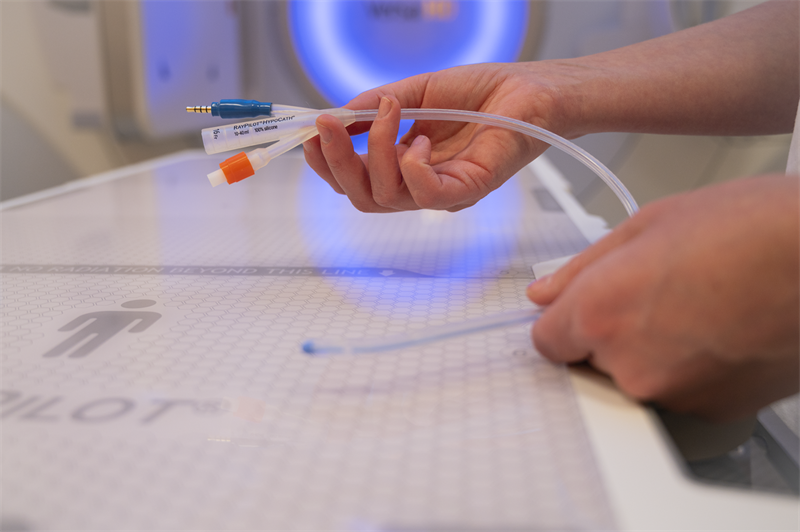
Over the past year, five Swedish men diagnosed with prostate cancer have chosen to undergo treatment at the University Hospital of Monza, Italy. There, they received a course of four radiation treatments delivered over a single week. The clinic uses modern radiotherapy with a high level of precision, a method that has been shown to cause fewer side effects than the treatment that is currently the standard of care and offered in many places, including parts of Scandinavia. This precision is enabled by Swedish technology.
Radiotherapy for prostate cancer has advanced considerably over the past 15 years. Modern treatment techniques use different types of technology for higher precision and motion monitoring of the prostate, making it possible to administer higher radiation doses in fewer sessions while reducing the risk of damage to surrounding healthy tissue.
Both conventional radiotherapy and surgical treatment of prostate cancer can lead to side effects such as urinary incontinence, frequent urination, bowel leakage, and erectile dysfunction. One important reason is that the prostate can move during treatment, sometimes by more than 10 millimeters, causing radiation to unintentionally affect nearby organs and healthy tissue.
High Precision, Fewer Side Effects
At the Monza clinic*, physicians use the Raypilot® System, a motion-tracking technology developed by Gothenburg-based company Micropos Medical. The system provides real-time, three-dimensional visualization of prostate movement during radiotherapy and alerts clinicians if the prostate moves beyond a predefined tolerance threshold, typically two millimeters.
Since 2020, the technology has been used at clinics in several European countries. Multiple studies** have demonstrated that its enhanced targeting accuracy can help reduce the risk of treatment-related side effects.
“Millimeter-level precision is crucial. The patient receives highly effective treatment with a low risk of side effects, while the healthcare pathway is streamlined because the treatment can be completed in just a few days rather than over a period of two to seven weeks,” says Thomas Lindström of Micropos Medical.
He also emphasizes that fewer treatment sessions allow for more efficient use of healthcare resources and can help shorten waiting queues in cancer care.
In Sweden, the Raypilot System is not currently used, and radiotherapy may be delivered in anywhere from seven, 20 or up to 39 treatment sessions. In Monza, the Swedish patients received four treatments over one week. The clinic is now conducting a study evaluating single-session radiotherapy, with encouraging preliminary results***.
Familiar with the Raypilot System
Martin Lundberg, 59, from Halland, is one of the patients treated in Italy.
Initially, he encountered skepticism when requesting a PSA test. After persistent discussions, the test was eventually performed and revealed elevated PSA levels. Further examinations followed, and within a few weeks Martin was informed that he had an aggressive form of prostate cancer requiring treatment. His urologist recommended surgery.
However, Martin wanted to fully understand his options before deciding.
“I researched extensively online, read everything I could find, and consulted an oncologist. Through a previous job, I was already familiar with the Raypilot System and its significant advantages. I decided that if the cancer had not spread, I wanted radiation therapy supported by the Raypilot System—even if that meant seeking treatment abroad and potentially paying for it myself.”
That is ultimately what happened. Further examinations confirmed that the cancer had not spread, and two weeks later Martin was scheduled for treatment in Monza. The radiotherapy was completed over four days in early December.
“Since then, everything has gone very well. I have not experienced a single complication, and I sleep through the night without any problems.”
Advocating for Better Prostate Cancer Care
A follow-up PSA test conducted just over four months after treatment showed favorable results. Today, Martin has returned to the lifestyle he enjoyed before his diagnosis.
Nevertheless, he admits to occasional anxiety about future PSA tests.
“The experience has left me with a constant underlying sense of stress. I have decided to try to channel that into something positive for others. I want more men to get tested and to be encouraged to do so by healthcare providers rather than discouraged. I also want more people to become aware of this remarkable treatment option.”
Martin was denied reimbursement for his treatment costs by the Swedish Social Insurance Agency and is currently pursuing the matter through legal channels. He advocates for national guidelines for prostate cancer care and increased investment in testing, treatment, and healthcare innovation.
A Difficult Decision-Making Process
Clas Ericsson, 68, underwent treatment in Monza in February. His prostate cancer was detected through a Stockholm regional screening initiative offering PSA testing to men above a certain age.
Last autumn, his test results deteriorated, making treatment necessary.
“I was told that surgery was required and could be performed within a month. Radiation therapy was presented as an inferior alternative. However, I wanted to learn more and consult additional experts before making such an important decision.
Through friends, Clas learned about Micropos Medical and the opportunity to receive radiation therapy abroad with a lower risk of side effects.
“None of the urologists or oncologists I consulted were familiar with radiotherapy guided by the Raypilot System, which made them skeptical. It was a difficult decision-making process. But after speaking with two other Swedish patients who had been treated in Monza, I made my choice. The possibility of reducing the risk of side effects was a decisive factor.”
No Side Effects
Once the decision had been made, the process moved quickly. Clas arranged travel and accommodation close to the clinic. Treatment consisted of four daily sessions, each lasting approximately fifteen minutes.
“The experience was every bit as professional and positive as others had described. I was concerned about having a catheter in place for four days, but it turned out to be much easier than I expected. I could go to the gym, take walks, sleep well, and experienced no pain or other discomfort.”
His first PSA test following treatment showed promising results, and he remains confident in his decision.
“I live and feel exactly as I did before treatment. I have not experienced any side effects whatsoever.”
Unlike Martin, Clas received reimbursement from the Swedish Social Insurance Agency without delay.
Like Martin, he encourages newly diagnosed patients to explore all treatment options before making a decision.
“Take your time. Speak to as many specialists as possible. Investigate the possibility of treatment with modern technology and contact those of us who have experience from Monza. In essence, the treatment is still radiation therapy, just as in Sweden. The difference, as I interpret it, is the level of precision. It is like using a telescopic sight, targeting the cancer while minimizing damage to everything else.”
Significant Impact on Quality of Life
Prostate cancer is the most common form of cancer among men in Sweden, affecting approximately 11,000 individuals each year.
In both Sweden and the rest of Europe, surgery remains the most common treatment for prostate cancer, despite research now showing**** that surgical treatment is associated with substantially higher rates of side effects—including loss of sexual function and urinary incontinence—than modern radiotherapy approaches. Prostate radiotherapy moves toward fewer, higher-dose fractions, precision during the actual treatment becomes increasingly important.
“Compelling clinical data and practical experience demonstrate that modern radiotherapy combined with continuous three-dimensional motion monitoring results in fewer side effects than surgery for prostate cancer treatment. The continued dominance of surgery reflects established structures and patient pathways more than patient benefit. We are actively working to increase awareness of modern radiotherapy, as its advantages can have a profound impact on patients’ quality of life after treatment. By reducing treatment-related side effects, modern radiotherapy also has the potential to lower healthcare costs and reduce the broader economic burden on society,” says Thomas Lindström.
*The Fondazione IRCCS San Gerardo dei Tintori University Hospital in Monza was the first clinic to begin using the Raypilot® System. The Swedish patients were referred to and treated by Professor Stefano Arcangeli.
**Examples of studies showing the accuracy of the Raypilot® System:
- Clinical implementation of real time motion management for prostate SBRT: A radiation therapist’s perspective. Joanne Mitchell et al.
Technical Innovations & Patient Support in Radiation Oncology, 2024, Aug 5 - Ablative Radiotherapy for Unfavorable Prostate Tumors (ABRUPT): Analysis of Toxicity and Quality of Life from a Prospective Study. Stefano Arcangeli et al.
International Journal of Radiation Oncology, Biology, Physics, 2024, July 04. - Electromagnetic Transmitter-Based Prostate Gating for Dose-Escalated Linac-Based Stereotactic Body Radiation Therapy: An Evaluation of Intra fraction Motion. De Bari, B. et al.
Curr. Oncol. 2024, 31, 962-974. - Noninvasive inter- and intrafractional motion control in ultrahypofractionated radiation therapy of prostate cancer using RayPilot HypoCath™-a sub stitute for gold fiducial-based IGRT? Johannes Berchtold et al. Strahlenther Onkol, 2023 Aug 25
- Dosimetric Impact of Intrafraction Prostate Motion and Interfraction Anatomical Changes in Dose-Escalated Linac-Based SBRT. Valeria Faccenda et al.
Cancers 2023, 15(4), 1153
*** Ablative Radiation Therapy for Unfavorable Prostate Tumors (ABRUPT): Preliminary Analysis of Toxicity and Quality of Life from a Prospective Study, Stefano Arcangeli et al, Int J Radiat Oncol Biol Phys, Dec 2024
**** Radical Prostatectomy Versus Stereotactic Radiotherapy for Clinically Localised Prostate Cancer: Results of the PACE-A Randomised Trial, Nicholas van As et al, European Urology, 2024
About the Raypilot System
The Raypilot® System is a real-time electromagnetic tracking system that continuously monitors the position of the prostate throughout each treatment session. It is added to existing linear accelerators to help clinical teams deliver prostate SBRT with high precision and confidence.
The system has been in clinical use since 2020 and is currently available at 22 clinics across Europe and the United States. To date, more than 400 patients have been treated with the support of the Raypilot® System, with most clinical use taking place in Italy, Switzerland, Scotland, Spain, and Austria.
For more information, please contact:
Thomas Lindström
Project manager, Micropos Medical AB
tel: +46 76 140 72 29
Email: thomas.lindstrom@micropos.se
Richard Forsberg
CEO, Micropos Medical AB
tel: +46 31-760 80 05
Email: info@micropos.se
Martin Lundberg
tel: +46 708 99 99 90
Email: martinebbelundberg@gmail.com
Clas Ericsson
+46 708 24 04 08
Email: ericssonclas@gmail.com
Micropos Medical AB is a Swedish medical device company that develops, manufactures, and sells technology enabling enhanced radiotherapy cancer treatment. The company's product, the Raypilot® System, generates high precision as well as high efficiency through real-time tumour tracking in radiation treatment of prostate cancer. Using The Raypilot System, clinics can treat their patients with accuracy and reduced risk of damaging healthy tissue surrounding the tumour. The company is listed on Spotlight Stock Market. www.micropos.se
Tags: