

Sweco analysis: Europe needs smarter investment to strengthen water resilience
Water infrastructure is a strategic resilience issue for Europe. A new Urban Insight report from Sweco explores how municipalities and water utilities can respond to growing pressures from climate change, drought, flooding, energy shocks, cyber incidents and ageing infrastructure. It calls for a new investment logic that moves beyond reactive replacement towards risk-based renewal and more adaptable water systems.
Water service providers currently invest around €52.5 billion annually in drinking-water and wastewater infrastructure across Europe. Yet many water networks are ageing faster than they are being renewed, while the European Commission estimates an annual investment gap of around €23 billion. The report, Transforming Europe’s Water Infrastructure, highlights that the challenge is not simply how much Europe invests, but how effectively that investment is targeted.
“Europe’s water infrastructure challenge is not simply a replacement problem; it is a resilience and system-design challenge. The key question is not only how much to invest, but where and when. By prioritising investments according to risk, performance and criticality, municipalities and water utilities can make every investment contribute more to the long-term resilience of the systems they manage,” says Mattias Salomonsson, Water Expert at Sweco.
In the report, Sweco experts recommend that municipalities, water utilities and policymakers make four strategic shifts in how water infrastructure is planned, renewed and managed:
• From reactive replacement to risk-based renewal
• From individual assets to interconnected systems
• From fixed investment plans to adaptive pathways
• From data collection to digital and AI-supported decision-making.
Sweco’s analysis also illustrates the scale of Europe’s renewal challenge. At current reinvestment rates, the implied time to replace drinking-water networks ranges from around 90 years in Belgium to around 1,000 years in Lithuania. In Finland and Poland, it exceeds 500 years, while in several other countries it is between 120 and 200 years.
Recent projects for Sweco clients across Europe demonstrate how the above approach can be applied in practice:
• Jersey: Integrated digital modelling has demonstrated the potential to reduce untreated discharges to St Aubin’s Bay by 90%.
• Germany: Dynamic modelling is supporting targeted measures to strengthen wastewater treatment capacity.
• Sweden: Operational data is helping prioritise pumping-station investments.
• The Netherlands: Sweco is supporting the renewal of critical wastewater systems and more resilient flood protection.
Press photos:
- Mattias Salomonsson, Water Expert at Sweco. Free use, please credit: Anna W Thorbjörnsson
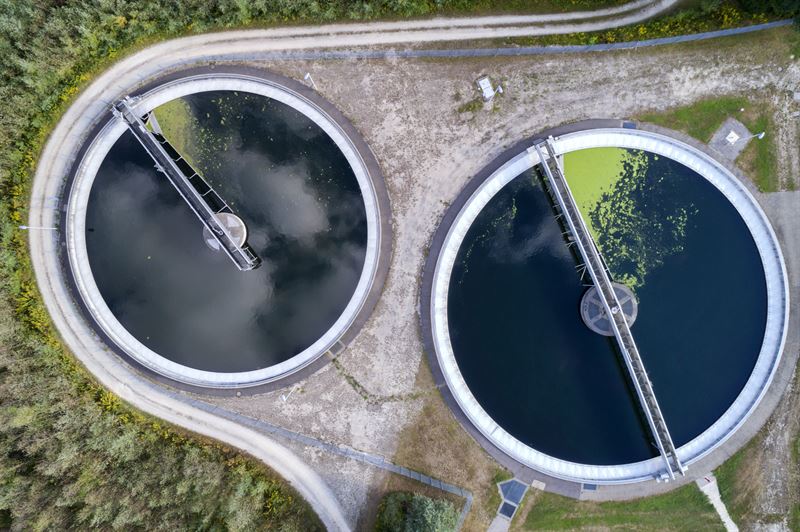
- Water stock photo, free use, please credit: Getty Images
--> Read more in the report attached, or at this link.
About Urban Insight by Sweco
Urban Insight is a series of insight reports written by Sweco experts on various aspects of urban development from a citizen perspective. The full report and previous reports are available here.
For additional information, please contact:
Anna E Olsson, Head of Press, Sweco Group, +4670 557 33 26, anna.e.olsson@sweco.se
Sweco plans and designs tomorrow’s sustainable communities and cities. With the collective knowledge of our 23,000 architects, engineers and other experts we work together with our clients to facilitate the green transition, maximise the potential of digitalisation and to strengthen Europe’s competitiveness and resilience. Sweco is Europe’s leading architecture and engineering consultancy, with sales of approximately SEK 32 billion (EUR 2.9 billion) in 2025. The company is listed on Nasdaq Stockholm. www.swecogroup.com