Survey: Low-emission steel options are already available for energy and infrastructure projects
Enersense International Plc | Press Release | September 15, 2026 at 13:50:00 EEST
According to a survey conducted by Enersense among suppliers in the energy, telecommunications, and industrial sectors, the market for lower-emission steel products has progressed further than is often assumed: as many as 83% of respondents already offer lower-emission steel alternatives. Steel production accounts for nearly 10% of global carbon dioxide emissions.
According to the survey, the main bottleneck for lower-emission steel is no longer the availability of technology, but demand. More than 70% of suppliers identified long-term agreements as the most effective way to accelerate the growth of lower-emission steel production. Nearly half (48%) also highlighted the importance of pilot projects involving lower-emission steel.
"The message from suppliers is clear: wider adoption of lower-emission steel requires, above all, predictable demand and collaboration throughout the value chain. We are pleased to see that our customers are also becoming increasingly interested in lower-emission alternatives," says Liisi Tamminen, Enersense’s Vice President, Communications, Investor Relations and Sustainability.
Enersense conducted the survey among steel and steel product suppliers serving the energy, telecommunications, and industrial sectors during the summer of 2026. The purpose of the survey was to assess the availability of lower-emission steel and emissions data, as well as suppliers’ readiness to meet sustainability and reporting requirements.
Demand is needed for low-emission steel solutions
Europe is currently investing record amounts in power transmission and digital infrastructure. Material choices, particularly steel, play a significant role in the overall emissions of these projects.
"Global emissions will not be reduced solely through electrification and digitalisation. Equally important is the choice of materials used to build these solutions," Tamminen says.
Large-scale emissions reductions in the steel industry require investments.
"By 2030, 70% of the world's blast furnaces will reach the end of their technical service life. Investment decisions made today will determine the emissions level of steel production for the next 15 to 20 years," Tamminen says.
Emissions data is becoming a new quality criterion in supply chains
The importance of emissions data is growing as customer requirements and European Union regulation continue to reshape the market. According to Enersense’s survey, approximately 80% of material suppliers are able to provide at least some form of emissions data for their steel products.
Nearly half of the survey respondents are subject to the requirements of the EU Carbon Border Adjustment Mechanism (CBAM) or report that the regulation affects their operations. There is still room for improvement in the availability of emissions data: only 30% of suppliers are currently able to provide comprehensively verified emissions data in accordance with CBAM requirements for their products. Approximately one-third (30%) estimate that their capabilities will improve during 2026 and 2027.
"There is a growing need for reliable emissions data, both to meet EU reporting requirements and to ensure the credibility of climate action. We are pleased to see that a large share of our suppliers are actively improving the quality of their data and increasing transparency throughout the value chain," Tamminen says.
Enersense works together with WWF Finland to increase the use of lower-emission steel in construction projects.
About us
Enersense delivers the essentials of tomorrow’s society. It acts as a lifecycle partner to customers in energy transmission and generation, the industrial energy transition, telecommunications and data centres. The company designs, builds, maintains and modernises critical infrastructure across the Nordics and the Baltics. Around 1,500 Enersense experts work for a more sustainable future, for example, with power lines and telecommunications networks, at substations and power plants. Enersense had a revenue of EUR 307 million in 2025, and it’s listed on Nasdaq Helsinki (ESENSE). www.enersense.com.
Image Attachments
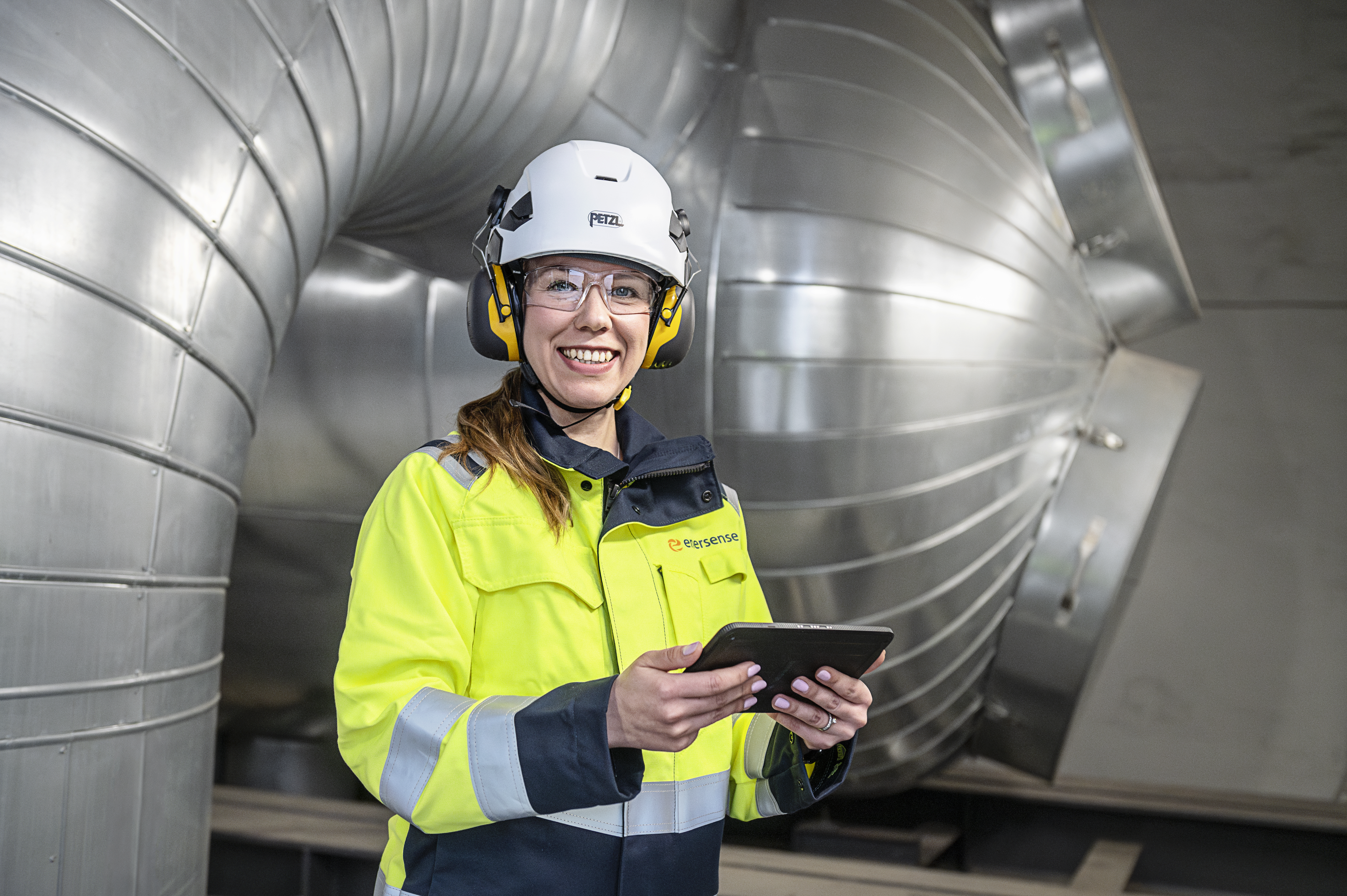
Enersense employee in the Vuosaari power plant, illustrative picture