
Richard Zwicky, CEO of Memores Software Inc., Named Pilot with the Observatory on Human Rights at the United Nations
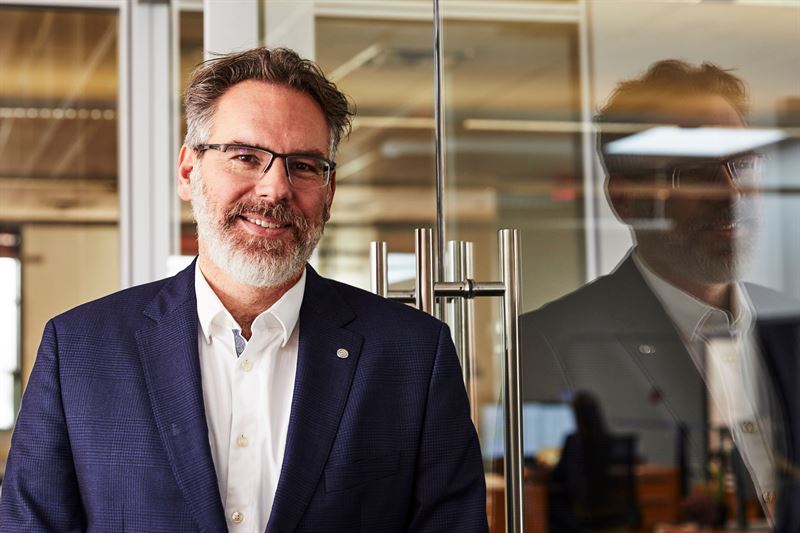
Zwicky joins the Observatory's Neurodiversity subgroup, bringing a founder's perspective on
inclusion, cognitive difference, and organizational design.
VICTORIA, BC, September 10, 2026. Richard Zwicky, Founder and CEO of Memores Software Inc., creator of the SPARKS Relational Intelligence (RQ) platform, today announced he is joining the Observatory on Human Rights at the UN at the University of Ottawa as a Pilot, contributing to its Neurodiversity subgroup.
"I am pleased to announce that I will be joining the Observatory on Human Rights at the UN at the University of Ottawa as a Pilot, contributing specifically to its Neurodiversity subgroup," said Zwicky. "I look forward to working alongside students, scholars, practitioners, and fellow Pilots and Collaborators to explore issues related to neurodiversity, inclusion, and human rights, and to contribute to meaningful conversations on how our institutions and communities can better recognize and embrace different ways of thinking, working, and engaging with the world."
The Observatory, an initiative of the Faculty of Law at the University of Ottawa, organizes its Working Groups around emerging human rights questions connected to United Nations mechanisms and the expertise of its Pilots and Collaborators. "The Observatory attracts visionary leaders who can navigate complexity, build trust across differences, collaborate across disciplines, and turn human rights principles into meaningful action," Zwicky said. "Thank you for including me. I look forward to sharing my experience and perspective with this inspiring community."
A founder's lens on neurodiversity and inclusion
Zwicky brings to the Neurodiversity subgroup a unique vantage point: that of a founder who has had to build the institution, not just study it. Memores Software's core product, SPARKS, is built around Relational Intelligence, a concept that treats how people understand, communicate with, and accommodate one another as a measurable, improvable capacity rather than a soft skill. Zwicky argues that the same questions the Observatory examines at the level of law and policy, who gets to belong, whose way of thinking is accommodated, and how institutions decide what counts as normal, play out first and most immediately inside an organization’s own team.
"A team is a human rights environment in miniature, before it is anything else," Zwicky said. "Every hiring decision, every meeting format, every norm about how feedback is given is a small policy choice about who gets to fully participate. Building a company has taught me that inclusion is not a value you state once; it is a set of working conditions you redesign continuously, the same discipline the Observatory brings to institutions at a much larger scale."
That conviction is also the premise behind SPARKS itself. The platform was built to surface early, aggregate signals of strain and disengagement inside organizations, privately and without exposing any individual, on the view that a workforce's wellbeing is a leading indicator most institutions only measure after the fact. Zwicky sees his internal experience running Memores, adapting communication norms, workload, and support to a team of different working and thinking styles, as a working laboratory for the same inclusion questions the Neurodiversity subgroup will take up formally, and expects that experience to run in both directions: informing his contribution to the Observatory's research, and returning to sharpen how Memores builds for the people who use its platform.
Memores Software Inc.
press@memores.me
https://memores.me
PO Box 8012, Station Central
Victoria
British Columbia
Canada
About the Observatory on Human Rights at the UN
Under the leadership of Professor Pascale Fournier, the Observatory on Human Rights at the UN innovates legal education by bridging theory and practice and working to democratize human rights knowledge for the public. It is affiliated with the University of Ottawa Faculty of Law (Civil Law Section) and located at the creative space INNOVA. Its Working Groups bring together students, scholars, practitioners, Pilots, and Collaborators around emerging human rights questions connected to UN human rights mechanisms, including children's rights, neurodiversity, race and discrimination, Indigenous rights, Faith for Rights, and the intersection of art, fashion and law. More information is available at unobservatory.com.
About Memores Software Inc.
Memores Software Inc., based in Victoria, BC, builds SPARKS, a predictive Relational Intelligence platform for workforce wellbeing, employee engagement, and burnout prevention, deployed to individual users, enterprise organizations, and insurance carriers. Founder and CEO Richard Zwicky has authored 20 issued patents in artificial intelligence (AI), behavioral targeting, search engine algorithms, fraud detection, and predictive analytics.