

Paul Hill, Sales Director at Daw Global, On Bridging The Gap Between Crypto And Fiat
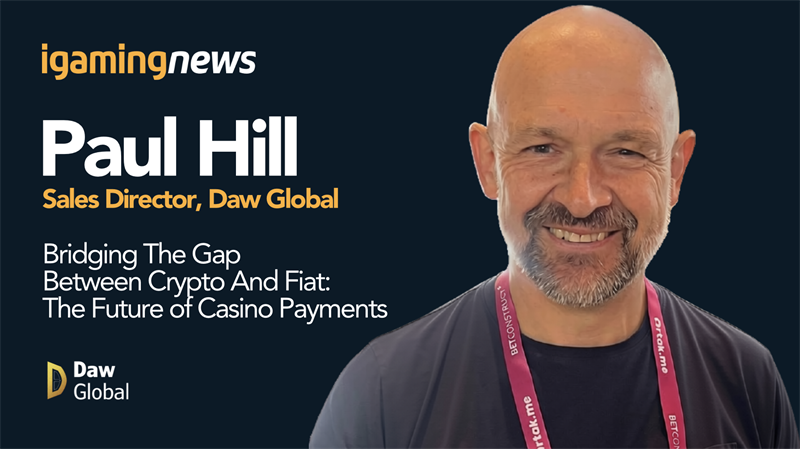
As cryptocurrency continues to reshape the global iGaming landscape, the relationship between digital assets and traditional banking infrastructure is becoming one of the industry’s biggest challenges and opportunities.
For crypto casino operators, the ability to move seamlessly between crypto and fiat currencies is no longer simply a technical consideration; it is a fundamental part of running an efficient, scalable business. From managing settlements and liquidity to navigating evolving regulations, operators are increasingly looking for financial partners that understand the complexities of both worlds.
In this exclusive interview, Paul Hill, Sales Director at Daw Global, discusses the rapid growth of crypto casinos, the infrastructure challenges facing operators and why greater transparency, efficiency and integration will be critical to the future of payments.
From stablecoins and regulatory developments such as MiCA to the limitations of existing payment ecosystems, Paul explains why the industry needs to move beyond fragmented solutions and towards a more connected approach where crypto and fiat can work alongside each other.
He also explores how Daw Global is helping operators gain greater visibility over their financial operations, reduce unnecessary complexity and create payment systems that are built for the next phase of iGaming’s evolution.
What is driving Daw Global’s increased focus on crypto casinos compared to traditional iGaming models?
The crypto casino sector has expanded significantly over recent years and shows no real sign of slowing down.
More operators are entering the space, more players are using cryptocurrency as a payment method rather than purely as an investment asset and the infrastructure supporting that ecosystem continues to develop.
From an operator’s perspective, crypto often provides a more practical route into markets where traditional banking and payment infrastructure is difficult, expensive or slow to establish. We have to move with the market, and crypto casinos are now a significant part of the wider iGaming landscape.
How do you see the crypto casino segment evolving over the next 2–3 years?
We expect it to continue growing. Operators are becoming more sophisticated, technology is improving, and players in more markets are becoming comfortable using cryptocurrency to fund their gaming.
That was not the case five years ago.
This growth is not limited to emerging markets either. Even in more developed regions, many players actively prefer crypto casinos because of the speed and flexibility they provide compared with traditional payment options. Unless there is a major shift in global regulation, we expect crypto casinos to continue taking a larger share of the overall gaming market.
From your perspective, what is currently the biggest bottleneck in crypto-fiat infrastructure for casinos?
The biggest challenge is getting crypto and fiat to work within the same setup rather than operating as two completely separate systems.
Most crypto casino operators are managing multiple crypto providers, payment providers and a banking provider sitting separately behind everything. While this can work, it creates unnecessary complexity. Operators need banking that brings both sides together and provides a clear view of where their money is at any given time. Without that visibility, reconciliation becomes more difficult, reporting becomes more complicated and treasury management becomes far harder than it needs to be.
The issue is not simply moving between crypto and fiat — it is creating an infrastructure where both work together properly.
Where do most operators struggle most: onboarding fiat into crypto, cashing out crypto to fiat, or maintaining liquidity between both?
In our experience, cashing out crypto into fiat is where most operators experience the biggest challenges.
Most crypto casino operators receive settlements from crypto providers in cryptocurrency. That money eventually needs to become fiat to cover operational costs, including paying staff, suppliers, affiliates and other business expenses. Finding banking providers that are comfortable handling gaming funds originating from crypto remains one of the biggest hurdles.
Many providers simply will not support those flows, meaning operators need confidence that they can move money between crypto and fiat without unnecessary delays or complications. A number of operators also continue to pay affiliates, suppliers and, in some cases, employees in crypto, so having access to both sides remains essential.
How much of the challenge is technical versus regulatory in nature?
Both elements play a role and it is difficult to separate them completely.
From a regulatory perspective, providers need the appetite and compliance frameworks required to support crypto casino operators. However, the technical side is often underestimated.
Many operators are still running separate systems for crypto and fiat, and those systems rarely communicate effectively. This creates delays, increases reconciliation challenges and adds unnecessary costs. The operators that operate most efficiently are those where banking, crypto and payments work together rather than independently.
What limitations do existing payment providers still have when supporting hybrid crypto-fiat casino ecosystems?
The biggest issue is that most providers focus on one area.
Crypto providers focus on crypto. Payment providers focus on fiat. Banking sits separately. As a result, operators often end up managing multiple relationships, with money moving between different platforms and financial information spread across various systems.
What operators need is a complete overview of their payment ecosystem rather than separate views into different parts of their finances.
How important is the speed and reliability of crypto-fiat settlement infrastructure for crypto casino operators?
Crypto casinos operate around the clock, and the payment infrastructure supporting them needs to do the same.
Delays in moving funds, whether paying affiliates, settling with providers or managing operational costs, can create significant disruption.
The key is ensuring crypto and fiat infrastructure work alongside each other rather than as isolated systems.
Speed and reliability are not additional benefits in this space; they are the foundation. The industry moves quickly, expectations are high and the infrastructure has to keep pace.
Are stablecoins helping bridge the gap, or do they introduce new complexities?
For operators, stablecoins generally make things easier.
They provide a practical way to settle funds while avoiding the volatility associated with other digital assets. For crypto casinos specifically, they fit naturally into existing workflows and help unlock markets where traditional payment infrastructure can be challenging.
They also create opportunities in regions where currency restrictions or capital controls make traditional payments more difficult.
However, from a player perspective, the picture is different. Cryptocurrency adoption has grown significantly, but many people still do not use crypto, do not understand it or simply do not want to.
Stablecoins are a valuable tool, but they are not the answer for every market or every customer.
How do evolving global regulations impact the ability to build seamless crypto-fiat systems?
Regulation has a significant impact, and MiCA is a good example.
MiCA represents one of the most advanced crypto regulatory frameworks currently in place. While clearer regulation will ultimately help create a safer and more credible industry, the transition period creates challenges for providers and operators.
Many businesses have had to adapt their approach while waiting for approvals or seeking alternative licensing routes.
Regulation creates short-term complexity, but stronger frameworks should ultimately benefit the wider ecosystem.
The future direction of cryptocurrency as a mainstream payment method remains difficult to predict, but the next decade will be critical in shaping how crypto and traditional finance interact.
Do compliance requirements differ significantly between regions when it comes to crypto casino operations?
Not significantly in many cases, largely because many operators operate through offshore licensing structures. A large number hold licences from jurisdictions such as Curaçao or Anjouan, allowing them to operate in permitted markets while meeting their compliance obligations.
However, the appeal of crypto goes beyond compliance. In regions such as Latin America and Africa, traditional operators often face challenges setting up local payment solutions across different currencies and markets.
Crypto removes many of those barriers. As long as players can access cryptocurrency, operators do not need to build multiple local payment infrastructures.
That flexibility is a major reason why crypto has become so important within the offshore casino sector.
What should crypto casino operators look for when selecting a banking partner?
Transparency above everything else.
Operators need to understand exactly what they are paying for, how fees work and how the banking relationship supports their business. We regularly speak to operators dealing with unclear pricing structures, unexpected charges or solutions that were not what they were originally promised.
Responsiveness is also critical. Crypto casinos operate 24/7 and need partners who understand that. The best relationships come from understanding each operator’s individual needs, payment flows and markets rather than offering a standard solution to everyone.
What would a “perfect” crypto-fiat casino payment experience look like?
Ultimately, it should work in the background in the same way a normal bank account does for any other business.
Unfortunately, gambling is often viewed as complex, and offshore operators working across multiple markets face additional challenges. A major issue today is unnecessary cost and complexity throughout the payment chain.
For example, funds can move from a player payment, through a PSP, into a settlement currency, then into another currency before finally reaching the supplier. At every stage, additional fees can be added.
The ideal solution removes those unnecessary steps.
Operators should have full visibility of their crypto and fiat position, understand exactly what they are paying and why, and have confidence that there are no hidden costs. Our focus is creating that transparency through partnerships and technology that gives operators a clearer view of their financial operations.
Do you believe we will eventually see fully unified payment rails between crypto and fiat, or will they remain parallel systems?
For the foreseeable future, they will remain parallel systems.
Crypto and fiat are fundamentally different and operate under different rules. However, the movement between the two will continue becoming easier, faster and more efficient.
The biggest factor will be regulation. As frameworks mature, the interaction between crypto and traditional finance will improve. Rather than becoming one single system, crypto and fiat will continue working alongside each other more effectively.
What innovations are you most excited about that could solve current infrastructure challenges?
For us, it comes back to transparency and everything surrounding the bank account itself. The account needs to work reliably and deliver exactly what the client expects — that is the minimum requirement.
Where we see the biggest opportunity is supporting the complete financial journey, including payment flows, crypto processing, OTC conversions and reconciliation. If operators can have full visibility across their entire payment ecosystem, they can make better decisions, reduce unnecessary costs and operate more efficiently.
The future is not just about providing a bank account. It is about understanding the complete financial picture and supporting operators from start to finish.