

Central Asia Metals PLC
05 August 2026

5 August 2026
Central Asia Metals PLC
(the 'Group', the 'Company' or 'CAML')
Mineral Resource and Ore Reserve Update
Central Asia Metals PLC (AIM: CAML) provides an update on its Mineral Resource and Ore Reserve Estimates.
As part of the proposed acquisition of Cygnus Metals Ltd (ASX: CY5, TSXV: CYG, OTCQB: CYGGF) ('Cygnus') via an Australian scheme of arrangement, as announced on 2 June 2026, CAML commissioned SLR Consulting (UK) Ltd ('SLR') to prepare Mineral Resource and Ore Reserve Reports in accordance with the guidelines of the Australasian Code for Reporting of Exploration Results, Mineral Resources and Ore Reserves (2012 Edition) (the 'JORC Code') to disclose information relevant to investors about:
- CAML's wholly-owned Kounrad in-situ dump-leach, solvent extraction-electrowinning (SX-EW) copper operation in Kazakhstan ('Kounrad'); and
- CAML's wholly-owned Sasa zinc-lead mine in North Macedonia ('Sasa').
The reports include, amongst other information, Mineral Resource and Ore Reserve Estimates with effective dates of 31 December 2025. The reports are available on CAML's website (at www.centralasiametals.com/investors/reports-and-presentations). Summaries of the Mineral Resource and Ore Reserve Estimates for Sasa and Kounrad are set out below.
Furthermore, as part of the documentation required for the proposed acquisition of Cygnus, CAML also commissioned SLR to prepare Technical Reports about Kounrad and Sasa in accordance with the disclosure requirements of National Instrument 43-101 Standards of Disclosure for Mineral Projects (NI 43-101). Those reports will be available on the Canadian Securities Administrators' website under Cygnus' corporate profile at www.sedarplus.ca (SEDAR+) concurrent with the planned publication of the Scheme Booklet to be despatched to Cygnus shareholders in relation to the Scheme.
Kounrad (100% owned)
Kounrad Mineral Resource Estimate
A summary of the audited Mineral Resource Estimate as of 31 December 2025, is shown in Table 1.
Table 1: Audited Mineral Resource Statement for Kounrad (effective date of 31 December 2025)
|
Classification |
Tonnes (Mt) |
Cu (%) |
Contained Cu metal (kt) |
|
Measured |
- |
- |
- |
|
Indicated |
595.1 |
0.07 |
407.9 |
|
Inferred |
- |
- |
- |
Notes
1. Mineral Resources are reported in accordance with the guidelines of the JORC Code (2012).
2. Cu grade is total copper.
3. Mineral Resources are estimated at a cut-off grade of 0% Cu.
4. Mineral Resources are estimated using a copper price of US$11,080 per tonne.
5. Mineral Resources are estimated using a calculated leach recovery of 18.5%.
6. Mineral Resources are estimated using average dry densities ranging from 1.875 to 2.07 t/m3.
7. Kounrad is an in-situ dump-leach operation, and therefore no minimum mining width has been applied.
8. Mineral Resources are inclusive of Ore Reserves.
9. Mineral Resources that are not Ore Reserves do not have demonstrated economic viability based on a prefeasibility study or feasibility study.
10. Contained metal refers to estimated contained metal in the ground not adjusted for metallurgical recovery.
11. Totals may not represent the sum of the parts owing to rounding.
Geology and geological interpretation
The Kounrad open pit is located adjacent to the waste dumps and comprises a porphyry copper deposit that was mined from 1936 to 2005. Copper sulphide ore was selectively mined, while material classified as waste and uneconomically treatable materials at the time were dumped and formed the existing Kounrad waste dumps. The waste material is comprised of oxide, mixed and sulphide granodiorites at grades of around 0.1% Cu. The Eastern Dumps contain mainly oxide material whereas the larger Western Dumps contain sulphide and mixed material. The smaller Northern Dumps also contain mixed material.
Malachite, azurite, chrysocolla and chalcopyrite (partly replaced by hematite and pyrite) are typical ore minerals of the oxide dumps. The sulphide dumps are characterised by vein and veinlet-disseminated sulphide mineralisation with covellite, chalcopyrite, bornite and pyrite. Long-term exposure of the dumps has triggered natural bacterial oxidation, converting a significant proportion of the refractory sulphide material into acid-soluble forms which are more amenable to leaching.
The Kounrad dumps are located on weathered bedrock of which the upper 10 to 40 metres consists of clay material that forms a low permeability layer. This is a critical factor in capturing the leach solutions after percolating through the dumps.
Sampling and sub-sampling techniques
Sampling of the Kounrad copper dumps included trenching, trial pits and reverse circulation (RC) drilling, and is summarised below:
- Pre-2007: an historical programme of channel sampling was undertaken on the Eastern Dumps and included the collection of 2,409 samples of 0.5 metre lengths taken from the surface of the dumps.
- 2007: exploration work consisted of 21 RC drillholes in Dumps 6, 7, and 9-10. Samples were assayed for total copper (Cutotal) and acid soluble copper (Cuacid).
- 2008-09: exploration work comprised 85 RC drillholes and 10 channel trenches with samples assayed for Cutotal and Cuacid.
- 2010: exploration work included 137 trial pits, 9 surface trenches and a further 13 pits excavated for metallurgical sampling. Samples were assayed for Cutotal, Cuacid.
- 2011: RC drillholes were drilled in Western Dumps, 1, 15 and 16, and Eastern Dumps 5, 6, 7, 9 and 10. A total of 98 holes were carried out and drilled through the full thickness of the dumps. Samples were assayed for Cutotal and Cuacid.
- 2012: 131 RC drillholes were completed in Dumps 2, 13, 20, 15, 16, 20, 21 and 22 and the Northern Dumps.
Sampling of RC drilling was undertaken at 3 metre intervals. Samples were initially sub-sampled at the drill site to provide a 5-kilogramme sample that was then split to provide a sub-sample that was dispatched to the VNIITSvetmet laboratory in Ust-Kamenogorsk for sample preparation. The samples were crushed in a jaw crusher to <2 millimetres followed by secondary crushing to <1 millimetres. The sample was then split to provide <0.5 kg which was pulverised to 74 microns and further split to provide a 250 gramme sample for analysis.
Drilling techniques
All drilling at the Kounrad dumps has been undertaken using RC drilling. The number of drillholes completed by each drilling programme is provided below:
- 2007: 21 RC drillholes to depths of 2.5 metres.
- 2008-09: 85 RC drillholes (1,971 metres) to depths of 8-30 metres.
- 2011: 98 RC drillholes (3,213 metres) through the full thickness of the dumps.
- 2012: 131 RC drillholes (4,107 metres) through the full thickness of the dumps.
Limited information exists regarding the pre-2011 drilling. The 2011 and 2012 drilling was completed by the drilling contractor AK Niyet Burga using Nemek 814 BE and HYDCO - 300 trailer drill rigs, with a hole diameter of 125 millimetres.
Classification
The Kounrad waste dumps have been classified as wholly Indicated Mineral Resources. Drilling of the dumps has been undertaken on a maximum spacing of 200-100 metres. The composition of the dump material, the copper grades and amenability to leaching is well understood through exploration, test work and production.
Sample analysis and method
Most of the assaying was conducted at the VNIITSvetmet laboratory in Ust-Kamenogorsk. Pit and trench samples from 2010 were assayed at CenterGeoAnalyt in Karaganda. The Alex Stewart laboratory in Moscow and CenterGeoAnalyt were used for check analysis.
At the time of analysis, the VNIITSvetmet laboratory held several accreditations, including ISO/IEEC 17025-2007 (accreditation certificate number KZ.И. 07.0480 dated 27 August 2009) and ISO 9001:2008. The accreditation of the CenterGeoAnalyt and Alex Stewart laboratories at the time of the analysis is not known.
Total copper was analysed using aqua regia acid digestion with ICP-MS finish. Analysis for acid soluble copper was carried out on a 50 gramme sample treated with a 5% solution of sulphuric acid and heated for 30 minutes. The leach residue was washed with water, and the sample analysed by ICP. The difference in the total copper and copper in the leach residue was calculated as the acid-soluble copper content. A summary of the sample analysis and method is provided below:
- Pre-2007: Limited information exists regarding the assaying methods used for the historical channel sampling of the Eastern Dumps.
- 2007-09: Samples were assayed at the VNIITSvetmet laboratory in Ust-Kamenogorsk. No information is available of the QA/QC procedures used for the 2007-09 exploration works.
- 2010: Samples were sent for preparation and assay at the CenterGeoAnalyt laboratory in Karaganda. VNIITSvetmet laboratory was used for external check analysis. Analysis was undertaken for Cutotal and Cuacid. A total of 30 external pulp duplicates and 59 internal control samples were analysed.
- 2011: Samples were assayed at the VNIITSvetmet laboratory. The Alex Stewart laboratory was used for external check analysis. Analysis was undertaken for Cutotal and Cuacid. A total of 918 samples were assayed, of these 30 (3%) were selected as internal laboratory duplicates and 75 (8%) were selected as umpire duplicates for analysis at Alex Stewart. Each batch of 60 samples included 1 barren (blank) sample, which consisted of blank granite material. A total of 16 blank samples were assayed.
- 2012: Samples were assayed at the VNIITSvetmet laboratory. Alex Stewart laboratory was used for external check analysis. Analysis was undertaken for Cutotal and Cuacid. A total of 1,364 samples were assayed at the VNIITSvetmet laboratory, of these 114 (8%) were selected as internal laboratory duplicates and 137 (10%) were selected as umpire duplicates for analysis at Alex Stewart. Each batch of 60 samples included 1 barren (blank) sample, which comprised blank granite material. A total of 20 blank samples were assayed.
Limited information exists regarding the procedures used for the pre-2007 sampling and 2007 drilling programmes, however, these were undertaken in the Eastern Dumps which have now been extensively leached. Limited information exists regarding the procedures used for the 2008-09 drilling programme. A statistical analysis comparing the results of this programme with the 2011-12 drilling identified no significant bias in the copper grades to be present that would materially affect the Mineral Resource Estimate. The 2010-12 programmes were undertaken using appropriate sample preparation and analyses procedures and no significant issues were identified in the assaying of the QC samples.
Estimation methodology
The Mineral Resource Estimates for the Kounrad in-situ dump-leach operation were produced by Sary Kazna LLP (SK) using a polygonal based approach and were audited by SLR.
An initial Mineral Resource Estimate for Dumps 6, 7 and 9-10 had an effective date of 1 December 2011, and included the 2011 drilling (no drilling was undertaken on these dumps in 2012). This was before leaching operations commenced on these dumps in April 2012. An initial Mineral Resource Estimate for the remaining dumps had an effective date of 17 May 2013, and included the 2012 drilling. No further exploration has been undertaken since this time. The initial Mineral Resource Estimates are updated annually by SK to account for depletion from on-going leaching operations.
To audit the SK Mineral Resource Estimates, SLR undertook a check estimate using a 3D block modelling approach using Leapfrog, Supervisor and Datamine software. The sample database included: 1) Pre-2007 channel sampling; 2) 2007 drilling; 3) 2008-09 drilling; 2010 trial pit sampling, metallurgical trial pit sampling and trenching; 4) 2011 drilling; 5) 2012 drilling.
Wireframes of the topographic surface of the dumps were constructed based on surveys carried out by SK surveyors using total station equipment. A surface defining the base of the dumps was constructed by SLR using the drillhole logging of basement material identified in the 2011 and 2012 campaigns.
The sample database and the volumetric block model were coded based on the dump IDs. High-grade Cu assays were top cut where required. A 3.0 metre composite length was used. Variogram contour maps and variography was attempted; however, robust variograms could not be produced to support a kriged estimate.
A block model was constructed using a parent block size of 50 x 50 x 3 metres and sub cell splitting was enabled to more accurately represent the dump volumes. Average densities were based on density test work from sampling of trial pits in 2012 and were applied on a dump-by-dump basis. Grade estimation was undertaken for copper and acid soluble copper. Inverse distance weighting (IDW2) was used as the principal estimation method. Domain boundaries of the dumps were treated as hard boundaries. Grade estimation was undertaken into the parent blocks. Grade estimation used a three-pass plan. The first search size was based on the 200 x 100 metre sample spacing. The second and third searches used x2 and x3 expansions to estimate any remaining blocks. First-pass block estimates were required to be informed by a minimum of 4 composites and a maximum of 12 composites, with a maximum of 2 composites per drillhole. Sample requirements were relaxed in later estimation passes to ensure that all blocks received estimated grades. The channel sample data were restricted to estimate only those blocks located near the surface to prevent over extrapolation of these data at depth. Directional control strings were used to orientate the search ellipses based on the dump profiles.
The block model was validated by 1) a visual comparison of composites and block grades; 2) a global statistical comparison of the composites and block grades by domain; 3) swath plots.
A comparison between the SLR check estimate and the SK Mineral Resource Estimate identified no material differences. Globally, the models reported similar grades, total reported tonnes were within 1%, and the total contained metal was within 2.5%. SLR accepts the SK Mineral Resource Estimate and the reported Mineral Resources are based on the SK estimate.
The copper recovered from the dumps since the start of leaching operations in April 2012 is estimated by SK metallurgical staff based on the results of laboratory and pilot plant testing, assumptions of leach and solution migration rates and cathode production information. Overall, a total of 179.3 kilotonnes of copper has been recovered and 75.4 kilotonnes of copper remains to be recovered. The Mineral Resources were depleted to account for the copper that has been recovered by the operation since April 2012.
Mineral Resources were reported inside of the concession boundary. The small Dump 3 (approximately 500,000 cubic metres) was excluded from the Mineral Resource Estimate.
Cut-off grade
Kounrad is an in-situ dump-leach operation and is not selectively mined. A cut-off grade of 0% Cu is therefore used to report the Mineral Resources.
Mining, metallurgical and other material modifying factors
Kounrad is an in-situ dump-leach operation and no mining is undertaken.
The metallurgical process is well-tested and has been operating since 2012. Leach recoveries attained by the operation are estimated at 51% for the Eastern (oxide) Dumps, while the Western Dumps, being more refractory, respond less favourably to leaching and recoveries ranging from 35% (sulphide material) to 42% (mixed material) have been achieved.
The stated Mineral Resources are not materially affected by any known environmental, permitting, legal, title, taxation, socio-economic, marketing, political or other relevant issues. There is no known mining, metallurgical, infrastructure or other factor that materially affects this Mineral Resource Estimate at this time.
Comparison with previous Mineral Resource Estimate
A Mineral Resource Estimate was prepared by SK before the start of leaching operations at Kounrad. A comparison of the previous and the current Mineral Resource Estimates is shown in Table 2. The estimates are in accordance with the guidelines of the JORC Code (2012).
The total Mineral Resource tonnage at Kounrad remains the same because no material has been mined or removed. A reduction in contained copper metal from 587.3 to 407.9 kilotonnes and a reduction in copper grade from 0.10% to 0.07% Cu is due to the recovery of copper by the leaching operations from April 2012 to 31 December 2025.
Table 2: Comparison of previous and current Mineral Resource Estimates
|
|
Current estimate (2025) |
Previous estimate1,2 |
||||
|
Classification |
Tonnes (Mt) |
Cu (%) |
Contained Cu metal (kt) |
Tonnes (Mt) |
Cu (%) |
Contained Cu metal (kt) |
|
Measured |
- |
- |
- |
- |
- |
- |
|
Indicated |
595.1 |
0.07 |
407.9 |
595.1 |
0.10 |
587.3 |
|
Inferred |
- |
- |
- |
- |
- |
- |
Notes
1. The effective date of the Mineral Resource Estimate for Dumps 6, 7 and 9-10 is 1 December 2011.
2. The effective date of the Mineral Resource Estimate for Dumps 2, 5, 1, 1a, 13, 15, 16, 20, 21, 21a, 22 and Northern Dumps 1 & 2 is 17 May 2013.
3. Cu grade is total copper.
4. Mineral Resources are estimated at a cut-off grade of 0% Cu.
5. Contained metal refers to estimated contained metal in the ground not adjusted for metallurgical recovery.
6. Totals may not represent the sum of the parts owing to rounding.
Kounrad Ore Reserve Estimate
The audited Ore Reserve statement is shown in Table 3.
Table 3: Audited Ore Reserve Statement for Kounrad (effective date of 31 December 2025)
|
Classification |
Tonnes (Mt) |
Cu (%) |
Contained Cu metal (kt) |
|
Proved |
- |
- |
- |
|
Probable |
595.1 |
0.07 |
407.9 |
Notes
1. Ore Reserves are reported in accordance with the guidelines of the JORC Code (2012).
2. Cu grade is total copper.
3. Ore Reserves are estimated at a cut-off grade of 0% Cu.
4. Ore Reserves are estimated using a copper price of US$11,080 per tonne.
5. Ore Reserves are estimated using a calculated leach recovery of 18.5%.
6. Kounrad is an in-situ dump-leach operation, and therefore no dilution or mining recovery factors have been applied.
7. Contained metal refers to estimated contained metal in the ground not adjusted for metallurgical recovery.
8. Totals may not represent the sum of the parts owing to rounding.
Material Assumptions
Kounrad is an operating in-situ dump-leach operation focussed on the recovery of copper from waste dumps adjacent to the historical Kounrad open pit. The leaching operation has been in continuous production since April 2012 and costs and revenue are well understood. Modifying factors were based on actual mineral processing, infrastructure, environmental and social, market and economic model information.
A financial model for the LoM showed the Ore Reserves to be economic based on the assumptions used and a copper price of US$11,080 per tonne.
Classification
The Ore Reserve Estimate is based on the Mineral Resource model. Indicated Mineral Resources were converted to Probable Ore Reserves by applying modifying factors. No Proved Ore Reserves were classified because no Measured Mineral Resources were estimated.
No Inferred Mineral Resources were estimated and no Inferred Resources were included in the Ore Reserve Estimate or the economic analysis.
Mining method and other mining assumptions
The operation is an in-situ dump-leach and no mining is required. Dilution and mining recovery factors are not applicable and no minimum mining widths have been applied.
Processing method and other processing assumptions
The dumps are leached in situ with raffinate solution at pH 1.2 to dissolve the copper mineralisation. The solution percolates through the dumps to a layer of low permeability clay at the base of the dumps. The pregnant leach solution (PLS) is collected at the base of the dumps by an HDPE lined interceptor trench and pumped to a series of holding ponds. From these ponds, the PLS is treated by the SX-EW plant, located south of the Eastern Dumps. The east plant site includes the SX-EW plant, solution ponds, boiler houses, stores and offices. PLS solutions from the Western Dumps are pumped a distance of 12.5 kilometres to the east plant for copper recovery.
A leach recovery of 51% has been achieved for Eastern Dumps 6, 7, 9-10. The Western Dumps, being more refractory, respond less favourably to leaching with recoveries ranging from 35% (sulphide material) to 42% (mixed material) being achieved.
The metallurgical process is well-tested and has been operating since 2012. A total of 178,961 tonnes of copper cathode has been produced since the start of the operation in April 2012 up to 31 December 2025. In future years, production is planned to decline as fewer dumps remain to be leached and those that remain are lower grade and comprise mainly sulphide or mixed material. The production schedule contains a total of 74,459 t of copper cathode that will be produced from 2026-34.
Based on the Ore Reserve Estimate and the estimated metallurgical recoveries there is sufficient leachable metal to support the production plan.
The copper cathode produced is 99.99% Cu. No significant levels of deleterious elements are present.
Cut-off grade
Kounrad is an in-situ dump-leach operation and is not selectively mined. A cut-off grade of 0% Cu is therefore used to report the Ore Reserves.
Estimation methodology
The Mineral Resource Estimate on which the Ore Reserve Estimate has been based was prepared by SK and dated 31 December 2025.
Indicated Mineral Resources were used as the basis of the Ore Reserve Estimate and were converted to Probable Ore Reserves based on the demonstrated technical and economic viability of the production schedule.
Material modifying factors
Permits held by SK and Kounrad Copper Company LLP (KCC) for the Property are sufficient to ensure that processing activities are conducted within the regulatory framework. SK and KCC are wholly owned subsidiaries of CAML.
SK holds a concession area of approximately 14.8 square kilometres. The concession relates to the exploration and extraction of copper from the waste dumps and has an expiry of 20 August 2034. The east plant and solar farm are outside of the concession and operate under lease arrangements. Dumps located outside of the concession are not included in the Mineral Resource or Ore Reserve Estimates.
Land tenure for the Kounrad operation is held under a state long-term lease arrangement. An alignment between the concession and the land tenure is required to ensure full consistency between these boundaries and is a planned transfer.
All major infrastructure required by the operation is in place and no additional significant infrastructure projects are currently planned.
The stated Ore Reserves are not materially affected by any known environmental, permitting, legal, title, taxation, socio-economic, marketing, political or other relevant issues. There is no known mining, metallurgical, infrastructure or other factor that materially affects this Ore Reserve Estimate at this time.
Comparison with previous Ore Reserve Estimate
There are no previous Ore Reserve Estimates reported for the Kounrad in-situ dump-leach operation.
Production target
As at 31 December 2025 there remained approximately 75,400 tonnes of copper that could be extracted from Kounrad, which should ensure a life of operation until expiry of the current licence in 2034. The production schedule contains a total of 74,459 tonnes of copper cathode that will be produced from 2026-34. Based on the Ore Reserve Estimate and the estimated metallurgical recoveries there is sufficient leachable metal to support the production plan.
Notwithstanding the production schedule shown below, CAML's copper production guidance for 2026 remains unchanged at 12,000 to 13,000 tonnes, with the figure shown in the schedule representing a minimum.
Table 4: Summary of Kounrad production schedule
|
2026 |
2027 |
2028 |
2029 |
2030 |
2031 |
2032 |
2033 |
|
|
Copper cathode (t) |
12,000 |
11,000 |
10,500 |
10,000 |
10,000 |
9,000 |
6,000 |
5,959 |
Notes
Reserves and Resources underpinning the production target
The production target is solely underpinned by Ore Reserves.
The estimated Ore Reserves underpinning the production target have been prepared by a Competent Person in accordance with the requirements of the JORC Code.
Sasa (100% owned)
Sasa Mineral Resource Estimate
A summary of the audited Mineral Resource Estimate as of 31 December 2025 is shown in Table 5.
Table 5: Audited Mineral Resource Statement for Sasa (effective date of 31 December 2025)
|
Deposit |
Classification |
Tonnes |
Grades |
Contained metal |
||||
|
(Mt) |
Pb (%) |
Zn (%) |
Ag (g/t) |
Pb (kt) |
Zn (kt) |
Ag (koz) |
||
|
Svinja Reka |
Measured |
- |
- |
- |
- |
- |
- |
- |
|
Indicated |
9.6 |
4.2 |
3.0 |
32.8 |
404 |
290 |
10,100 |
|
|
Inferred |
2.3 |
2.9 |
2.4 |
35.5 |
68 |
56 |
2,662 |
|
|
Golema Reka |
Measured |
- |
- |
- |
- |
- |
- |
- |
|
Indicated |
1.8 |
4.1 |
1.3 |
13.8 |
75 |
24 |
810 |
|
|
Inferred |
6.8 |
3.9 |
1.2 |
13.2 |
263 |
82 |
2,880 |
|
|
Total |
Measured |
- |
- |
- |
- |
- |
- |
- |
|
Indicated |
11.4 |
4.2 |
2.8 |
29.8 |
479 |
314 |
10,910 |
|
|
Inferred |
9.1 |
3.6 |
1.5 |
18.9 |
331 |
138 |
5,541 |
|
Notes
1. Mineral Resources are reported in accordance with the guidelines of the JORC Code (2012).
2. Mineral Resources are estimated using NSR cut-off values of US$53 per tonne for sub-level caving, US$65 per tonne for cut and fill stoping and $60 per tonne for long-hole stoping.
3. Mineral Resources are estimated using metal prices of US$3,041 per tonne for zinc, US$2,506 per tonne for lead and US$31 per ounce for silver.
4. Mineral Resources are estimated using metallurgical recoveries of 94% for lead, 82% for zinc and 75% for silver.
5. Mineral Resources are estimated using average dry densities ranging from 2.7 to 4.0 t/m3.
6. A minimum thickness of 1.5 metres was used to model the mineralised zones.
7. Mineral Resources are inclusive of Ore Reserves.
8. Mineral Resources that are not Ore Reserves do not have demonstrated economic viability based on a prefeasibility study or feasibility study.
9. Contained metal refers to estimated contained metal in the ground not adjusted for metallurgical recovery.
10. Totals may not represent the sum of the parts owing to rounding
Geology and geological interpretation
The Sasa deposits of Svinja Reka and Golema Reka are located in the Serbo-Macedonian massif which comprises greenschist and amphibolite facies metamorphic rocks, Precambrian to Palaeozoic in age, which have been variably intruded by andesitic to trachytic volcanic rocks during the Tertiary. Lead-zinc-silver mineralisation at Sasa occurs as bedding concordant deposits hosted predominantly by quartz-graphite schist and marbles of Lower Palaeozoic age at Svinja Reka, while at Golema Reka it is primarily developed within gneiss host rocks.
High-temperature hydrothermal fluids and bedding-parallel faulting (related to the intrusion of Tertiary volcanics) is responsible for metasomatism of the host sediments to develop skarn and base metal mineralisation. The well-defined, partially exploited lenses of lead-zinc-silver mineralisation dip at approximately 35 degrees to the southwest and typically range in true thickness from between 2 and 30 metres.
The Sasa deposits are considered to be polymetallic lead-zinc-silver skarn-hydrothermal replacement systems developed within favourable metamorphic host rocks and influenced by later structural reactivation.
The Kozja Reka occurrence is located northwest of Golema Reka and was historically mined, however has insufficient exploration to define Mineral Resources.
Sampling and sub-sampling techniques
Surface and underground diamond core drilling is used to provide samples as the basis for the Mineral Resource Estimates. Samples from drill core are collected by Sasa geological staff. A sample interval of 0.3 to 1.0 metres is used. Logging, sampling and sample cutting (half core) are undertaken at the on-site core logging facility at Sasa. Sample preparation is undertaken at the Sasa analytical laboratory where half core is crushed to -3 millimetres and then dried in an oven at 130 degrees centigrade. The sample is passed through a riffle splitter to derive a 50% split, which is pulverised using a disc mill to give a -0.74 micrometres, 50 gramme pulp sample for analysis.
Drilling Techniques
Underground core drilling comprises most of the drilling completed at Sasa. Underground drillholes are completed using 76-millimetre (NQ) diameter, 36-millimetre diameter (BQ) or AX diamond core in up-holes.
Surface core drilling is less frequently undertaken and uses 76-millimetre diameter, HQ or NQ diamond core.
Classification
No Measured Mineral Resources were classified owing to the spatial complexity and local variability of the mineralisation. Indicated Mineral Resources were classified based on a minimum of four drillholes and a spacing of 50 metres or less. Inferred Mineral Resources were classified based on a minimum of two drillholes and a spacing of up to 150 metres.
Sample analysis and method
The Sasa laboratory analyses the 50 gramme pulp samples for lead, zinc and silver by atomic absorption (AA) using three-acid digestion. The Sasa laboratory is not currently accredited for the analytical method used for drill samples. A systematic Quality Assurance/Quality Control (QA/QC) system is used to monitor the accuracy and precision of assaying. Routine QA/QC samples (certified standards, blanks and coarse reject duplicates are submitted in the sample stream by Sasa geological staff. The results of the internal QA/QC analysis are considered acceptable.
In 2021 and 2024, the Sasa laboratory submitted check samples to the accredited Eurotest-Control EAD laboratory in Sofia, Bulgaria. The results of the check analysis for both periods are considered acceptable and identified no significant issues with the Sasa laboratory analysis.
Estimation methodology
Underground mapping combined with diamond drilling information has been used to interpret the mineralised zones and define three-dimensional solids in Leapfrog Geo software. A nominal 2% Pb+Zn cut-off plus lithology was used to constrain the mineralised domains and improve the continuation of the orebodies, although, since the contacts are generally sharp, some weaker mineralisation was included in the model.
Drillhole samples located within the domains were selected and coded by the principal domains. The samples were composited to 1 metre. Grade capping was applied to the composites based on appropriate population breaks indicated in the log probability plots. Geostatistical analyses and variography was undertaken. A block model was generated within the domain wireframes using parent blocks of dimensions 3.5 metres east by 14 metres north and 7 metres Relative Level.
Sub-cell splitting was applied to better represent the natural geometry and distribution of the mineralisation and reflect the ability to discriminate between higher grade and lower grade blocks or waste blocks at a size corresponding to the proposed mining methods. Grades were estimated into the block model using Ordinary Kriging for lead, zinc and silver. Multiple search passes were used to ensure all blocks received estimated grades. The domain boundaries were considered as hard boundaries. Bulk density values were interpolated using Nearest Neighbour and/or a regression formula based on estimated lead grades. The block model was visually and statistically validated by comparing the estimated block grades relative to the original sample results.
Cut-off grade
Net smelter return (NSR) was calculated to determine the value of each individual stope and used metal prices, payable metals considering lead, zinc and silver grades, metallurgical recoveries, and realisation costs. Metal prices used in the calculation of NSR for Mineral Resources were US$3,041 per tonne for zinc, US$2,506 per tonne for lead, and US$31 per ounce for silver. Metallurgical recoveries used in the calculation of NSR were 94% for lead, 82% for zinc and 75% for silver.
The NSR calculation also considered the planned underground mining methods based on orebody geometry and mining level. NSR cut-off values (COVs) of US$53 per tonne for sub-level caving (SLC), US$65 per tonne for cut and fill stoping (C&F) and US$60 per tonne for long-hole stoping (LHS) were used to estimate the Mineral Resources.
Mining, metallurgical and other material modifying factors
Mining of the Svinja Reka deposit is planned to continue using SLC, C&F and LHS stoping methods. Mining of the Golema Reka deposit is assumed to use LHS for the purposes of resource estimation.
The Sasa processing plant has been operating since 2006 and comprises a three-stage crushing circuit and conventional grinding, classification and selective flotation circuits to produce lead and zinc concentrates that are thickened and filtered for shipment by truck. Actual metallurgical recoveries achieved by the processing plant are 94% for lead, 86% for zinc and 75% for silver.
The stated Mineral Resources are not materially affected by any known environmental, permitting, legal, title, taxation, socio-economic, marketing, political or other relevant issues. There is no known mining, metallurgical, infrastructure or other factor that materially affects this Mineral Resource Estimate at this time.
Comparison with previous Mineral Resource Estimate
A previous Mineral Resource Estimate for Sasa was prepared by CAML and reported in accordance with the JORC Code (2012) and with an effective date of 31 December 2024. A comparison of the current and the previous Mineral Resource Estimates is shown in Table 6.
The total Svinja Reka Mineral Resource increased by 0.1 million tonnes owing to additions resulting from drilling and updated metal prices offset by mining depletion and higher NSR COVs. The total Golema Reka Mineral Resource reduced by 0.6 million tonnes mainly owing to a higher NSR COV.
Table 6: Comparison of current and previous Mineral Resource Estimates
|
Deposit |
Classification |
Tonnes |
Grades |
Contained metal |
||||
|
(Mt) |
Pb (%) |
Zn (%) |
Ag (g/t) |
Pb (kt) |
Zn (kt) |
Ag (koz) |
||
|
Current Estimate (2025) |
||||||||
|
Svinja Reka |
Measured |
- |
- |
- |
- |
- |
- |
- |
|
Indicated |
9.6 |
4.2 |
3.0 |
32.8 |
404 |
290 |
10,100 |
|
|
Inferred |
2.3 |
2.9 |
2.4 |
35.5 |
68 |
56 |
2,662 |
|
|
Golema Reka |
Measured |
- |
- |
- |
- |
- |
- |
- |
|
Indicated |
1.8 |
4.1 |
1.3 |
13.8 |
75 |
24 |
810 |
|
|
Inferred |
6.8 |
3.9 |
1.2 |
13.2 |
263 |
82 |
2,880 |
|
|
Total |
Measured |
- |
- |
- |
- |
- |
- |
- |
|
Indicated |
11.4 |
4.2 |
2.8 |
29.8 |
479 |
314 |
10,910 |
|
|
Inferred |
9.1 |
3.6 |
1.5 |
18.9 |
331 |
138 |
5,541 |
|
|
Previous Estimate (2024) |
||||||||
|
Svinja Reka |
Measured |
- |
- |
- |
- |
- |
- |
- |
|
Indicated |
9.5 |
4.3 |
3.1 |
31.1 |
409 |
292 |
9,540 |
|
|
Inferred |
2.3 |
3.7 |
2.6 |
40.8 |
83 |
59 |
2,960 |
|
|
Golema Reka |
Measured |
- |
- |
- |
- |
- |
- |
- |
|
Indicated |
1.9 |
4.0 |
1.3 |
13.5 |
77 |
26 |
841 |
|
|
Inferred |
7.3 |
3.7 |
1.2 |
12.8 |
274 |
87 |
3,021 |
|
|
Total |
Measured |
- |
- |
- |
- |
- |
- |
- |
|
Indicated |
11.5 |
4.2 |
2.8 |
28.1 |
487 |
318 |
10,381 |
|
|
Inferred |
9.6 |
3.7 |
1.5 |
19.4 |
357 |
146 |
5,981 |
|
Notes
1. The Svinja Reka Mineral Resources were estimated using the following NSR COVs:
a. US$46 per tonne for SLC in 2024; and US$53 per tonne in 2025.
b. US$53 per tonne for C&F in 2024; and US$65 per tonne in 2025.
c. US$53 per tonne for LHS in 2024; and US$60 per tonne in 2025.
2. The Golema Reka Mineral Resources were estimated using a NSR COV of US$53 per tonne in 2024 and US$60 per tonne in 2025.
3. Metal prices used to estimate the Mineral Resources were:
a. Zinc - US$2,933 per tonne in 2024; and US$3,041 per tonne in 2025.
b. Lead - US$2,300 per tonne in 2024; and US$2,506 per tonne in 2025.
c. Silver - US$26 per ounce in 2024; and US$31 per ounce in 2025.
4. Contained metal refers to estimated contained metal in the ground not adjusted for metallurgical recovery.
Sasa Ore Reserve Estimate
The audited Ore Reserve statement for Sasa is shown in Table 7.
Table 7: Audited Ore Reserve Statement for Sasa (effective date of 31 December 2025)
|
Deposit |
Classification |
Tonnes |
Grades |
Contained metal |
||||
|
(Mt) |
Pb (%) |
Zn (%) |
Ag (g/t) |
Pb (kt) |
Zn (kt) |
Ag (koz) |
||
|
Svinja Reka |
Proved |
- |
- |
- |
- |
- |
- |
- |
|
Probable |
6.9 |
3.5 |
2.5 |
26.1 |
244 |
170 |
5,782 |
|
|
Golema Reka |
Proved |
- |
- |
- |
- |
- |
- |
- |
|
Probable |
- |
- |
- |
- |
- |
- |
- |
|
|
Total |
Proved |
- |
- |
- |
- |
- |
- |
- |
|
Probable |
6.9 |
3.5 |
2.5 |
26.1 |
244 |
170 |
5,782 |
|
Notes
1. Ore Reserves are reported in accordance with the guidelines of the JORC Code (2012).
2. Ore Reserves are estimated using NSR cut-off values of US$53 per tonne for SLC, US$65 per tonne for C&F and $60 per tonne for LHS.
3. Ore Reserves are estimated using metal prices of US$2,644 per tonne for zinc, US$2,179 per tonne for lead and US$27 per ounce for silver.
4. Ore Reserves are estimated using metallurgical recoveries of 94% for lead, 82% for zinc and 75% for silver.
5. A minimum mining width of 1.8 metres, including internal but excluding external dilution, has been used.
6. Contained metal refers to estimated contained metal in the ground not adjusted for metallurgical recovery.
7. Totals may not represent the sum of the parts owing to rounding.
Material assumptions
Sasa is an operating underground lead-zinc-silver mine focussed on the Svinja Reka deposit. The mine has been in continuous operation since 2006 and costs and revenue are well understood. Modifying factors were based on actual mining, mineral processing, geotechnical, hydrogeological, mining methods, infrastructure, environmental and social, market and economic model information.
A financial model for the life of mine (LoM) showed the Ore Reserves to be economic based on the assumptions used and metal prices of US$2,644 per tonne for zinc, US$2,179 per tonne for lead, and US$27 per ounce for silver.
Ore Reserves are reported for the Svinja Reka deposit only. No Ore Reserves are reported for the Golema Reka deposit because no prefeasibility study or feasibility study has been undertaken.
Classification
The Ore Reserve Estimate is based on the Mineral Resource model for Svinja Reka. Indicated Mineral Resources were converted to Probable Ore Reserves by applying modifying factors. No Proved Ore Reserves were classified because no Measured Mineral Resources were estimated.
Inferred Mineral Resources contained within the stope designs were considered as having zero grade during the stope design process. Inferred Mineral Resources were excluded from the Ore Reserve Estimate, and no value was assigned to them in the economic analysis.
Mining methods and other mining assumptions
Svinja Reka is an operating underground mine and currently produces approximately 800,000 tonnes per annum of ore, with average grades of 3.4% Pb and 2.6% Zn. Mining methods have been developed and upgraded over time as understanding of the orebody geometry and geotechnical properties has increased.
The main access to the underground workings is through the Central Decline, which extends a distance of 3,735 metres from a portal located adjacent to the process plant to a depth of 750 metres Relative Level. Secondary access is provided by the Golema Reka shaft and the Level 14b portal. As of H1 2026, approximately 75% of the ore is hauled by truck and 25% via shaft, with shaft haulage scheduled to be phased out in 2026.
Historically, the mine operated using SLC with 7.0 metre sublevel spacing. As the orebody narrows with depth, the suitability of this method has declined. Since 2023, a transition to LHS with backfill has been ongoing as the primary mining method. C&F is also used in areas requiring greater selectivity or with difficult ground conditions. Both historical voids and newly mined stopes are backfilled using cemented tailings.
Sasa uses conventional trackless underground mining equipment. Ventilation is based on a mechanical overpressure system that supplies fresh air to active mining areas and exhausts return air through a network of raises and airways. Two principal fans are installed, and fresh air is supplied primarily via the decline portals.
Mining dilution is based on mining method, development profile and stope dimensions. Mining recovery is based on operational experience. The dilution and mining recoveries used are 30% dilution and 82% mining recovery for SLC; 10% dilution and 98% mining recovery for C&F; and 18% dilution and 92% mining recovery for LHS. A minimum mining width of 1.8 metres is used.
The current LoM plan extends over approximately nine years. Production is expected to increase to around 830,000 tonnes per annum over the next three years, before reducing in the final year. Average planned grades over this period are 3.5% Pb and 2.5% Zn. Mining is split between LHS (67%), C&F (17%) and SLC (15%).
Processing method and other processing assumptions
The Sasa processing plant was commissioned in 2006 and has a nameplate capacity of 850,000 tonnes per annum of ore. To match the mine production rate, in recent years the plant has operated at throughputs of approximately 800,000 tonnes per annum. The process plant comprises a three-stage crushing circuit and conventional grinding, classification and selective flotation circuits to produce lead and zinc concentrates that are thickened and filtered for shipment by truck.
Metallurgical recoveries used in the LoM plan from 2026 to 2034 are 94% for lead, 86% for zinc and 75% for silver and are consistent with actual recoveries achieved by the plant.
Concentrate grades are approximately 71% Pb in the lead concentrate and 50% Zn in the zinc concentrate. Silver is recovered to both the lead and zinc concentrates but is payable only in the lead concentrate. Silver recovery to the lead concentrate is 75% to a grade of 254 g/t Ag.
No deleterious elements affect the lead concentrate. For the zinc concentrate, no significant deleterious elements result, although it is important to control the silica and iron content, with maximum levels of 2.5% SiO2 and 11% Fe, respectively.
A paste backfill plant and dry stack plant were constructed and commissioned in 2023 and 2025, respectively. For 2026, it is planned that circa 31% of the tailings will be dry stacked, 36% will be used for paste backfill and 33% stored in the existing TSF4. Paste backfill is the priority method for tailings disposal.
Cut-off grade
Metal prices used in the calculation of NSR for Ore Reserves were US$2,644 per tonne for zinc, US$2,179 per tonne for lead, and US$27 per ounce for silver. Metallurgical recoveries used in the calculation of NSR were 94% for lead, 82% for zinc and 75% for silver. The zinc recovery is conservative and less than the 86% achieved by the processing plant.
The NSR calculation also considered the planned underground mining methods based on orebody geometry and mining level. Between levels 810 metres and 962 metres, and above 990 metres, SLC was used. Between levels 750 metres and 760 metres, and between 800 metres and 810 metres, C&F was used. Below level 750 metres, between levels 760 metres and 800 metres, and between levels 962 metres and 990 metres, LHS was used.
NSR COVs of US$53 per tonne for SLC, US$65 per tonne for C&F and US$60 per tonne for LHS were used to estimate the Ore Reserves.
Estimation methodology
Mine design and scheduling works are carried out using the Deswik Software suite and follow a defined process which conforms to industry best practice for estimating Ore Reserves.
Stope locations are identified using stope optimisations, with final stope designs augmented by manual checks and verifications. Development headings are designed manually according to mining method and location.
Stopes are designed based on average block NSR values which are incorporated into the Mineral Resource block model prior to commencement of the mine design.
Stopes are designed using a combination of optimisation and manual stope/development design. The design basis is driven by the NSR COVs, in conjunction with the geotechnical parameters defining maximum stope dimensions, selected mining method and block value.
Stope optimisation creates a stope shape that maximises the recovered Mineral Resource value above the COV while also allowing for practical mining parameters, including minimum and maximum mining width, anticipated wall dilutions, minimum and maximum wall angles, minimum separation distances between parallel and/or sub-parallel stopes, and minimum and maximum stope heights and widths. Mineable shapes are evaluated using the Mineral Resource block model, based on the NSR COVs and the Mineral Resource classification.
Material modifying factors
An Exploitation Concession (24-5550/1) was granted to Rudnik SASA DOOEL on 13 November 2014, and is valid until 28 September 2030. The Exploitation Concession was expanded in February 2026 from an area of 4.22 square kilometres to approximately 6.87 square kilometres. Rudnik SASA DOOEL can apply to extend the concession beyond the current expiry date. Rudnik SASA DOOEL is a 100% owned subsidiary of CAML.
Permits held by Rudnik SASA DOOEL for the Property are sufficient to ensure that mining activities are conducted within the regulatory framework.
All major infrastructure required by the operation is in place and no additional significant infrastructure projects are currently planned.
The stated Ore Reserves are not materially affected by any known environmental, permitting, legal, title, taxation, socio-economic, marketing, political or other relevant issues. There is no known mining, metallurgical, infrastructure or other factor that materially affects this Ore Reserve Estimate at this time.
Comparison with previous Ore Reserve Estimate
A previous Ore Reserve Estimate for Sasa was prepared by CAML and reported in accordance with the guidelines of the JORC Code (2012) and with an effective date of 31 December 2024. A comparison of the current and the previous Ore Reserve Estimates is shown in in Table 8.
The total Svinja Reka Ore Reserves reduced by 2.3 million tonnes owing to revisions to the mine design, the application of higher NSR COVs in response to increased assumptions for operating costs; revised assumptions for metal prices and concentrate treatment charges (TCs) and mining depletion.
Table 8: Comparison of current and previous Ore Reserve Estimates
|
Deposit |
Classification |
Tonnes |
Grades |
Contained metal |
||||
|
(Mt) |
Pb (%) |
Zn (%) |
Ag (g/t) |
Pb (kt) |
Zn (kt) |
Ag (koz) |
||
|
Current estimate (2025) |
||||||||
|
Svinja Reka |
Proved |
- |
- |
- |
- |
- |
- |
- |
|
Probable |
6.9 |
3.5 |
2.5 |
26.1 |
244 |
170 |
5,782 |
|
|
Golema Reka |
Proved |
- |
- |
- |
- |
- |
- |
- |
|
Probable |
- |
- |
- |
- |
- |
- |
- |
|
|
Total |
Proved |
- |
- |
- |
- |
- |
- |
- |
|
Probable |
6.9 |
3.5 |
2.5 |
26.1 |
244 |
170 |
5,782 |
|
|
Previous Estimate (2024) |
||||||||
|
Svinja Reka |
Proved |
- |
- |
- |
- |
- |
- |
- |
|
Probable |
9.2 |
3.4 |
2.4 |
26.5 |
316 |
223 |
7,800 |
|
|
Golema Reka |
Proved |
- |
- |
- |
- |
- |
- |
- |
|
Probable |
- |
- |
- |
- |
- |
- |
- |
|
|
Total |
Proved |
- |
- |
- |
- |
- |
- |
- |
|
Probable |
9.2 |
3.4 |
2.4 |
26.5 |
316 |
223 |
7,800 |
|
Notes
1. Ore Reserves were estimated using the following NSR COVs:
a. US$46 per tonne for SLC in 2024; and US$53 per tonne in 2025.
b. US$53 per tonne for C&F in 2024; and US$65 per tonne in 2025.
c. US$53 per tonne for LHS in 2024; and US$60 per tonne in 2025.
2. Metal prices used to estimate the Ore Reserves were:
a. Zinc - US$2,750 per tonne in 2024; and US$2,644 per tonne in 2025.
b. Lead - US$2,081 per tonne in 2024; and US$2,179 per tonne in 2025.
c. Silver - US$24 per ounce in 2024; and US$27 per ounce in 2025.
3. Contained metal refers to estimated contained metal in the ground not adjusted for metallurgical recovery.
Production target
Sasa's life-of-mine plan envisages mining up to approximately 830,000 tonnes annually for eight years commencing 2026.
Material assumptions
The material assumptions underpinning this production target are set out in this section.
The production target is based on Probable Ore Reserves and Inferred Mineral Resources. The Probable Ore Reserves were derived from Indicated Mineral Resources through the application of technical and economic modifying factors. Sasa is operational, and modifying factors were based on operating actuals, as described previously in this announcement. Inferred Mineral Resources were not converted to Ore Reserves. The financial viability of the operation is not dependent on the inclusion of Inferred Mineral Resources in the production schedule.
The Probable Ore Reserves and Inferred Mineral Resources underpinning the production target referred to in this announcement have been prepared by Competent Persons in accordance with the requirements of the JORC Code (2012).
Reserves and Resources underpinning the production target
The relevant proportions of Ore Reserves and Mineral Resources underpinning the production target are as follows:
Table 9: Sasa life-of-mine schedule
|
LoM |
2026 |
2027 |
2028 |
2029 |
2030 |
2031 |
2032 |
2033 |
2034 |
|
|
From: |
||||||||||
|
Probable Ore (kt) |
6,882.0 |
815.2 |
799.5 |
797.0 |
780.5 |
767.8 |
821.7 |
768.3 |
698.3 |
633.1 |
|
Inferred Resources (kt) |
445.8 |
0.4 |
30.7 |
33.1 |
49.8 |
62.8 |
8.4 |
61.7 |
127.0 |
72.0 |
|
Total (kt) |
7,327.8 |
815.6 |
830.2 |
830.1 |
830.3 |
830.6 |
830.1 |
830.0 |
825.3 |
705.1 |
|
Inferred Resources |
6.1% |
0.0% |
3.7% |
4.0% |
6.0% |
7.6% |
1.0% |
7.4% |
15.4% |
10.2% |
Notes
1. Ore tonnes are Probable Ore Reserves as presented in Section 14 of 'Mineral Resources and Ore Reserves Report, Sasa Mine, North Macedonia' with an effective date of 31 December 2025.
2. Mining losses and mining dilution applied as detailed in Section 14 of 'Mineral Resources and Ore Reserves Report, Sasa Mine, North Macedonia' with an effective date of 31 December 2025.
3. Totals may not represent the sum of the parts owing to rounding.
The estimated Ore Reserves and Mineral Resources underpinning the production target have been prepared by Competent Persons in accordance with the requirements of the JORC Code.
Cautionary statement
There is a low level of geological confidence associated with Inferred Mineral Resources and there is no certainty that further exploration work will result in the determination of indicated Mineral Resources or that the production target itself will be realised.
Competent Persons
The Mineral Resource Estimate for Kounrad is based on, and fairly represents, information and supporting documentation prepared by Ruslan Erzhanov, an independent Competent Person as defined by JORC. Mr Erzhanov (MSc, FGS, CGeol, PONEN RoK) is a member of the Geological Society of London (UK) and is an employee of SLR Consulting (UK) Ltd. This announcement and the information herein have been reviewed and issued with the prior written consent of Mr Erzhanov as to the form and context in which the Mineral Resource Estimate for Kounrad and the supporting information are presented.
The Ore Reserve Estimate for Kounrad is based on, and fairly represents, information and supporting documentation prepared by Philip King, an independent Competent Person as defined by JORC. Mr King (BSc, ARSM, CEng, FIMMM) is a member of the Institute of Mining, Metallurgy and Materials and is an independent consultant. This announcement and the information herein have been reviewed and issued with the prior written consent of Mr King as to the form and context in which the Ore Reserve Estimate for Kounrad and the supporting information are presented.
The Mineral Resource Estimate for Sasa is based on, and fairly represents, information and supporting documentation prepared by Jason Ché Osmond, an independent Competent Person as defined by JORC. Mr Osmond (BSc, MSc, MCSM, FGS, CGeol, EurGeol) is a member of the Geological Society of London (UK) and is an employee of SLR Consulting (UK) Ltd. This announcement and the information herein have been reviewed and issued with the prior written consent of Mr Osmond as to the form and context in which the Mineral Resource Estimate for Sasa and the supporting information are presented.
The Ore Reserve Estimate for Sasa is based on, and fairly represents, information and supporting documentation prepared by Colin Davies, an independent Competent Person as defined by JORC. Mr Davies (BEng, MSc, CEng, ACSM, MIMMM, QMR) is a member of the Institute of Mining, Metallurgy and Materials and is an employee of SLR Consulting (UK) Ltd. This announcement and the information herein have been reviewed and issued with the prior written consent of Mr Davies as to the form and context in which the Ore Reserve Estimate for Sasa and the supporting information are presented.
This announcement contains inside information for the purposes of Article 7 of Regulation 596/2014. The person responsible for making this announcement is Richard Morgan, Investor Relations Manager.
All dollar amounts in this announcement are US dollars unless otherwise stated.
For further information contact:
|
Central Asia Metals |
Tel: +44 (0) 20 7898 9001 |
|
|
Gavin Ferrar |
||
|
CEO |
||
|
Louise Wrathall |
||
|
CFO |
||
|
Richard Morgan |
richard.morgan@centralasiametals.com |
|
|
Investor Relations Manager |
||
|
Peel Hunt (Nominated Adviser and joint broker) |
Tel: +44 (0) 20 7418 8900 |
|
|
Ross Allister |
|
|
|
David McKeown |
|
|
|
Emily Bhasin |
|
|
|
BMO Capital Markets (joint broker) |
Tel: +44 (0) 20 7236 1010 |
|
|
Thomas Rider |
|
|
|
Pascal Lussier Duquette |
|
|
|
BlytheRay (PR advisers) |
Tel: +44 (0) 20 7138 3204 |
|
|
Megan Ray |
|
|
|
Rachael Brooks |
|
Note to editors:
Central Asia Metals, an AIM-quoted UK company based in London, owns 100% of the Kounrad SX-EW copper operation in central Kazakhstan and 100% of the Sasa zinc-lead mine in North Macedonia. The Company also owns an 80% interest in CAML Exploration and 100% in CAML XD, two subsidiaries formed to progress early-stage exploration opportunities in Kazakhstan, and a 32.6% interest in Aberdeen Minerals Ltd, a privately-owned UK company focused on the exploration and development of base metals opportunities in northeast Scotland.
For further information, please visit www.centralasiametals.com and follow CAML on X at @CamlMetals and on LinkedIn at Central Asia Metals Plc

|
Glossary |
|
|
Term |
Definition |
|
Atomic absorption (AA) |
An analytical laboratory technique used to determine concentrations of metals such as lead, zinc and silver in samples. |
|
Acid soluble copper (Cuacid) |
The proportion of copper that dissolves in dilute sulphuric acid and is potentially recoverable through leaching. |
|
AIM |
The Alternative Investment Market of the London Stock Exchange. |
|
Block model |
A three-dimensional digital representation of a mineral deposit divided into blocks for resource estimation and mine planning. |
|
Bulk density |
The dry density of mineralised material used to convert volumes into tonnages. |
|
CAML |
Central Asia Metals PLC. |
|
Cautionary statement |
A statement required under the JORC Code highlighting uncertainty associated with Inferred Mineral Resources included in a production target. |
|
Cut and fill (C&F) |
An underground mining method where mined voids are filled with waste or backfill before mining adjacent areas. |
|
Channel sampling |
Collection of samples along a measured line or channel, commonly on exposed surfaces. |
|
Competent Person (CP) |
A qualified professional responsible for publicly reported Mineral Resource or Ore Reserve Estimates under the JORC Code. |
|
Contained metal |
The estimated quantity of metal contained within a Mineral Resource or Ore Reserve before metallurgical recovery is applied. |
|
Copper cathode |
Refined copper metal produced by electrowinning, typically at 99.99% purity. |
|
COV |
Cut-off value |
|
Cu |
Chemical symbol for copper. |
|
Depletion |
Reduction in a Mineral Resource caused by extraction or recovery of metal. |
|
Discounted cash flow (DCF) |
Economic evaluation method that discounts future cash flows to determine project value. |
|
Diamond drilling |
Drilling method that produces continuous cylindrical rock core for geological logging and sampling. |
|
Electrowinning (EW) |
Process that recovers copper metal from solution through electrolysis. |
|
Feasibility study (FS) |
Detailed technical and economic study demonstrating the viability of a mining project. |
|
HDPE |
High density polyethylene; used for lining trenches, ponds and pipelines. |
|
ICP-MS |
Inductively coupled plasma mass spectrometry; a laboratory analytical technique used for metal assays. |
|
Inverse distance weighting (IDW) |
A grade interpolation method that estimates block grades from nearby sample values. |
|
Indicated Mineral Resource |
Resource category with sufficient confidence to support mine planning and evaluation. |
|
Inferred Mineral Resource |
Resource category with lower confidence based on limited geological evidence and sampling. |
|
JORC Code (2012) |
Australasian Code for reporting of exploration results, Mineral Resources and Ore Reserves. |
|
Kriging (ordinary kriging) |
Geostatistical estimation technique used for interpolation of grades in resource models. |
|
KCC |
Kounrad Copper Company LLP, a CAML subsidiary operating the SX-EW element of the Kounrad project. |
|
Long-hole stoping (LHS) |
Underground mining method using long production drillholes and stopes. |
|
LoM (life of mine) |
The planned operational life of a mining project. |
|
MAC |
Maximum allowable concentration under Kazakh environmental regulations. |
|
MAE |
Maximum allowable emission under Kazakh environmental regulations. |
|
Measured Mineral Resource |
Highest confidence Mineral Resource category under the JORC Code. No Measured Resources are currently reported for Sasa or Kounrad. |
|
Metallurgical recovery |
Percentage of contained metal expected to be recovered during processing. |
|
Mineral Resource |
A concentration of material of economic interest with reasonable prospects for eventual economic extraction. Reported as Measured, Indicated or Inferred. |
|
Modifying factors |
Technical, economic, environmental, legal, social and operational factors applied when converting Mineral Resources to Ore Reserves. |
|
Net smelter return (NSR) |
Value per tonne of ore calculated from metal content, recoveries, payabilities, costs and metal prices. Used for reporting and reserve estimation at Sasa. |
|
Ore Reserve |
Economically mineable part of a Measured or Indicated Mineral Resource after applying modifying factors. |
|
OVOS |
Environmental Impact Assessment process used in Kazakhstan. |
|
Prefeasibility study (PFS) |
Study demonstrating sufficient confidence to evaluate a project's technical and economic viability. |
|
Pb |
Chemical symbol for lead. |
|
Pregnant leach solution (PLS) |
Copper-bearing solution generated during leaching before metal recovery. |
|
Probable Ore Reserve |
Ore Reserve category derived predominantly from Indicated Mineral Resources. |
|
Proved Ore Reserve |
Highest confidence Ore Reserve category; requires Measured Resources as the basis. |
|
QA/QC |
Quality assurance and quality control procedures used to verify analytical accuracy and precision. |
|
Reverse circulation drilling (RC drilling) |
Drilling technique using compressed air to recover rock chips for sampling. |
|
RPEEE |
Reasonable prospects for eventual economic extraction; a requirement for reporting Mineral Resources. |
|
SEDAR+ |
Canadian securities filing platform used for NI 43-101 technical reports and other regulatory documents. |
|
Silver stream agreement |
Agreement under which silver production from Sasa is sold to OR Resources Inc at a fixed contractual price. |
|
SK |
Sary Kazna LLP, a CAML subsidiary operating the in-situ dump-leach element of the Kounrad project |
|
Sub-level caving (SLC) |
Bulk underground mining method in which ore is caved and extracted from drawpoints. |
|
Solvent extraction (SX) |
Process used to extract copper selectively from leach solutions prior to electrowinning. |
|
SX-EW |
Solvent extraction-electrowinning copper production process used at Kounrad. |
|
Treatment charges (TCs) |
Charges levied by smelters or other processors for treating concentrates. |
|
Technogenic mineral formation (TMF) |
A man-made accumulation of mineral-bearing material such as waste dumps. |
|
Tailings storage facility (TSF) |
Engineered facility used for storage of processing tailings. |
|
Zn |
Chemical symbol for zinc. |
APPENDIX 1: SASA MINE - JORC Code, 2012 Edition - Table 1 Checklist of Assessment and Reporting Criteria
Section 1 - Sampling Techniques and Data
|
Criteria |
Commentary |
|
Sampling techniques |
· Surface and underground diamond core drilling is used to provide samples as the basis for the Mineral Resource estimates. · Drilling orientations are designed to intersect the mineralised horizons at angles as close to perpendicular as possible and provide representative samples approximating the true thickness of the mineralisation. · Samples from drill core are collected by Rudnik SASA DOOEL geological staff. A sample interval of 0.3 to 1.0 m is used. · Logging, sampling and sample cutting (half core) are undertaken at the on-site core logging facility at the Sasa Mine. · Mineralised half core is retained for archive at the core storage facility located at the mine. · Sample preparation and analysis is undertaken at the Sasa Mine analytical laboratory. A 50 g pulp sample is used for analysis by atomic absorption (AA). The Sasa Mine laboratory is not accredited. · A systematic Quality Assurance / Quality Control (QA/QC) system is used to monitor the accuracy and precision of assaying. |
|
Drilling techniques |
· All surface drillholes were completed using 76 mm diameter, HQ or NQ diamond core. · Underground drillholes were completed using 76mm (NQ) diameter, 36 mm diameter (BQ) or AX diamond core in up-holes. |
|
Drill sample recovery |
· The sample interval was reconciled to the length of the recovered core to derive sample recovery. · Core recovery information for most drilling programmes has not been transferred to the drillhole database and therefore is not readily available for review; however, based on observations made at drill sites and the core storage facility, core recovery is considered to be good (generally greater than 90%). · Historical core recovery, where recorded, is generally above 80% in surface drillholes. · No relationship between grade and core recovery has been identified. |
|
Logging |
· All drill core is logged for geology, core recovery, geotechnical parameters and digital photographs of the core are taken. · Logging is considered qualitative in nature. |
|
Sub-sampling techniques and sample preparation |
· Sample lengths for drill core are guided by visually logged geological contacts and typically range between 0.3 and 1 m in length, using half core for analysis. · The remaining half core is stored for three to five years in case external controls require re-assaying. · Samples are submitted for preparation to the Sasa Mine laboratory, where half core is crushed to -3 mm and then dried in an oven at 130°C. · The sample is passed through a riffle splitter to derive a 50% split, which is pulverised using a disc mill to give a -0.74 µm, 50 g pulp sample for analysis. · Sub-sampling and laboratory preparation methods are considered satisfactory for the intended purpose. |
|
Quality of assay data and laboratory tests |
· The Sasa Mine laboratory analyses samples for Pb, Zn and Ag by AA using 3-acid digestion. · The Geology Department submits routine QA/QC samples (certified standards, blanks and coarse reject duplicates along with the core sample batches. Where sample results are out of specification then portions of the batch are re-submitted for re-assay. Generally, the assay results are within acceptable levels of accuracy and precision. · In 2021 and 2024, the Sasa Mine laboratory submitted check samples to the accredited Eurotest-Control EAD laboratory in Sofia, Bulgaria. The results of the check analysis for both periods are considered acceptable and identified no significant issues with the Sasa Mine laboratory analysis. |
|
Verification of sampling and assaying |
· Significant intersections are cross-checked with the logged geology and drill core after final assays are received. · Drillhole data is stored in an MX Deposit database which was implemented in June 2022. · No holes have been twinned. · No adjustments have been made to the assay data. |
|
Location of data points |
· The position of all surface drillhole collars completed by the Company was completed using a Precision GPS. · Underground drillhole collars and development surveys are located based on total station surveys by mining surveyors and are translated to the Macedonian grid (Gauss-Krüger co-ordinate system, Hermannskogel datum) for storage in the master database. · Downhole surveys for surface holes, where recorded, were completed using a reflex gyro probe by Geops (Bulgaria) drill and survey contractor, with readings taken at approximately every 50 m. · No downhole surveys were recorded for the underground drillholes. These holes are typically short and range in length between 50 and 70 m. |
|
Data spacing and distribution |
· Surface drillholes provide intersections at approximate 50 to 200 m spacing. · Underground drilling is used to infill the surface drilling. Within mining areas these are typically collared at 20 to 30 m spacing with multiple (fan) holes often drilled at a range of inclinations from a single collar, providing sample coverage ranging from 10 to 30 m. · SLR considers the drill spacings to be sufficient to demonstrate spatial and grade continuity to support the definition of Inferred and Indicated Mineral Resources. · Raw sample data has not been composited. |
|
Orientation of data in relation to geological structure |
· Surface drillholes are oriented northeast-southwest across the deposit and intersection with the mineralisation is broadly perpendicular. · Underground drilling is typically drilled towards the southwest (from footwall to hanging wall) with multiple (fan) holes drilled at a range of inclinations providing intersections with the mineralisation that typically range from perpendicular to -45°. |
|
Sample security |
· The core is transported to the core logging facility at the end of each second drilling shift. · All sampling and analysis are carried out by the Sasa Mine Laboratory. · Industry best practices for Chain of Custody procedures have been used and archived drillcore is stored on site in a secure facility. |
|
Audits or reviews |
· In 2021 and 2024, the Sasa Mine laboratory submitted check samples to the Eurotest-Control EAD laboratory in Sofia, Bulgaria. The results of the check analysis for both periods are considered acceptable and identified no significant issues with the Sasa Mine laboratory analysis. · A review of the Sasa Mine Mineral Resource estimation procedures (including sampling techniques and data) was undertaken by Wardell Armstrong International (WAI) in May 2025. Recommendations for further work were made; however, no fatal flaws were identified in the review. |
Section 2 - Reporting of Exploration Results
|
Criteria |
Commentary |
|
Mineral tenement and land tenure status |
· The Property comprises an Exploitation Concession located in northeastern North Macedonia, some 150 km east of the capital, Skopje. · The Exploitation Concession (24-5550/1) was granted to Rudnik SASA DOOEL on November 13, 2014, and is valid until September 28, 2030. The Exploitation Concession was expanded in February 2026 from an area of 4.22 km2 to approximately 6.87 km2. Rudnik SASA DOOEL can apply to extend the concession beyond the current expiry date. · Rudnik SASA DOOEL is a 100% owned subsidiary of CAML. |
|
Exploration done by other parties |
· During 1936, 1945, and 1946 the Project area was prospected by Bulgarian geologists, but detailed work only began in 1952 when geological mapping by a team from the Geological Institute of Skopje produced maps over the mineralised occurrences. This was followed by geophysics, trenching, drilling and excavating crosscuts through mineralisation at surface. · Exploration by other parties at the Sasa Mine is summarised below: o The Sasa Mine originally started working in 1965 but stopped in 2001 when government funding of operating capital ended. From 1954 to 2002, a total of 274 drillholes (12 from surface and 262 from underground) were completed at Svinja Reka for a total of 20,597 m and 82 drillholes (24 from surface and 58 from underground) were completed at Golema Reka for a total of 11,942 m. o Solway Investment Group Ltd (Solway) acquired the mine from a group of creditors in 2005. The plant was re-equipped with a state-of-the-art flotation circuit allowing production of separate zinc and lead concentrates. From 2006 to 2015, a total of 1,080 drillholes for 80,737 m were completed at Svinja Reka (32 from surface and 1,048 from underground), and 22 underground drillholes for 1,503 m were completed at Golema Reka. o On November 3, 2015, Solway announced that it had sold the Sasa Mine to the Orion Mine Finance Group (Orion) partnered with Fusion Capital AG (Fusion) through its wholly owned subsidiary, Lynx Europe SPLLC Skopje (Lynx). From 2015 to 2017, under ownership of Lynx a total of 228 drillholes were completed at Svinja Reka. o In November 2017, CAML acquired 100% ownership of the Project. A total of 1,513 drillholes for 108,095 m have been completed by CAML. |
|
Geology |
· The Project is located in the Serbo-Macedonian massif which comprises greenschist and amphibolite facies metamorphic rocks, Precambrian to Palaeozoic in age, which have been variably intruded by andesitic to trachytic volcanic rocks during the Tertiary. · Lead-zinc-silver mineralisation at Sasa occurs as bedding concordant deposits hosted predominantly by quartz-graphite schist and marbles of Lower Palaeozoic age at Svinja Reka, while at Golema Reka it is primarily developed within gneissic host rocks. · High-temperature hydrothermal fluids and bedding-parallel faulting (related to the intrusion of Tertiary volcanics) is responsible for metasomatism of the host sediments to develop skarn and base metal mineralisation. · The well-defined, partially exploited lenses of lead-zinc-silver mineralisation dip at approximately 35° to the southwest and typically range in true thickness from between 2-30 m. |
|
Drill hole Information |
· No exploration results are being reported; therefore, this section is not relevant to this report on Mineral Resources and Ore Reserves. |
|
Data aggregation methods |
· No exploration results are being reported; therefore, this section is not relevant to this report on Mineral Resources and Ore Reserves. |
|
Relationship between mineralisation widths and intercept lengths |
· No exploration results are being reported; therefore, this section is not relevant to this report on Mineral Resources and Ore Reserves. |
|
Diagrams |
· Relevant maps, sections and diagrams are provided in the report. |
|
Balanced reporting |
· No exploration results are being reported; therefore, this section is not relevant to this report on Mineral Resources and Ore Reserves. |
|
Other substantive exploration data |
· No exploration results are being reported; therefore, this section is not relevant to this report on Mineral Resources and Ore Reserves. |
|
Further work |
· A structural study is ongoing and, in the future, will help, highlight areas that may host further lead-zinc-silver mineralisation. · Three deep surface drillholes were drilled in 2022. One proved the southwestern extension of the mineralisation. However, two drillholes did not intersect mineralisation but confirmed the limits of the mineralisation in the northern central area. · Diagrams highlighting areas of possible extensions and future drilling areas are provided in the report (Section 10.2.6). |
Section 3 - Estimation and Reporting of Mineral Resources
|
Criteria |
Commentary |
|
Database integrity |
· Data entry, validation, storage and database maintenance is carried out by Rudnik SASA DOOEL staff using established procedures. The diamond core drilling data used for the Mineral Resource estimates are stored in a central MX Deposit database located at the Sasa Mine offices. The database has a series of automated validation tools during import and export for error identification. The quality of the assay data contained in the database is monitored by Rudnik SASA DOOEL staff using established QA/QC procedures. · Data validation conducted by SLR included: o A site visit undertaken on 13 to 14 May, 2026. o Review of the geological and geographical setting of the Svinja Reka and Golema Reka deposits. o Review of extent of the exploration work completed to date. o Inspection of drill core to assess the nature of the mineralisation and to confirm geological descriptions. o Inspection of geology and mineralisation in underground exposures. o Review of drilling, logging, sampling and analysis procedures. o An evaluation of minimum and maximum grade values and sample lengths. o Assessing for inconsistencies in spelling or coding (typographic or case sensitive errors). o Ensuring full data entry for each drillhole and that a specific data type (collar, survey, lithology and assay) is not missing. o Assessing for sample gaps and overlaps. o A review of assay detection limits. o Identification of any problematic assay records. o A spatial on-screen review of the grade and lithology distributions of the drillholes was undertaken to identify any additional data reliability issues. o A review of collar locations for underground or surface drilling relative to underground workings or the topographical surface. · Overall, no significant issues in terms of data collection, data entry or data storage were identified by the authors in a review of the electronic databases. |
|
Site visits |
· The Competent Person under the JORC Code (2012) for this Mineral Resource estimate is Mr Jason Ché Osmond, Technical Director for Geology and Mineral Resources, and a full-time employee of SLR. · Mr Osmond visited the Sasa Mine on 13 to 14 May, 2026. |
|
Geological interpretation |
· The geology of the Svinja Reka and Golema Reka deposits is well known and is summarised below: o The Svinja Reka deposit comprises well-defined, partially exploited lenses of lead-zinc-silver mineralisation that dip at approximately 35° to the southeast. Individual lenses typically range in true thickness from approximately 2 to 30 m and occur as sub-parallel bodies, commonly consisting of two or three discrete lenses separated by interburden zones of 1 to 10 m in thickness. The mineralised lenses exhibit pinch and swell features along strike and down-dip, with an apparent dominant plunge to the south. The principal lenses of economic interest are identified as Podina (footwall), Sredisno (central), and Krovina (hanging wall), all of which are characterised by relatively sharp geological contacts. The thickness of the mineralised lenses reduces with increasing depth of the orebody. o Lead-zinc-silver mineralisation at the Golema Reka deposit is hosted within granitoid gneiss, striking approximately 135° and dipping moderately (approximately 30 to 45°) to the southeast. Mineralisation occurs as stacked, massive to semi-massive sulphide lenses with thicknesses ranging from approximately 0.5 to 10 m along strike and down dip. A total of seven mineralised lenses has been identified and have been partly exploited by historical mining. Individual lenses display pinch-and-swell geometries both along strike and down dip, with a dominant plunge to the south. The lenses are separated by intervals of weakly mineralised to barren gneiss. Mineralisation remains open down dip towards the southeast and along strike towards the northwest, although it may locally terminate against a northwestern fault that separates the Golema Reka deposit from the Kozja Reka occurrence. Geological continuity at Golema Reka remains less certain than at Svinja Reka due to lower drilling density and increased geological complexity. · Underground mapping combined with diamond drilling information has been used to interpret the mineralised zones using Leapfrog Geo software. · A nominal 2% Pb+Zn cut-off plus lithology was used to constrain the mineralised domains and improve the continuation of the orebodies, although, since the contacts are generally sharp, some weaker mineralisation was included in the model. · Due to the multiple lenses, and pinching and swelling morphology, underground mapping was also used to guide the interpretation of the 3-dimensional domain solids. · Internal waste zones (<2% Pb+Zn) are common within the mined, mapped, and modelled zones for Svinja Reka. In many cases it is not practical to separate these zones. |
|
Dimensions |
· At Svinja Reka, the well-defined, partially exploited lenses of mineralisation dip at approximately 35° to the southwest and typically range in true thickness between 2-30 m. · The mineralised lenses are present in parallel sheets (typically 2 or 3 bodies), separated by an interburden with thicknesses of 1-10 m. · The lenses pinch and swell along strike and down-dip, with an apparently dominant southerly plunge. · The mineralisation is continuous along strike, in some lenses up to 1,000 m. |
|
Estimation and modelling techniques |
· The following estimation and modelling techniques were used by CAML to estimate the Mineral Resources for the Svinja Reka deposit (a similar workflow was also adopted for the Golema Reka deposit). Estimation was undertaken using Leapfrog, Supervisor and Datamine software. o Database compilation and review. o Compositing the sample data to 1 m intervals. o Grade capping levels were based on appropriate population breaks indicated in the log probability plots, resulting in a reduction of coefficient of variation to less than 1.5. Grade caps were applied to the composites. o Geostatistical analyses and variography was undertaken. o A block model was generated within the geological model wireframes using parent blocks of dimensions 3.5 mE by 14 mN and 7 mRL. Sub-cell splitting was applied to better represent the natural geometry and distribution of the mineralisation and reflect the ability to discriminate between higher grade and lower grade blocks or waste blocks at a size corresponding to the proposed mining methods. o For Pass 1 a minimum of 8 and maximum of 26 composites were used. For Pass 2 a minimum of 6 and maximum of 18 composites were used. For Pass 3 a minimum of 4 and maximum of 10 composites were used. o Grades were estimated using Ordinary Kriging for Pb, Zn and Ag. Bulk density values were interpolated using Nearest Neighbour and/or a regression formula based on estimated Pb grades. o Hard boundary estimation was applied during the grade estimation. o No correlation exists between Pb and Zn. There is a strong correlation between Pb and Ag. o Visually and statistically validated the estimated block grades relative to the original sample results. |
|
Moisture |
· Tonnages of the Mineral Resources are estimated on a dry weight basis. |
|
Cut-off parameters |
· The Mineral Resources are reported using Net Smelter Return cut-off values of $53/t for sub-level stopes, $65/t for cut-and-fill and $60/t for long-hole stopes. · Metal price assumptions are $3,041/t for zinc, $2,506/t for lead and $31/oz for silver. The metal prices used for reporting the Mineral Resource are approximately 15% above those used for the Ore Reserves. · Metallurgical recoveries used in the calculation of NSR were 94% for lead, 82% for zinc and 75% for silver. The zinc recovery is conservative and less than the 86% achieved by the processing plant. Royalties of 2% were used and are in the process of being updated to 4% based on the updated Concession Fee in 2025. · The NSR cut-off values are based on projected operating costs for mining, processing and G&A costs provided by the Sasa Mine Financial Department. |
|
Mining factors or assumptions |
· Mining of the Svinja Reka deposit is planned to continue using sub-level caving, cut and fill stoping and long-hole stoping. · Mining of the Golema Reka deposit is planned to use long-hole stoping. · Further information on Mining Factors is provided in Section 4 of this Table 1. |
|
Metallurgical factors or assumptions |
· The Sasa process plant has been operating since 2006 and comprises a three-stage crushing circuit and conventional grinding, classification and selective flotation circuits to produce lead and zinc concentrates that are thickened and filtered for shipment by truck. · Actual metallurgical recoveries achieved by the processing plant are 94% for lead, 86% for zinc and 75% for silver. · Further information on Metallurgical Factors is provided in Section 4 of this Table 1. |
|
Environmental factors or assumptions |
· The Project is considered compliant with local North Macedonian legislation, and a considerable amount of work has been undertaken to bring the Project in line with international best practice. · SLR is not aware of any waste storage, environmental or permitting issues that prevent the reporting of a Mineral Resource estimate for the Sasa Mine. · Further information on Environmental Factors is provided in Section 4 of this Table 1. |
|
Bulk density |
· Density measurements are conducted on core samples of approximately 10 cm length using the Archimedes method. · For Svinja Reka density values for the mineralisation and internal waste domains were assigned in the Mineral Resource model based on a two-pass nearest neighbour interpolation approach. In the first pass, a nearest neighbour estimation was applied using a search ellipsoid of 50 x 50 x 12 m. For any unestimated blocks, density values were assigned based on empirical relationships between the combined Pb and Zn grades and the measured densities. Regression equations were developed from a total of 2,290 core measurements. Within the schist domain, a hybrid approach was adopted. All blocks with an estimated Pb + Zn grade of less than 2.0% were assigned a density of 2.75 t/m³. Blocks with grades equal to or greater than 2.0% Pb + Zn were assigned density values calculated using the regression equation. · For Golema Reka a regression formula based on the relationship between Pb and Zn grades and density from 81 samples was used to assign density in the block model and was applied post-grade estimation. For blocks with no estimated Pb or Zn grades, a density of 2.7 t/m3 was used. |
|
Classification |
· Mineral Resource classification was made following the guidelines of the JORC Code (2012). · No Measured Mineral Resources were classified due to the spatial complexity and local variability of the mineralisation. · Indicated Mineral Resources were classified based on a minimum of 4 drillholes and a spacing of 50 m or less. · Inferred Mineral Resources were classified based on a minimum of 2 drillholes and a spacing of up to 150 m. · Wireframes depicting contiguous areas were constructed and used to assign the Mineral Resource classification in the block model. · The applied classification is considered appropriate by the Competent Person to reflect the geological interpretation and estimation risk. |
|
Audits or reviews |
· A review of the Sasa Mine Mineral Resource estimation procedures was undertaken by Wardell Armstrong International (WAI) in May 2025. Recommendations for further work were made; however, no fatal flaws were identified in the review. |
|
Discussion of relative accuracy/ confidence |
· The relative accuracy and confidence in the Mineral Resource estimate is reflected in the resource classification categories applied which were developed in accordance with the guidelines of the JORC Code (2012). · The geological interpretation used to generate the Mineral Resource presented herein is generally considered to be robust and is based on significant exploration and operational experience; however, there are areas of lower geological confidence which may be subject to further revision in the future. · In areas of limited drilling and where an Inferred Resource classification has been applied there is insufficient information to support a robust estimate on which to support the application of Modifying Factors in sufficient detail to support mine planning and the evaluation of the economic viability of the deposit. Geological evidence within these Inferred areas is sufficient to imply but not confirm geological or grade continuity. · Reconciliation comparing planned production from the resource model against actual performance of the processing plant is undertaken monthly. The results of the reconciliation are accumulated annually. · On an annual basis, the reconciliations show a generally good agreement between the resource model and actual production and generally report less than 5% difference in contained Pb and Zn metal. Overall, the results of the reconciliations are considered by the Competent Persons to be within acceptable tolerances. · The statement relates to global estimates of tonnes and grade. |
Section 4 - Estimation and Reporting of Ore Reserves
|
Criteria |
Commentary |
|
Mineral Resource estimate for conversion to Ore Reserves |
· The Mineral Resource estimate on which this Ore Reserve estimate has been based was prepared by CAML and dated December 31, 2025. The Mineral Resource estimate was audited by SLR. · The Indicated Mineral Resources have been used as the basis of the Ore Reserve estimate. No Measured Mineral Resources have been declared. · The Mineral Resource estimate is inclusive of the Ore Reserve estimate. · Ore Reserves are reported for the Svinja Reka deposit only (currently operational). No Ore Reserves are reported for the Golema Reka deposit because no Pre-Feasibility Study or Feasibility Study has been undertaken. |
|
Site visits |
· The Competent Person under the JORC Code (2012) for this Ore Reserve Estimate is Mr Colin Davies, Associate Director for Mining, and a full-time employee of SLR. · Mr Davies visited the Sasa Mine on 13 to 14 May, 2026. |
|
Study status |
· The Sasa Mine is currently operating. Modifying Factors were based on actual mining, mineral processing, geotechnical, hydrogeological, mine method, infrastructure, environmental and social, market and economic model information. · Material with a geological confidence classification of Inferred has not been included within the Ore Reserve estimate. · The mine plan is considered technically achievable and economically viable. All material Modifying Factors were considered. · The Mineral Resources have been converted to an Ore Reserve estimate by means of a Mineable Shape Optimiser (MSO) based on reasonable technical and economic parameters and a scheduled underground mine design. |
|
Cut-off parameters |
· NSR was calculated to determine the value of each individual stope and used metal prices, payable metals considering lead, zinc and silver grades, metallurgical recoveries, and realisation costs. · Metal prices used in the calculation of NSR for Ore Reserves were US$2,644 per tonne for zinc, US$2,179 per tonne for lead, and US$27 per ounce for silver. · Metallurgical recoveries used in the calculation of NSR were 94% for lead, 82% for zinc and 75% for silver. The zinc recovery is conservative and less than the 86% achieved by the processing plant. Royalties of 2% were used and are in the process of being updated to 4% based on the updated Concession Fee in 2025. · The NSR calculation also considered the planned underground mining methods based on orebody geometry for the following mining levels: o SLC between levels 810 m and 962 m, and above 990 m. o CF between levels 750 m and 760 m, and between 800 m and 810 m. o LHS below level 750 m, between levels 760 m and 800 m, and between levels 962 m and 990 m. · NSR cut-off values (COVs) of US$53 per tonne for SLC, US$65 per tonne for CF and US$60 per tonne for LHS were used to estimate the Ore Reserves. |
|
Mining factors or assumptions |
· Svinja Reka is an operating underground mine and produces approximately 800 ktpa of ore, with average grades of 3.4% Pb and 2.6% Zn. · Mining operations have been continuous at Svinja Reka since 2006, and mining methods have been developed and upgraded over time as understanding of the orebody geometry and geotechnical properties has increased. · The main access to the underground workings is through the Central Decline, which extends a distance of 3,735 m from a portal located adjacent to the process plant to a depth of 750 mRL. Secondary access is provided by the Golema Reka shaft and the Level 14b portal. As of H1 2026, approximately 75% of the ore is hauled by truck and 25% via shaft, with shaft haulage scheduled to be phased out in 2026. · Historically, the mine operated using sub‑level caving (SLC) with 7.0 m sublevel spacing. As the orebody narrows with depth, the suitability of this method has declined. Since 2023, a transition to long hole stoping (LHS) with backfill has been ongoing as the primary mining method. Cut and fill mining (CF) is also used in areas requiring greater selectivity or with difficult ground conditions. Both historical voids and newly mined stopes are backfilled using cemented tailings. · The Sasa Mine uses conventional trackless underground mining equipment. Ventilation is based on a mechanical overpressure system that supplies fresh air to active mining areas and exhausts return air through a network of raises and airways. Two principal fans are installed, and fresh air is supplied primarily via the decline portals. · The current life of mine plan extends over approximately nine years. Production is expected to increase to around 830 ktpa over the next three years, before reducing towards the final years. Average planned grades over this period are 3.5% Pb and 2.5% Zn. Mining is split between long hole stoping (67%), cut and fill (17%) and sub‑level caving (15%). · Mine design and scheduling works are carried out using the Deswik Software suite and follow a defined process which conforms to industry best practice for the estimating Ore Reserves. · Stope locations are identified using stope optimisations, with final stope designs augmented by manual checks and verifications. Development headings are designed manually according to mining method and location. · Stopes are designed based on average block NSR values which are incorporated into the Mineral Resource block model prior to commencement of the mine design. · Stopes are designed using a combination of optimisation and manual stope/development design. The design basis is driven by the NSR COVs, in conjunction with the geotechnical parameters defining maximum stope dimensions, selected mining method and block value. · Stope optimisation creates a stope shape that maximises the recovered Mineral Resource value above the COV while also allowing for practical mining parameters including minimum and maximum mining width, anticipated wall dilutions, minimum and maximum wall angles, minimum separation distances between parallel and/or sub-parallel stopes, minimum and maximum stope heights and widths. Mineable shapes are evaluated using the Mineral Resource block model, based on the NSR COVs and the Mineral Resource classification. · Dilution factors, including consideration of dilution from backfill and dilution by Inferred Mineral Resources, are applied to the mineable shapes with a diluted stope grade calculated for each stope within the design. Stopes which have an average NSR value below the appropriate COV are excluded from the design and scheduling process. · Stopes which achieve the appropriate NSR are then processed in Deswik to calculate design quantities, including application of mining recovery factors, to define the Ore Reserves. · Mining dilution was applied to excavations based on mining method, development profile and stope dimensions. Total stope dilution includes overbreak (including from backfill), Inferred Mineral Resources and material below COV contained within the stope designs. Inferred Mineral Resources contained within the stope designs were considered as having zero grade. · Mining recovery was applied based on operational experience of the different mining methods. · A summary of the dilution and mining recoveries is provided below: o SLC - 30% dilution and 82% mining recovery. o CF - 10% dilution and 98% mining recovery. o LHS - 18% dilution and 92% mining recovery. · Mining recovery was applied based on operational experience of the different mining methods. · A minimum mining width of 1.8 m was used. · Inferred Mineral Resources contained within the stope designs were considered as having zero grade. · Inferred Mineral Resources were excluded from the Ore Reserve estimate. |
|
Metallurgical factors or assumptions |
· The Sasa processing plant was commissioned in 2006 and was originally designed to process 650 ktpa of ore. · The plant was upgraded in 2007 with additional Metso flotation cells to a nameplate capacity of 850 ktpa of ore. However, to match the mine production rate, the plant operates at throughputs less than this and, in recent years, has processed approximately 800 ktpa. · The process plant comprises a three-stage crushing circuit and conventional grinding, classification and selective flotation circuits to produce lead and zinc concentrates that are thickened and filtered for shipment by truck. · Metallurgical recoveries used in the LOM plan from 2026 to 2034 are 94% for lead, 86% for zinc and 75% for silver and are consistent with actual recoveries achieved by the plant. · A paste backfill plant and dry stack plant were constructed and commissioned in 2023 and 2025, respectively. · For 2026, it is planned that circa 31% of the tailings will be dry stacked, 36% will be used for paste backfill and 33% stored in the existing TSF-4. Paste backfill is the priority method for tailings disposal. |
|
Environmental |
· Permits held by Rudnik SASA DOOEL for the Property are sufficient to ensure that mining activities are conducted within the regulatory framework. · A hydrogeological and geochemical modelling study was undertaken by SRK in 2022. · Geochemical test work showed the tailings to be potentially acid generating (PAG). However, static leach tests including denoised water leachate tests (DI) and net acid generation (NAG) tests generally indicated no leachable parameters of concern from the tailings. Monolithic leach tests (MLT) and humidity cell tests (HCT) showed the paste backfill to be geochemically less reactive than the tailings. Waste rock geochemical characterisation by Rudnik SASA DOOEL showed both the schist and gneiss waste rock to be PAG. · Water samples from the current operation at Sasa are tested at an external accredited laboratory, and do not show any exceedances of permit parameters, with exception of increased manganese in the TSF drainages. Legacy mining features (including adits) upstream of the current operation impact on water quality with elevated levels of manganese, zinc and cadmium and to a lesser extent lead and iron. · At mine closure, bulkheads are planned to be installed in the main drainage adits and will ensure the paste backfill or exposed footwall and hanging wall rock up to Adit 14b level will be submerged, thus removing the free oxygen required to generate ARD. Adit 14b, together with the shallower historical adits, will remain open and drain the mine. Passive water treatment technologies to remove metals from the post-closure water discharge were recommended for further investigation by SRK (2022). Waste rock transported from the underground mine to the surface is currently stockpiled on the TSF and is planned to be incorporated as part of the TSF closure. · SLR is not aware of any waste storage, environmental or permitting issues that prevent the reporting of an Ore Reserve estimate for the Svinja Reka deposit. |
|
Infrastructure |
· The high voltage (HV) power from the state grid to the underground mine is fed at 35 kV to three transformers where the voltage is stepped down to 6 kV with a capacity of 4 MVA (Megavolt-Ampere). · The process water intake structure is situated upstream of the confluence of the Kamenica River with the Kozje River and is used for the flotation circuit. Mine water and return Dry Stack Tailings (DST) water are used for the grinding circuit. · The Kamenica River is captured in a concrete diversion tunnel, constructed beneath the Tailings Storage Facility (TSF), and exits through the western abutment of TSF-4. A diversion channel also exists on the eastern side for the Petrova River. · The Sasa TSFs have successively developed downstream from TSF-1, TSF-2, TSF-3.1, TSF-3.2 to TSF-4 in the steep-sided valley of the Kamenica River. Except for TSF-4, all the other TSFs are inactive with TSF-1 and TSF-3.1 rehabilitated with soil cover and vegetation, TSF-2 and part of TSF-1 are used for construction of the DST, and TSF 3.2 is in the closure phase and is being capped and remediated. TSF-4 was designed by the Faculty of Engineering, Skopje, in March 2015 to international standards, and external reviews are carried out annually by Knight Piésold Ltd (Knight Piésold) to Global Industry Standard on Tailings Management (GISTM) standards. · The paste backfill plant and DST plant were commissioned in 2023 and 2025, respectively. · The town of Makedonska Kamenica has approximately 4,500 inhabitants. The Sasa Mine is the largest direct employer in the region with approximately 700 employees. Most employees live near the mine. · The mine has an established network of mining suppliers and contractors. · There are existing transport links, telecommunications facilities, electricity and water supply. · All major infrastructure required by the operation is in place and no additional significant infrastructure projects are currently planned. · The authors are of the opinion that there is sufficient land, water, and power for the planned mining and processing operations. |
|
Costs |
· Capital Costs are based on FY26 Budget costs that were estimated based on actual costs. Total capital costs for the LOM (2026 to 2034) are estimated at US$75.7 million. A cost of US$61 million is also estimated for closure. · Operating Costs are based on FY26 Budget costs that were estimated based on actual costs. Total operating costs for the LOM (2026 to 2034) are estimated at US$419.3 million. · No deleterious elements affect the lead concentrate. For the zinc concentrate, no significant deleterious elements result, although it is important to control the silica and iron content, with maximum levels of 2.5% SiO2 and 11% Fe, respectively. · All financial modelling for the Ore Reserve estimate was completed in US dollars (US$). · Transportation and refinery treatment charges are based on current agreements. · There is a payment relating to the compensation for exploitation of the minerals (Concession Fee) based on the market value of the metals contained in the concentrates as follows: o 4% of the market value of the metal of lead per tonne in each tonne of lead concentrate produced. o 4% of the market value of the metal of zinc per tonne in each tonne of zinc concentrate produced. o 4% of the market value of the metal of silver per tonne in each tonne of lead concentrate produced. · Metal prices are determined using the average price of the metals in the month it was produced. This Concession Fee is paid quarterly to the Ministry of Economy of the Republic of North Macedonia. · The silver contained in the concentrates is subject to a streaming agreement signed in 2017 with OR Resources Inc. and is invoiced separately when the silver content reaches payable levels. CAML receives US$6.665 per ounce for its silver production for the life of the Sasa Mine. |
|
Revenue factors |
· Head grades used to derive revenue were based on the LOM schedule. · Metal prices were provided by CAML and were considered by the Competent Person to be reasonable for estimating Ore Reserves. · All financial modelling for the Ore Reserve estimate was completed in US dollars (US$). · Transport, treatment charges and payabilities of concentrate sold are based on current agreements. · The principal metals are zinc, lead and silver. There are no co-products. |
|
Market assessment |
· Both lead and zinc concentrates, are sold via an annual rolling hybrid offtake contract with Traxys Europe S.A. (Traxys), to the regional and international well diversified customer base. · The commercial terms of the contracts with final customers are negotiated on an annual basis based on the prevailing market conditions with the offtaker assistance. · The payable silver contained in the lead concentrate is subject to a life of mine streaming agreement with OR Resources Inc. With the assistance of the broker, on a monthly basis CAML buys and delivers the physical silver to OR Resources Inc., which is the equivalent of the payable silver sold during the calendar month to final customers. CAML receives US$6.665 per ounce for silver. · Concentrates have been sold to Traxys for many years, and a customer and competitor analysis was not deemed necessary. · Price forecasts were based on metal prices provided by CAML. Volume forecasts were based on the LOM schedule. · The lead and zinc concentrates are transported from the Sasa Mine by truck. |
|
Economic |
· The Sasa Mine has produced at consistent rates for many years and costs and revenue are well understood. · The economic analysis was based on the Probable Ore Reserves in the LOM schedule. Inferred Mineral Resources were excluded from the economic analysis. · The economic analysis used a Discounted Cash Flow (DCF) method to estimate the Projects return based on expected future revenues, costs, and investments. Cash flows were prepared in real terms with no allowance for inflation. A discount rate of 8% was used. · The financial model for the LOM was reviewed by the authors and showed the Ore Reserves to be economic based on the assumptions used and metal prices of US$2,644 per tonne for zinc, US$2,179 per tonne for lead, and US$27 per ounce for silver. · A silver price of US$6.665 per ounce was also used in the financial model to reflect the value received by CAML based on the silver streaming agreement with OR Resources Inc. The Ore Reserves were also shown to be economic at this price. · CAML monitors key economic assumptions, operational performance and technical parameters and has undertaken sensitivity analysis on the LOM financial model for the Sasa operation to assess the impact of changes in the principal value drivers. Sensitivities were applied to zinc and lead prices of ±10%, head grades of ±10%, metallurgical recoveries of ±5%, operating costs of ±10%, capital expenditure of ±10%, treatment charges of ±20%, and discount rates ranging from 8% to 12%. The sensitivity analysis on all inputs delivered a positive NPV within the ranges tested. |
|
Social |
· Employees and external stakeholders are considered as follows: o Employees are considered integral stakeholders to the Sasa Mine, and as such a dedicated internal communications plan has been in place since 2018, which explicitly links to the external communications plan, ensuring that consistent information is presented to employees and the community. Approximately 80% of the employees are based in the local communities. The purpose of the internal communications plan is to ensure employees are informed on upcoming changes to the mine, new initiatives (both external and internal), and have the opportunity to ask questions. There is active encouragement for employees to contact their line manager with any concerns, but also an anonymous grievance mechanism to provide anonymity should this be required. o In 2018, Rudnik SASA DOOEL developed a Stakeholder Engagement Plan and structured community engagement programme, including establishing the Sasa Foundation, to ensure that appropriate governance is in place for administering financial support to local organisations. A formal grievance mechanism is in place, enabling communities to raise questions or concerns. These are recorded internally, and responses documented and fed back to the enquirer · There are no known social issues which are expected to materially impact the Ore Reserve estimate. |
|
Other |
· No major issues were identified that will materially affect the estimation or classification of the Ore Reserve estimates. · No material risks with the potential to prevent the planned production were identified. · No outstanding legal issues exist that could compromise the Ore Reserve estimate have been identified. · The current LOM at Sasa runs until 2034, the authors consider there are reasonable grounds to expect the concession to be extended beyond the current expiry of September 28, 2030. · Rudnik SASA DOOEL has all other required permits to conduct the proposed work on the Property and to continue production as planned. SLR is not aware of any other significant factors and risks that may affect access, title, or the right or ability to perform the proposed work on the Property. |
|
Classification |
· Ore Reserves are classified in accordance with the guidelines of the JORC Code (2012). · No Proved Ore Reserves were classified because no Measured Mineral Resources were estimated. Probable Ore Reserves were classified based on Indicated Mineral Resources. · Inferred Mineral Resources contained within the stope designs were considered as having zero grade during the stope design process. Inferred Mineral Resources comprise around 6% of the total LOM tonnes and are mainly concentrated towards the end of the LOM schedule. Inferred Mineral Resources were excluded from the Ore Reserve estimate, and no value was assigned to them in the economic analysis. · It is the opinion of the Competent Person that the classification adequately represents the degree of confidence in the deposit. · No Probable Ore Reserves have been derived from Measured Mineral Resources. |
|
Audits or reviews |
· A review of the Sasa Mine Ore Reserve estimation procedures was undertaken by Wardell Armstrong International (WAI) in May 2025. Recommendations for further work were made; however, no fatal flaws were identified in the review. |
|
Discussion of relative accuracy/ confidence |
· It is the Competent Person's view that the quality and accuracy of the Modifying Factors are sufficient for reporting of Ore Reserves in accordance with the JORC Code (2012). · The Modifying Factors are derived from actual operating experience. · The statement relates to global estimates. · Reconciliation comparing planned production from the resource model against actual performance of the processing plant is undertaken monthly. The results of the reconciliation are accumulated annually. · On an annual basis, the reconciliations show a generally good agreement between the resource model and actual production and generally report less than 5% difference in contained Pb and Zn metal. Overall, the results of the reconciliations are considered by the Competent Persons to be within acceptable tolerances. |
APPENDIX 2: KOUNRAD - JORC Code, 2012 Edition - Table 1 Checklist of Assessment and Reporting Criteria
Section 1 - Sampling Techniques and Data
|
Criteria |
Commentary |
|
Sampling techniques |
· Sampling of the Kounrad copper dumps included trenching, trial pits and Reverse Circulation (RC) drilling. · Pre-2007 - an historical programme of channel sampling was undertaken on the Eastern Dumps and included the collection of 2,409 samples of 0.5 m lengths taken from the surface of the dumps. · 2007 - exploration work consisted of 21 RC drillholes in Dumps 6, 7, and 9-10. Samples were assayed for total copper (Cutotal) and acid soluble copper (Cuacid). · 2008-2009 - exploration works comprised 85 RC drillholes and 10 channel trenches with samples assayed for Cutotal and Cuacid. · 2010 - exploration works included 137 trial pits, 9 surface trenches and a further 13 pits excavated for metallurgical sampling. Samples were assayed for Cutotal and Cuacid. · 2011 - RC drillholes were drilled in Western Dumps, 1, 15 and 16, and Eastern Dumps 5, 6, 7, 9 and 10. A total of 98 holes were carried out and drilled through the full thickness of the dumps. Samples were assayed for Cutotal and Cuacid. · 2012 - 131 RC drillholes were completed in Dumps 2, 13, 20, 15, 16, 20, 21 and 22 and the Northern Dumps. · Sampling of RC drilling has been undertaken on 3 m intervals. · Samples were initially sub-sampled at the drill site to provide a 5 kg sampled that was then split to provide a sub-sample that was dispatched to the laboratory and a second sample that was retained for archive. · Samples were crushed at the laboratory in a jaw crusher to <2 mm followed by secondary crushing to <1 mm. The sample was then split to provide <0.5 kg which was pulverised to 74 microns and further split to provide a 250 g sample for analysis. Total copper was analysed using aqua regia acid digestion with ICP-MS finish. Analysis for acid soluble copper was carried out on a 50 g sample treated with a 5% solution of sulphuric acid and heated for 30 minutes. The leach residue was washed with water, and the sample analysed by ICP. The difference in the total copper and copper in the leach residue was calculated as the acid-soluble copper content. · Most of the assaying was conducted at the VNIITSvetmet laboratory in Ust-Kamenogorsk. Pit and trench samples from 2010 were assayed at CenterGeoAnalyt in Karaganda. The Alex Stewart laboratory in Moscow and CenterGeoAnalyt were used for check analysis. · At the time of analysis, the VNIITSvetmet laboratory held several accreditations, including ISO/IEEC 17025-2007 (accreditation certificate number KZ.И. 07.0480 dated August 27, 2009) and ISO 9001:2008. The accreditation of the CenterGeoAnalyt and Alex Stewart laboratories at the time of the analysis is not known. |
|
Drilling techniques |
· All drilling of the Kounrad dumps has been undertaken using RC drilling. The number of drillholes completed by each drilling programme is provided below: o 2007 - 21 RC drillholes to depths of 2.5 m. o 2008-2009 - 85 RC drillholes (1,971 m) to depths of 8-30 m. o 2011 - 98 RC drillholes (3,213 m) through the full thickness of the dumps. o 2012 - 131 RC drillholes (4,107 m) through the full thickness of the dumps. · Limited information exists regarding the pre-2011 drilling. The 2011 and 2012 drilling was completed by the drilling contractor AK Niyet Burga using Nemek 814 BE and HYDCO - 300 trailer drill rigs, with a hole diameter of 125mm. |
|
Drill sample recovery |
· Due to the challenges of drilling poorly consolidated dump material, AK Niyet Burga implemented 3.0 m drilling runs, with drill bits raised and lowered several times per run before air flushing to ensure a representative sample was recovered. · Sample recoveries were reported to average 76%. · This calculation was based on the recovered sample weight compared to the theoretical weight of a full 3.0 m sample at the drilling diameter and at a density of 2.04 t/m3 and 1.87 t/m3 for sulphide/mixed and oxide dumps, respectively. · Sample recovery was often lower in the first 6.0 m of the drillhole, particularly due to hole flushing, blowing fine material and drill cuttings out of the hole rather than through the riser pipe, resulting in some sample loss. Recovery generally improved as drilling depth increased. · No relationship between grade and sample recovery has been identified. |
|
Logging |
· Following sampling, small piles of RC chips corresponding to each of the 3 m drill runs were set aside adjacent to the drill rig. The RC chips were logged by Mr Zsolt Peregi a consultant geologist to the project. · Samples were sieved, washed and placed into chip boxes. · Logging included: o Dump ID. o Depth to base of dump. o Drill bit size. o Start/end dates. o Drill rig. o Contractor. o Dump composition (oxide/mixed/sulphide). o RC chip geology description. o Mineralogy. o Moisture. o Particle size (coarse/fine). · Logging was carried out for the whole of the RC drillholes, through the entire thickness of the dumps. |
|
Sub-sampling techniques and sample preparation |
Pre-2007 · Limited information exists regarding the sub-sampling or sample preparation procedures used for the historical channel sampling of the Eastern Dumps. 2007-2009 · Sub-sampling and sample preparation methods for samples from 2007-2009 are unknown. 2010 (samples from surface trenches) · At Dump 21, nine trenches were excavated to a depth of 1 m, and samples were taken every 5 m along their length. From this, a total of 180 samples were collected for analysis. 2010 (samples from trial pits) · 137 trial pits trenches were excavated to depths of 2.5-3.0 m. The material was sub-sampled to a weight of 150 kg and levelled to a depth of 15 cm over which a 20 cm square sampling grid was placed. Sub samples were collected from each grid to produce a composite sample of approximately 10 kg and sent for analysis. 2010 (metallurgical samples collected from trial pits pits) · 13 trial pits were excavated and a total of approximately 2 tonnes of material were collected from each pit. The material was sub-sampled to a weight of 150 kg using the following methodology: o Particles greater than 150 mm being broken down by hammer or using the excavator bucket; o Sampled material being placed on a level area; o Mixing of the sample three times by hand shovel; o Placing material in the shape of a disc approximately 20-30 cm in depth; o Division of the sample into four equal quarters; o Discarding of the two opposite quarters; o Hand mixing of the two remaining quarters; and o Repetition of the process until a sub-sample of approximately 150 kg was obtained. 2011 - 2012 (drilling programmes) · Due to the quantity of sample material recovered from each 3 m drill run, initial sub-sampling was carried out at the drill rig site, comprising: o Sampled material being placed onto nylon sheet. o Mixing of the sample three times by hand shovel. o Placing material in the shape of a 70 x 70 cm quadrangle approximately 8 cm in depth; o Division of the sample into 16 equal sections using a 4 by 4 sampling grid. o Obtaining approximately 5 kg sub-sample by taking a specific amount of material from each of the 16 sections. · Two sub-samples were obtained for each 3 m drillhole interval; one to be sent to the laboratory and one to be retained as reference material. · Samples were then transported to the VNIITSvetmet laboratory in Ust-Kamenogorsk, where additional sample preparation was carried out. · At VNIITSvetmet laboratory samples were crushed to initially passing <2 mm in a jaw crusher, before a second round of crushing to <1 mm. The sample was then reduced to a weight to <0.5 kg, during several sub-sampling phases. The remaining sample was then pulverised to 74 µm before a 250 g sub sample was taken for assay. · For oxide samples the final 250g sub-sample was further split with 30 g of sample being used for assay and the remainder for spectral analysis. · Sub-sampling and laboratory preparation methods are considered satisfactory for the intended purpose. |
|
Quality of assay data and laboratory tests |
Pre-2007 · Limited information exists regarding the assaying methods used for the historical channel sampling of the Eastern Dumps. 2007-2009 · Samples were assayed at the VNIITSvetmet laboratory in Ust-Kamenogorsk. · SLR understands that the same assay methods as subsequently used in the 2011-2012 exploration works were used. · No information is available of the QA/QC procedures used for the 2007-2009 exploration works. 2010 · Samples were sent for preparation and assay at the CenterGeoAnalyt LLP laboratory in Karaganda. · VNIITSvetmet laboratory was used for external check analysis. · Analysis was undertaken for Cutotal and Cuacid. · A total of 30 external pulp duplicates and 59 internal control samples were analysed. · Internal laboratory QA/QC analysis shows an excellent correlation, with 100% of duplicate pairs meeting the 90% of samples being <10% Half Absolute Relative Difference (HARD) criteria. Umpire check assays, however, show a lower level of correlation, with only 53% of the duplicate pairs meeting the 90% of samples being <10% HARD criteria. This highlights potential precision-related issues either with the primary laboratory and/or the umpire laboratory during this period. 2011 · Samples were assayed at the VNIITSvetmet laboratory. · Alex Stewart laboratory was used for external check analysis. · Analysis was undertaken for Cutotal and Cuacid. · Duplicates - From 918 samples assayed at the VNIITSvetmet laboratory, 30 (3%) were selected as internal laboratory duplicates and 75 (8%) were selected as umpire duplicates for analysis at Alex Stewart. Overall, the level of repeatability of internal and external duplicates is considered good. Whilst all datasets fall short of the 90% of samples being <10% HARD criteria, the correlation coefficient is above 0.97 and mean grades between duplicate pairs are consistent. The variance reflected in the HARD values of the Cuacid check assays is predominantly confined to lower grades and may reflect differences in assay techniques or artefacts in laboratory detection limits. · Blanks - Each batch of 60 samples included 1 barren (blank) sample, which consisted of blank granite material. A total of 16 blank samples were assayed. With the exception of two samples, all blank samples were within ±5 times the assay detection limit. Those samples that did fail are still relatively low-grade and could reflect trace levels of Cu in the uncertified blank material. Overall, there is no indication of systematic sample contamination during this period. 2012 · Samples were assayed at the VNIITSvetmet laboratory. · Alex Stewart laboratory was used for external check analysis. · Analysis was undertaken for Cutotal and Cuacid. · Duplicates - From 1,364 samples assayed at the VNIITSvetmet laboratory, 114 (8%) were selected as internal laboratory duplicates and 137 (10%) were selected as umpire duplicates for analysis at Alex Stewart. Overall, the level of repeatability of the Cutotal external duplicates is excellent, whilst the precision of Cutotal internal duplicates is considered good. Whilst the latter falls short of the 90% of samples being <10% HARD criteria, the correlation coefficient is above 0.96 and mean grades between duplicate pairs are consistent. The internal and external duplicates for Cuacid show lower levels of precision, however, the correlation coefficients are considered generally acceptable. Highest-variance duplicate pairs are observed to relate mainly to the lowest copper grades. · Blanks - Each batch of 60 samples included 1 barren (blank) sample, which comprised blank granite material. A total of 20 blank samples were assayed. All blank samples were within ±5 times the assay detection limit and suggests no systematic cross-contamination was present during this period. |
|
Verification of sampling and assaying |
· Data was recorded initially in hard copy before entry into digital format. · Data entry, validation, storage and database maintenance was carried out by SK geological department. The sampling data used for the Mineral Resource estimates is stored in Microsoft® Excel format at the Kounrad offices. No additional exploration has been undertaken at Kounrad since 2012 and no updates to the databases have been made by SK since this time. · No holes have been twinned. · No adjustments have been made to the assay data. |
|
Location of data points |
· The topographic surface of the dumps was based on surveys carried out by SK surveyors using total station equipment. · A surface defining the base of the dumps was constructed by SLR using the drillhole logging of basement material identified in the 2011 and 2012 campaigns. The drilling used 3 m sample intervals, and therefore basement could be intersected at any depth within the final 3 m run. Where samples were logged as containing basement, the top of the sample was used by SLR to define the basement surface, which was then used to construct the volumetric model. · During the 2011-212 exploration works each completed drillhole was marked by a wooden stake with corresponding drillhole ID. Surveys of the drillhole collars were undertaken using a total station. · Although no specific details have been provided regarding the pre-2011 sample surveys, SLR notes that the sample collar elevations correspond to the latest dump surveys, providing support to their validity. · No downhole surveys were carried out. SLR considers that given the relatively short drillhole lengths and the vertical orientation of all drillholes, the lack of downhole surveys is acceptable. |
|
Data spacing and distribution |
· Average drill spacing is 200-100 m; · SLR considers the drill spacing to be sufficient to demonstrate spatial and grade continuity within the dumps to support the definition of Indicated Mineral resources. · Raw sample data has not been composited. |
|
Orientation of data in relation to geological structure |
· The drillhole orientation is such that the dumps are intersected vertically and this is consistent with the dump construction methods. · No sampling bias due to sample orientations is therefore considered likely. |
|
Sample security |
· No specific details regarding sample security from the 2007-2010 exploration works are available. · Samples from 2011-2012 were sub-sampled and placed into sample bags with the corresponding sample ID at the drill rig site. Sample bags were then grouped into batches of 8-10 samples and placed into large rice bags and transported to two locked shipping containers at the SK pilot plant facility for storage prior to transporting to the VNIITSvetmet laboratory in Ust-Kamenogorsk. · Sample bags were labelled with the appropriate sample ID, the same sample ID was written on a cardboard tag which was placed inside the sample bag. |
|
Audits or reviews |
· A review of the sampling techniques and data was undertaken by Wardell Armstrong International (WAI) in 2012. The results were considered acceptable for use in Mineral Resource estimation. |
Section 2 - Reporting of Exploration Results
|
Criteria |
Commentary |
|
Mineral tenement and land tenure status |
· Sary Kazna LLP (SK) is a 100% subsidiary of CAML. · SK holds a concession area of approximately 14.8 km2. The concession relates to the exploration and extraction of copper from the waste dumps and has an expiry of August 20, 2034. |
|
Exploration done by other parties |
· Prior to 2007 an historical programme of channel sampling was undertaken on the Eastern Dumps and included the collection of 2,409 samples of 0.5 m lengths taken from the surface of the dumps. · In 2006, the Kazakhstan government initiated a new tendering process for the Kounrad dumps, and CAML, through its Kazakhstan wholly owned subsidiary SK, acquired 60% ownership of the sub-soil use contract for the dumps from the State Entrepreneurial Corporation Saryarka (SEC Saryarka). The remaining 40% remained under private ownership. · In 2014, CAML completed the acquisition of the remaining 40% of the Project and became the sole owner. · All exploration works from 2007-2012 were undertaken by SK. |
|
Geology |
· The Kounrad open pit copper mine is located in the Balkhash metallogenic belt within the Balkhash-Junggar orogenic belt of the Central Asian Metallogenic Domain (CAMD). The geology encompassing the deposit comprises porphyry copper mineralisation related to techtono-magmatism during the Devonian and Carboniferous-Permian volcano-magmatic arcs. · Following the start of open pit mining operations at the Kounrad mine in 1936, the copper sulphide ore was selectively mined, material classified as waste and uneconomically treatable materials at the time were dumped at designated areas adjacent to the open pit, thus forming the current dumps. · The waste materials were classified into four groups, three of which were based on the amount of acid soluble copper present and the fourth being related to the sulphide grade as follows: o Oxide Waste - greater than 20% acid soluble copper. o Mixed Waste - greater than 10% but less than 20% acid soluble copper. o Sulphide Waste - below cut-off grade and with less than 10% acid soluble copper. o Waste - less than 0.15% total copper grade. · Material within the dumps consists of massive, iron-hydroxide-altered granodiorites often silicified and intensely fractured with hematite-limonite-pyrite veinlets. Typically for the sulphide dumps, the material is characterised by vein and veinlet-disseminated sulphide mineralisation with covellite, chalcopyrite, bornite and pyrite. Malachite, azurite, chrysocolla, and chalcopyrite (partly replaced by hematite and pyrite) are typical ore minerals of the oxide dumps. · Long term exposure of the dumps has triggered natural bacterial oxidation, converting a significant portion of the refractory sulphide material into acid-soluble forms which are more amenable to leaching. In addition, some of the copper sulphide minerals are also naturally acid soluble. · The Kounrad waste dumps are located on bedrock consisting of granite and granodiorite, the upper 10 to 40 m of which are highly weathered creating a low permeability clay layer and cemented sediments at the surface. The low permeability nature of the interface directly below the waste dumps is a critical factor in capturing the leach solutions after percolating through the dumps. |
|
Drill hole Information |
· No exploration results are being reported; therefore, this section is not relevant to this report on Mineral Resources and Ore Reserves. |
|
Data aggregation methods |
· No exploration results are being reported; therefore, this section is not relevant to this report on Mineral Resources and Ore Reserves. |
|
Relationship between mineralisation widths and intercept lengths |
· No exploration results are being reported; therefore, this section is not relevant to this report on Mineral Resources and Ore Reserves. |
|
Diagrams |
· Relevant maps, sections and diagrams are provided in the report. |
|
Balanced reporting |
· No exploration results are being reported; therefore, this section is not relevant to this report on Mineral Resources and Ore Reserves. |
|
Other substantive exploration data |
· In 2010, a metallurgical programme of 13 samples was initiated by SK using the VNIITSvetmet laboratory to test the amenability of the sulphide and mixed waste materials at laboratory scale to column leaching. Samples for these tests were taken from a depth of approximately 10 m below the surface. A bulldozer was utilised to prepare a sample area, accessed by a 30 m ramp, down to a depth of 6 m by pushing surplus material away. An excavator was then positioned and, using its boom to its full extent, collected a sample from an additional 4 m depth. By this method, approximately 2 tonnes of sample was recovered from each sample pit, from which a representative sample of 150 kg was derived and dispatched to the laboratory. · Prior to the commencement of the in-situ dump-leach operation, pilot scale SX-EW trials were undertaken at the eastern and Western Dumps. · Large diameter column tests were also undertaken at site. · Density measurements were undertaken in 2012 using trial pits. The pits were excavated in the surface of the dumps using a backhoe and the excavated material was weighed. The pit volumes were calculated from surveys undertaken using total station surveying equipment. A moisture content of 2.5% was assumed in calculating the dry densities. |
|
Further work |
· No additional exploration activities are planned. |
Section 3 - Estimation and Reporting of Mineral Resources
|
Criteria |
Commentary |
|
Database integrity |
· All data was manually entered to Microsoft® Excel spreadsheets by SK from hard copy logging. · Data entry, validation, storage and database maintenance was carried out by SK geological department. The sampling data used for the Mineral Resource estimates is stored in Microsoft® Excel format at the Kounrad offices. No additional exploration has been undertaken at Kounrad since 2012 and no updates to the databases have been made by SK since this time. · Database validation conducted by SLR included: o A site visit undertaken on May 13 to 14, 2026. o Review of the geological and geographical setting of the Kounrad deposit and dumps. o Review of extent of the exploration work completed to date. o Review of drilling, logging, sampling and analysis procedures. o An evaluation of minimum and maximum grade values and sample lengths. o Assessing for inconsistencies in spelling or coding (typographic or case sensitive errors). o Ensuring full data entry for each drillhole or sample and that a specific data type (collar, survey, lithology and assay) is not missing. o Assessing for sample gaps and overlaps. o A review of assay detection limits. o Identification of any problematic assay records. o A spatial on-screen review of the grade and lithology distributions of the drillholes and samples was undertaken to identify any additional data reliability issues. o A review of collar locations for surface drilling and sampling relative to the topographical surface. o A review of the lithological logging of basement material compared to the interpreted base of the dumps. o A statistical comparison of assays from the different sampling programmes was undertaken by SLR and identified no significant issues. · Overall, no significant issues in terms of data collection, data entry or data storage were identified by the authors in a review of the electronic database. |
|
Site visits |
· The Competent Person under the JORC Code (2012) for this Mineral Resource estimate is Mr Ruslan Erzhanov, Principal Resource Geologist, and a full-time employee of SLR. · Mr Erzhanov visited the Kounrad site on 13-14 May 2026. |
|
Geological interpretation |
· Wireframes of the topographic surface of the dumps were constructed based on surveys carried out by SK surveyors using total station equipment. · A surface defining the base of the dumps was constructed by SLR using the drillhole logging of basement material identified in the 2011 and 2012 drilling campaigns. The drilling used 3 m sample intervals, and therefore basement could be intersected at any depth within the final 3 m run. Where samples were logged as containing basement, the top of the sample was used by SLR to define the basement surface, which was then used to construct the volumetric model. The CP considers this to be a conservative estimate of the depth of the base of the dumps. · The dump wireframes were used to code the block model and exploration samples based on dump ID. These comprised the principal domains. |
|
Dimensions |
· The approximate thickness, area and volume of the dumps are provided in the table below.
|
|
Estimation and modelling techniques |
· The Mineral Resource estimates for the Kounrad in-situ dump-leach operation were produced by SK using a polygonal based approach and were audited by SLR. · An initial Mineral Resource estimate for Dumps 6, 7 and 9-10 had an effective date of December 1, 2011, and included the 2011 drilling (no drilling was undertaken on these dumps in 2012). This was before leaching operations commenced on these dumps in April 2012. An initial Mineral Resource estimate for the remaining dumps had an effective date of May 17, 2013, and included the 2012 drilling. No further exploration has been undertaken since this time. The initial Mineral Resource estimates are updated annually by SK to account for depletion due to on-going leaching operations. · To audit the SK Mineral Resource estimates, SLR undertook a check estimate using a 3D block modelling approach using Leapfrog, Supervisor and Datamine software. The following procedures were used by SLR. o Sample database - the sample database included: 1) Pre-2007 channel sampling; 2) 2007 drilling; 3) 2008-2009 drilling; 2010 trial pit sampling, metallurgical trial pit sampling and trenching; 4) 2011 drilling; 5) 2012 drilling. o Domaining - Wireframes of the topographic surface of the dumps were constructed based on surveys carried out by SK surveyors using total station equipment. A surface defining the base of the dumps was constructed by SLR using the drillhole logging of basement material identified in the 2011 and 2012 campaigns. The drilling used 3 m sample intervals, and therefore basement could be intersected at any depth within the final 3 m run. Where samples were logged as containing basement, the top of the sample was used by SLR to define the basement surface, which was then used to construct the volumetric model. The sample database and the volumetric block model were coded based on the dump IDs defined by the dump wireframes. The small Dump 3 (approximately 500 thousand m3) was not included in the SK Mineral Resource estimate and was also excluded by SLR. o Treatment of high-grade assays - Top cuts of 0.25% Cu, 0.12% Cu, 0.3% Cu, 0.1% Cu and 0.4% Cu were applied to total Cu (%) for domains 2, 13, 15, 20 and 22, respectively. No significant reduction in mean grade resulted from applying the top cut values. o Compositing - A 3.0 m composite length was used. Samples were not composited across domain boundaries. Historical trench samples (Eastern Dumps) have individual sample lengths of 0.5 m and could not be composited. o Variography - Variogram contour maps and variography was attempted, however, robust variograms could not be produced to support a kriged estimate. o Block Model - A block model was constructed based on the dump wireframes and was coded by the dump ID as domains. A parent block size of 50 m x 50 m x 3 m was used and sub cell splitting was enabled to more accurately represent the dump volumes. o Density - Average densities were applied based on a domain-by-domain basis as detailed in the Bulk Density section of this Table 1. o Grade estimation - Grade estimation was undertaken for copper and acid soluble copper. No deleterious elements were estimated. Inverse distance weighting (IDW2) was used as the principal estimation method. Domain boundaries of the dumps were treated as hard boundaries. Grade estimation was undertaken into parent blocks of 50 m x 50 m x 3m (X, Y, Z) in size. The block size is considered appropriate based on the maximum sample spacing of 200-100 m. Grade estimation used a three-pass plan. The first search size was based on the sample spacing. The second and third searches used x2 and x3 expansions to estimate any remaining blocks. First-pass block estimates were required to be informed by a minimum of 4 composites and a maximum of 12 composites, with a maximum of 2 composites per drillhole. Sample requirements were relaxed in later estimation passes to ensure that all blocks received estimated grades. The channel sample data were restricted to estimate only those blocks located near the surface to prevent over extrapolation of these data at depth. Directional control strings were used to orientate the search ellipses based on the dump profiles. o Block model validation - Model validation included: 1) a visual comparison of composites and block grades; 2) a global statistical comparison of the composites and block grades by domain; 3) swath plots. Overall, the comparison between the composites and the estimated mean grades are considered acceptable. o Depletion due to leaching operations - The copper recovered from the dumps since the start of leaching operations in April 2012 is estimated by SK metallurgical staff based on the results of laboratory and pilot plant testing, assumptions of leach and solution migration rates and cathode production information: § From the oxide dumps a total of 69.0 kt of copper has been recovered and a total of 12.5 kt of copper remains to be recovered. § For the mixed and sulphide dumps a total of 110.3 kt of copper has been recovered and a total of 62.9 kt of copper remains to be recovered. § Overall, a total of 179.3 kt of copper has been recovered and 75.4 kt of copper remains to be recovered. § A leach recovery of 18.5% is calculated based on recovering the remaining 75.4 kt from 407.9 kt of remaining in-situ copper metal (total contained metal (587.3 kt) minus total recovered metal (179.3 kt). o Reasonable prospects for eventual economic extraction - RPEEE were tested based on a review of the financial model for the LOM and showed the Mineral Resources to be economic based on the current technical and economic parameters for the operation. o Mineral Resources were reported inside of the concession boundary. · A comparison between the SLR check estimate and the SK Mineral Resource estimate identified no material differences (further discussed under Audits or Reviews). |
|
Moisture |
· Tonnages of the Mineral Resources are estimated on a dry weight basis. |
|
Cut-off parameters |
· Kounrad is an in-situ dump-leach operation and is not selectively mined. A cut-off grade of 0% Cu is therefore used to report the Mineral Resources. |
|
Mining factors or assumptions |
· The operation is an in-situ dump leach and no mining is required (processing only). · Dilution and mining recovery factors are not applicable. · No minimum mining widths have been applied. |
|
Metallurgical factors or assumptions |
· The metallurgical process is well-tested and has been operating since 2012. · The feasibility of recovering copper by in-situ heap leaching has been investigated through extensive programmes of laboratory test work and on-site pilot testing: o Metallurgical testing of the waste dumps commenced in the early 1960's when the property was entirely State owned. o Following laboratory test work, field trials were conducted from 1970 to 1992, involving the acid leaching of the dumps followed by the precipitation of copper from solution using the iron cementation process. o In early 2002, further metallurgical testing was commenced and CAML resumed testing with the installation of a pilot plant facility at the Eastern Dumps in 2008. o The pilot plant was later moved to the Western Dumps in 2011 as part of on-going investigative studies where it operated for a total time period of 15 months. o Pilot trials undertaken by CAML at the Eastern Dumps yielded a recovery of 50.2%, confirmed in practice as a leach recovery of 51% has been achieved for Dumps 6,7,9-10. The Western Dumps, being more refractory, respond less favourably to leaching with recoveries ranging from 35% (sulphide material) to 42% (mixed material) being achieved. o Recent test work completed by CAML since 2017 includes column tests and size distribution tests. · Further information on Metallurgical Factors is provided in Section 4 of this Table 1. |
|
Environmental factors or assumptions |
· Permits held by SK and KCC for the Property are sufficient to ensure that processing activities are conducted within the regulatory framework. · Further information on Environmental Factors is provided in Section 4 of this Table 1. |
|
Bulk density |
· Density measurements were undertaken in 2012 using trial pits. The pits were excavated in the surface of the dumps using a backhoe and the excavated material was weighed. The pit volumes were calculated from surveys undertaken using total station surveying equipment. A moisture content of 2.5% was assumed in calculating the dry densities. · For Dump 16 a density of 2.07 t/m3 was used instead of the average of 2.14 t/m3 to account for an anomalous result of 2.46 t/m3. For the oxide Dumps 6, 7, and 9-10 an average density of 1.875 t/m3 was used, and for the Northern Dumps an average density of 1.88 t/m3 was used. · A summary of the dry densities used in the Mineral Resource estimate is shown in the table below.
|
|
Classification |
· Mineral Resource classification was made following the guidelines of the JORC Code (2012) to the Indicated category. · The Mineral Resource classification was reviewed by the CP considering the confidence in the drillhole data, the geological interpretation, geological continuity, data spacing and orientation, spatial grade continuity, confidence in the Mineral Resource estimation and confidence in predicting production. · The Kounrad waste dumps are laterally extensive man-made landforms. Drilling of the dumps has been undertaken on a maximum spacing of 200-100 m. The composition of the dump material, the copper grades and amenability to leaching is well understood through exploration, test work and production. · The CP considers there is a sufficient level of confidence in the Mineral Resource estimate to allow appropriate application of technical and economic parameters to support production planning and to allow evaluation of the economic viability of the dumps. · The applied classification is considered appropriate by the CP to reflect the geological interpretation and estimation risk. |
|
Audits or reviews |
· The reported Mineral Resources were estimated by SK and audited by SLR. As part of the audit process SLR undertook a check estimate. A global comparison of the SK and SLR estimates provided the following results: o Both estimates reported similar copper grades. o Total tonnes were within 1%. o Total contained copper metal was within 2.5%. · SLR considers the two estimates are sufficiently comparable with no material differences. SLR accepts the SK Mineral Resource estimate and the reported Mineral Resources are based on the SK estimate. |
|
Discussion of relative accuracy/ confidence |
· The relative accuracy and confidence in the Mineral Resource estimate is reflected in the resource classification categories applied which were developed in accordance with the guidelines of the JORC Code (2012). · The geological interpretation used to generate the Mineral Resource presented herein is generally considered to be robust and is based on significant exploration and operational experience. · Reconciliation of the Mineral Resource model with actual production on a dump-by-dump basis is not possible due to the overlapping nature of the dumps and an inability to collect and measure the leach solutions from each dump separately. To assess confidence in predicting production, the authors have compared the annual initial production guidance by CAML and the end of year actual production from 2012 to 2025 and the results are provided in Section 4 of this Table 1. · Over the period, production is generally in line with guidance and is considered by the CP to show an acceptable level of confidence in predicting annual production from the operation. · The statement relates to global estimates of tonnes and grade. |
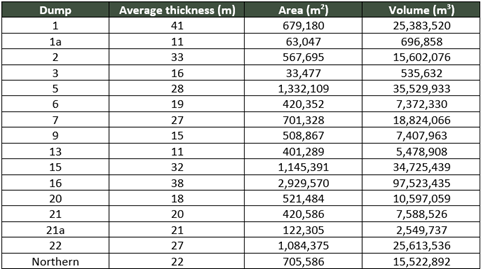
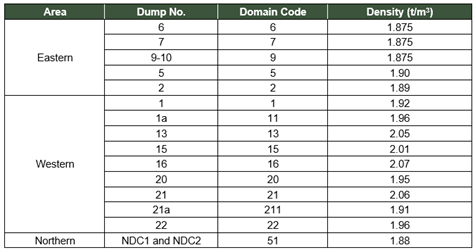
Section 4 - Estimation and Reporting of Ore Reserves
|
Criteria |
Commentary |
|
Mineral Resource estimate for conversion to Ore Reserves |
· The Mineral Resource estimate on which this Ore Reserve estimate has been based was prepared by SK and dated December 31, 2025. The Mineral Resource estimate was audited by SLR. · The Indicated Mineral Resources have been used as the basis of the Ore Reserve estimate. No Measured Mineral Resources have been declared. · The Mineral Resource estimate is inclusive of the Ore Reserve estimate. |
|
Site visits |
· The Competent Person under the JORC Code (2012) for this Ore Reserve Estimate is Mr Philip King, an Independent Consultant. · Mr King visited the Kounrad in-situ dump-leach operation on May 13 to 14, 2026. |
|
Study status |
· The Kounrad in-situ dump leach is currently operating. Modifying Factors were based on actual processing, infrastructure, environmental and social, market and economic model information. · No Inferred Mineral Resources were estimated and therefore the Ore Reserve estimate does not include any Inferred resources. · Mineral Resources were converted to an Ore Reserve estimate based on a production schedule that is considered technically achievable and economically viable. · All material Modifying Factors were considered. |
|
Cut-off parameters |
· Kounrad is an in-situ dump-leach operation and is not selectively mined. A cut-off grade of 0% Cu is therefore used to report the Ore Reserves. |
|
Mining factors or assumptions |
· The Mineral Resource was converted to an Ore Reserve based on the demonstrated technical and economic viability of the production schedule. · The operation is an in-situ dump leach and no mining is required. · Dilution and mining recovery factors are not applicable. · No minimum mining widths have been applied. · No Inferred Mineral Resources were included. · No mining infrastructure is required (processing only). |
|
Metallurgical factors or assumptions |
· The metallurgical process includes: o In-situ leaching of the Kounrad dumps with raffinate solution at pH 1.2 which is used to dissolve the copper mineralisation. o The PLS is collected at the base of the dumps by an HDPE lined interceptor trench and pumped to a series of holding ponds. o From these ponds, the PLS is treated by the SX-EW plant, located south of the Eastern Dumps. o The east plant site includes the SX-EW plant, solution ponds, boiler houses, stores and offices. o PLS solutions from the Western Dumps are pumped a distance of 12.5 km to the east plant for copper recovery. · The metallurgical process is well-tested and has been operating since 2012. · The feasibility of recovering copper by in-situ heap leaching has been investigated through extensive programmes of laboratory test work and on-site pilot testing: o Metallurgical testing of the waste dumps commenced in the early 1960's when the property was entirely State owned. o Following laboratory test work, field trials were conducted from 1970 to 1992, involving the acid leaching of the dumps followed by the precipitation of copper from solution using the iron cementation process. o In early 2002, further metallurgical testing was commenced and CAML resumed testing with the installation of a pilot plant facility at the Eastern Dumps in 2008. o The pilot plant was later moved to the Western Dumps in 2011 as part of on-going investigative studies where it operated for a total time period of 15 months. o Pilot trials undertaken by CAML at the Eastern Dumps yielded a recovery of 50.2%, confirmed in practice as a leach recovery of 51% has been achieved for Dumps 6,7,9-10. The Western Dumps, being more refractory, respond less favourably to leaching with recoveries ranging from 35% (sulphide material) to 42% (mixed material) being achieved. o Recent test work completed by CAML since 2017 includes column tests and size distribution tests. o The material tested is representative of future ore sources and the test work is appropriate for the in-situ leaching method used to extract the copper mineralisation. · A total of 178,961 tonnes of copper cathode has been produced since the start of the operation in April 2012 and December 31, 2025. · Annual copper production ramped up between 2012 and 2015, increasing from 6,586 t to 12,071 t, before reaching a plateau between 2016 and 2022 of approximately 14,000 tpa. Since 2022, there has been a small decline in production, reaching 13,311 t in 2025. · In future years production is planned to decline as fewer dumps remain to be leached and those that remain are lower grade and comprise mainly sulphide or mixed material. · The production schedule contains a total of 74,459 t of copper cathode that will be produced from 2026-2034. · Based on the Ore Reserve estimate and the estimated metallurgical recoveries there is sufficient leachable metal to support the production plan. · The copper cathode produced is 99.99% Cu. No significant levels of deleterious elements are present. |
|
Environmental |
· The Kounrad operation complies with Kazakhstan's environmental protection legislation, which requires an impact assessment process for projects of this type. Baseline environmental data are collected by specialist ecological contractors as part of the OVOS procedure (the Kazakh equivalent of an Environmental and Social Impact Assessment, ESIA). Based on the OVOS findings, the competent authorities establish project-specific regulatory limits, including Maximum Allowable Concentrations (MACs) and Maximum Allowable Emissions (MAEs), for the planned operations. · In agreement with the Ministry of Natural Resources, it is considered that the Kounrad site had previously been disturbed and contaminated as a result of historical operations, natural leaching, and other local industrial activities. Accordingly, CAML are not responsible for any historical contamination and are required to ensure that existing environmental conditions are not worsened. · An OVOS was prepared for SK in 2024 by Proekt Service (Karaganda) (Proekt). Additionally, a new mine closure plan and reclamation design were developed by Proekt. · The most recent OVOS prepared for KCC was in 2020 by SBK LLP (Karaganda). · As part of the two OVOSs, two separate public hearings were held. In addition, baseline environmental and social information (including air quality, soils, surface water and groundwater, flora and fauna, cultural heritage, and socio-economic conditions) were derived from existing data sources. · The authors consider that both OVOS documents for the Kounrad operations provide a required review of baseline conditions and have been prepared in accordance with Kazakhstan's legislative requirements. · External Environmental monitoring is undertaken by independent ecological contractors CAIER, based in Almaty. The company provides all required reporting to the state. Internal monitoring is undertaken by SK and KCC. o Available data indicate that waste rock materials at Kounrad have acid-generation potential and that there is a legacy of metalliferous groundwater contamination. Drainage points and process manholes are routinely monitored. o Groundwater monitoring is undertaken on a continuous basis under the responsibility of the company hydrogeologist. Groundwater samples are analysed in the company laboratory, while CAIER carries out external monitoring for air quality, surface water and groundwater, as well as soils, vegetation, and fauna. o Groundwater is monitored through 30 monitoring boreholes located around 200-700 m from the dumps. Water quality results are not currently benchmarked against MACs due to the lack of established state standards. Water is internally sampled weekly and analysed for Cu, pH, total Fe, and chloride. Data on groundwater levels and composition are collected manually and entered into spreadsheets in the MonitorPro system, which serves as a central database for monitoring results. Groundwater levels are measured weekly. o Based on local hydrogeological conditions, monitoring results indicate a low hydraulic conductivity and slow groundwater flow, with precipitation being the principal source of recharge. o No non-compliance issues were reported to SLR. · Permits held by SK and KCC for the Property are sufficient to ensure that processing activities are conducted within the regulatory framework. · SLR is not aware of any waste storage, environmental or permitting issues that prevent the reporting of an Ore Reserve estimate for the Kounrad in-situ dump-leach operation. |
|
Infrastructure |
· The Balkhash area has a long history of mining and smelting of copper and there is an established in-country network of mining and processing suppliers and contractors. · There is an extensive network of highways, rail links, telecommunications facilities, national grid electricity and a supply of water. · Existing infrastructure at the Kounrad operation includes: o Waste dumps and network of leaching pipework. o Channels (lined) for directing pregnant leach solution. o East plant including the solvent extraction plant and electrowinning units (EW1 and EW2) and associated facilities. o West plant and associated facilities (pregnant solutions collected at the west plant are pumped to the east plant for processing and copper refining). o PLS ponds, raffinate ponds, emergency ponds and pump stations. o HDPE pipeline (12.5 km) connecting west and east plants for transporting solutions. o Boiler houses (east and west) and coal storage. o Site offices, laboratory, stores, maintenance workshops. o Rail spur and load out. o Water pipelines. · Electrical power is supplied to the operation by the national grid from a 35 kV overhead line from a substation 7 km away, with a single 10 MVA main transformer and a 6.8 MVA spare available on site. A 4.7 MVA solar farm provides approximately 16% of the sites electrical power during daylight hours and was commissioned at the end of 2023. Coal powered boilers are used in the winter for heating solutions before leaching due to extreme winter temperatures. · Process water is sourced during the summer months from Lake Balkhash (semi-saline) via a dedicated 25 km pipeline. In the winter months (when the lake freezes) water is sourced from a flooded underground mine located 6 km from Kounrad, thus maintaining continuity of supply. A new pumping station is planned to be installed at Lake Balkhash to enable water extraction throughout the year. Potable water is sourced from the local supply network and an on-site reverse osmosis plant. · No tailings storage facility (TSF) is required by the operation. No reworking of the waste dumps other than by in-situ leaching is undertaken and no new waste dumps need to be constructed. · The Kounrad site has a dedicated 1.7 km rail spur that connects to the national rail network and is used for transportation of bulk reagents, coal, equipment and materials. · Approximately 328 permanent personnel are employed by the Kounrad operation. · There is sufficient and experienced work force available due to the proximity of the city of Balkhash with a population of around 78,000. · All major infrastructure required by the operation are in place. An additional lake water treatment plant (ultrafiltration) is planned to be constructed in 2026. · The authors are of the opinion that there is sufficient land, water, and power for the planned operation. |
|
Costs |
· Capital Costs are based on FY26 Budget costs that were estimated based on actual costs. Total capital costs for the LOM (2026 to 2034) are estimated at US$10.8 million. A cost of US$16.1 million is also estimated for closure. · Operating Costs are based on FY26 Budget costs that were estimated based on actual costs. Total operating costs for the LOM (2026 to 2034) are estimated at US$156.0 million. · The cathode quality conforms to LME Grade A (>99.99% Cu) and levels of impurities are historically generally very low. · All financial modelling for the Ore Reserve estimate was completed in US dollars (US$). · Transportation charges are based on current agreements. · Treatment and refining charges are not applicable. · Royalties and statutory payments are payable in accordance with the Tax Code of the Republic of Kazakhstan No. 214-V111 and dated July 18, 2025. o Mineral Extraction Tax - For solid minerals recovered from technogenic mineral formations (TMFs), the taxation base is the volume of solid minerals sold that have been recovered from TMFs. The Mineral Extraction Tax (MET) rate established by the Tax Code of the Republic of Kazakhstan is 8.55%. A reduction coefficient of 0.1 is applied in calculating the MET for solid minerals recovered from technogenic mineral formations. o Other Payments - Land tax is payable annually and is estimated at US$255.4 thousand per year. The property tax base is the average annual carrying value of taxable assets as recorded in the accounting records. Property tax is payable annually at a rate of 1.5% of the tax base. Vehicle tax is estimated based on the projected fleet and amounts to approximately US$3.5 thousand per year. Contributions to the Mine Closure Fund and the training of Kazakhstani specialists are made at a rate of 1.0% of operating expenditures. |
|
Revenue factors |
· Head grades used to derive revenue were based on the LOM schedule. · The copper price was provided by CAML and was considered by the Competent Person to be reasonable for estimating Ore Reserves. · All financial modelling for the Ore Reserve estimate was completed in US dollars (US$). · Transportation charges are based on current agreements. · Treatment and refining charges are not applicable. · The principal metal is copper. There are no co-products. |
|
Market assessment |
· The copper cathode is sold under an annual rolling offtake contract with Traxys Europe S.A. (Traxys), which is entitled for a minimum of 90% of Kounrad's cathode production. Small volumes of cathodes are also sold to the domestic market. Cathode ownership transfers to the offtaker at the Kounrad factory gate. · The commercial terms of the offtake contract with Traxys are negotiated on an annual basis based on the prevailing market conditions. · Concentrates have been sold to Traxys for many years, and a customer and competitor analysis was not deemed necessary. · Price forecasts were based on a copper price provided by CAML. Volume forecasts were based on the LOM schedule. |
|
Economic |
· The Sasa Mine has produced at consistent rates for many years and costs and revenue are well understood. · The economic analysis was based on the Probable Ore Reserves in the LOM schedule. · The economic analysis used a Discounted Cash Flow (DCF) method to estimate the Projects return based on expected future revenues, costs, and investments. Cash flows were prepared in real terms with no allowance for inflation. A discount rate of 8% was used. · The financial model for the LOM was reviewed by the authors and showed the Ore Reserves to be economic based on the assumptions used and a copper price of US$10,899 per tonne. · CAML monitors key economic assumptions and operational performance and has undertaken sensitivity analysis on the LOM financial model for the Kounrad operation to assess the impact of changes in the principal value drivers. The analysis considered changes in commodity prices, metallurgical recovery, operating costs, capital expenditure and discount rate assumptions. The results indicated that no reasonably foreseeable changes in the operating and market conditions would have a material impact on the economic viability of the operation. |
|
Social |
· Employees and external stakeholders are considered as follows: o An internal and external communications plan is in place for the Kounrad operations and was last reviewed in 2020. The plan is scheduled to be updated again in Q3 2026. It includes a functioning complaints and grievance mechanism for employees. Training sessions are also used as an additional channel for internal communication. o Under Kazakh law, there is no ongoing requirement for public consultation once the OVOS process has been completed. A complaints and grievance management system is in place at Kounrad, with records maintained in a grievance register monitored by the Sustainability department. A stakeholder register was developed in 2024, and the Stakeholder Engagement Plan is scheduled to be updated in Q3 2026. o To strengthen external communications, dedicated Corporate Communications and PR Manager positions were added to the team in 2018 and 2019, respectively. The Kounrad Foundation was established in 2020. Local communities are reported to be broadly supportive of the operation, particularly due to associated employment opportunities. As part of the Project's social management system, procedures have been established for external communications, expectation management, and the management of commitments. SLR considers that the CSR team has developed robust systems and procedures that are broadly aligned with international good practice. · There are no known social issues which are expected to materially impact the Ore Reserve estimate. |
|
Other |
· No major issues were identified that will materially affect the estimation or classification of the Ore Reserve estimates. · No material risks with the potential to prevent the planned production were identified. · No outstanding legal issues exist that could compromise the Ore Reserve estimate have been identified. · SK and KCC has all other required permits to conduct the proposed work on the Property and to continue production as planned. SLR is not aware of any other significant factors and risks that may affect access, title, or the right or ability to perform the proposed work on the Property. |
|
Classification |
· Ore Reserves are classified in accordance with the guidelines of the JORC Code (2012). · No Proved Ore Reserves were classified because no Measured Mineral Resources were estimated. Probable Ore Reserves were classified based on Indicated Mineral Resources. · No Inferred Mineral Resources are estimated for the Project. Therefore, no Inferred resources were included in the Ore Reserve estimate or the economic analysis. · It is the opinion of the Competent Person that the classification adequately represents the degree of confidence in the deposit. · No Probable Ore Reserves have been derived from Measured Mineral Resources. |
|
Audits or reviews |
· SLR is not aware of any other audits or reviews of the Ore Reserve estimates. |
|
Discussion of relative accuracy/ confidence |
· It is the Competent Person's view that the quality and accuracy of the Modifying Factors are sufficient for reporting of Ore Reserves in accordance with the JORC Code (2012). · The Modifying Factors are derived from actual operating experience. · The statement relates to global estimates. · Reconciliation of the Mineral Resource model with actual production on a dump-by-dump basis is not possible due to the overlapping nature of the dumps and an inability to collect and measure the leach solutions from each dump separately. To assess confidence in predicting production, the authors have compared the annual initial production guidance by CAML and the end of year actual production from 2012 to 2025 as shown below.
· Over the period, production is generally in line with guidance. The results are considered by the Competent Persons to show an acceptable level of confidence in predicting annual production from the operation. |
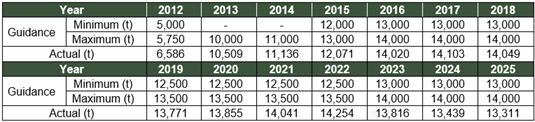
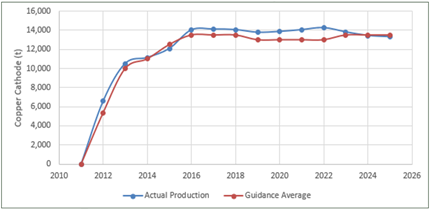
This information is provided by RNS, the news service of the London Stock Exchange. RNS is approved by the Financial Conduct Authority to act as a Primary Information Provider in the United Kingdom. Terms and conditions relating to the use and distribution of this information may apply. For further information, please contact rns@lseg.com or visit www.rns.com.
RNS may use your IP address to confirm compliance with the terms and conditions, to analyse how you engage with the information contained in this communication, and to share such analysis on an anonymised basis with others as part of our commercial services. For further information about how RNS and the London Stock Exchange use the personal data you provide us, please see our Privacy Policy.
ENDRNS may use your IP address to confirm compliance with the terms and conditions, to analyse how you engage with the information contained in this communication, and to share such analysis on an anonymised basis with others as part of our commercial services. For further information about how RNS and the London Stock Exchange use the personal data you provide us, please see our Privacy Policy.