

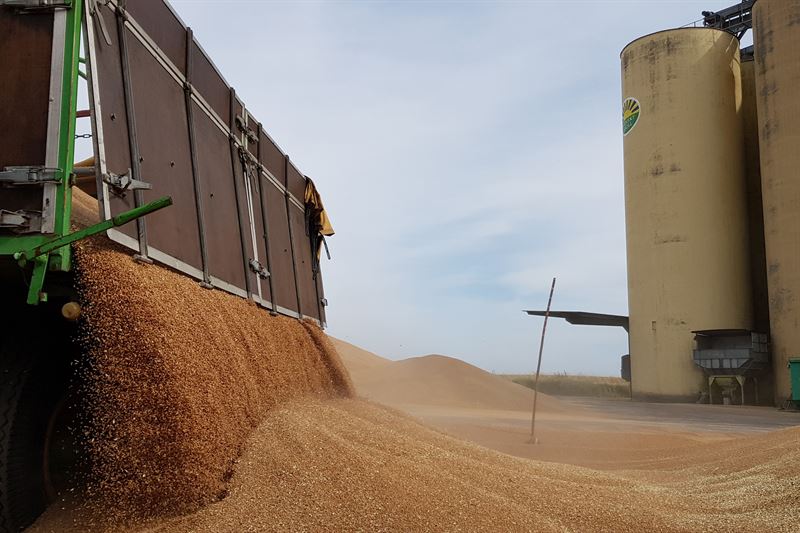
Following more favourable weather conditions across several regions during July and August, Lantmännen now sees better prospects for the Swedish grain harvest than indicated in its forecast in June. Despite the improvement, this year’s harvest is still expected to be smaller than in 2025 in Sweden, while extreme heat has weakened harvest prospects in parts of Europe.
Approximately 60 percent of the harvest has now been completed, and through its grain reception network across the country, Lantmännen continues to monitor how the harvest is developing in different parts of Sweden. Following more favourable weather conditions during July and August in several regions, Lantmännen assesses that this year’s grain harvest is now likely to be closer to an average harvest than indicated by conditions in June. Lantmännen’s assessment is based on weather data, acreage figures and historical yields, complemented by regional expertise.
“Crop conditions have improved in several parts of the country compared with our assessment at the end of June. The harvest outlook is more positive, but total volumes are still expected to be lower than last year,” says Per Germundsson, Director Grain Business at Lantmännen.
The size of the harvest is important well beyond the crop production sector.
“Grain is a cornerstone of Sweden’s food supply. A good harvest strengthens farmers’ profitability, provides the food industry with essential raw materials and contributes to Sweden’s preparedness. Without strong domestic food production in normal times, Sweden is less resilient in times of crises and disruptions,” says Per Germundsson.
Profitability remains under pressure
Despite the improved harvest outlook, the financial situation for grain farmers remains challenging, according to Lantmännen. Costs for energy, fuel and fertilizers remain high, while uncertainty continues to affect the grain market.
“The combination of lower volumes, high production costs and a challenging grain market is putting significant pressure on many grain growers. Weak profitability makes decisions regarding autumn sowing more difficult and risks reducing next year’s production as well as farmers’ ability to invest,” says Per Germundsson.
Significant Regional Differences
In southern Sweden, harvesting is now more than halfway completed, while in western Sweden it is still at an early stage. There are also major differences between neighbouring areas, depending on how winter conditions and rainfall during spring and summer have affected crops.
In several regions, weather conditions during July have been favourable for continued crop development. Grain quality has so far been relatively good, and stable harvesting conditions in the coming weeks would help maintain this quality.
Extreme heat puts pressure on European harvests and changes grain market conditions
While harvest prospects have improved in several Swedish growing regions, extreme heat and drought have worsened conditions across large parts of Europe. According to the EU’s Copernicus Climate Change Service, Western Europe experienced its hottest June and July since records began. Low water levels have also restricted freight traffic on both the Rhine and the Danube.
In July, the European agricultural trade association COCERAL lowered its forecast for the grain harvest in the EU and the UK. The harvest is now estimated at 286.6 million tonnes, more than 23 million tonnes, or around eight per cent, lower than in 2025.
“The extreme weather conditions in Europe demonstrate how quickly conditions in the grain market can change. When harvest prospects deteriorate while transport costs increase, uncertainty also rises for Swedish farmers,” says Per Germundsson.
According to Lantmännen’s assessment, a smaller European harvest and higher transportation costs could affect the cost of grain and feed and, over time, also food prices in Sweden.
Facts and further information
Harvest Situation in Europe: According to COCERAL’s forecast published on 10 July, the grain harvest in the EU and the UK is expected to reach 286.6 million tonnes in 2026, compared with 310.0 million tonnes in 2025. The forecast was reduced by approximately nine million tonnes following the European heatwave.
Extreme Heat in Europe: According to the EU’s Copernicus Climate Change Service, Western Europe experienced its warmest June-July period on record. The heat was accompanied by extensive drought and record-low soil moisture levels in parts of Europe, reducing crop potential and weakening harvest prospects.
Global Grain Market: The UN Food and Agriculture Organization (FAO) forecasts global cereal production at 2,983 million tonnes in 2026, 1.9 per cent below the record level reached in 2025. At the same time, global grain stocks are expected to increase slightly.
More information
Lantmännen's Press Office
+46 10 556 88 00
press@lantmannen.com
About Lantmännen
About Lantmännen: Lantmännen is an agricultural cooperative and Northern Europe’s leader in agriculture, bioenergy and food products. Owned by 17,000 Swedish farmers, Lantmännen has more than 10,000 employees, operations in over 20 countries and an annual turnover of SEK 60 billion. With grain at the heart of the operations, Lantmännen refines arable land resources to make farming thrive. Some of Lantmännen’s best-known food brands are AXA, Kungsörnen, Scan, GoGreen, FINN CRISP, Schulstad and Vaasan. The company is founded on the knowledge and values acquired through generations of farmers. By engaging in research, development and operations throughout the value chain, Lantmännen takes responsibility from field to fork.
For more information: www.lantmannen.com