
GoChengdu GoChengdu: In a year and a half, a pot of hot pot has “cooked up” a global “circle of friends”
|
GoChengdu
/ Key word(s): Expansion
CHENGDU, China, July 31, 2026 /PRNewswire/ — A year and a half ago, the “Hello, Chengdu” Panda Parlor started its journey from Yinshi Plaza in Chengdu, China. A year and a half later, its footprint has crossed Southeast Asia and expanded into Germany, Italy, Spain, and the United States. It sets up a “stage” inside overseas Chinese restaurants, allowing the world to perceive China through the lively atmosphere of everyday life. 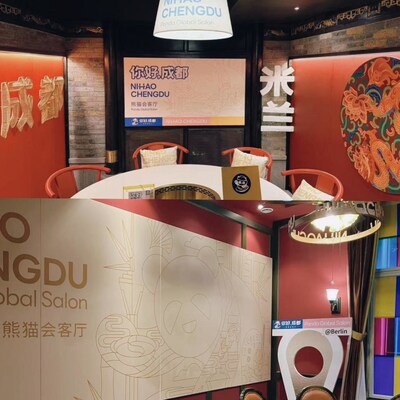 Using food as a bond, the story of China is told right from the dining table On January 7, 2025, the “Hello, Chengdu” Panda Parlor was officially launched globally, with the first batch of locations opening simultaneously in four cities: Chengdu, Singapore, Kuala Lumpur, and Bangkok. Culinary art is a universal language across borders; wherever people clink glasses around a boiling pot, there lies an opportunity to tell the story of China. With performers of Sichuan Opera face-changing mingling among the tables and overseas diners cooking beef tripe with their chopsticks, guests inadvertently “travel” through China. In 2026, the footprint of the Panda Parlor expanded beyond Southeast Asia. The Berlin and Barcelona branches of Houtang Hot Pot, the Milan branch of Xiaolongkan Hot Pot, and the Sichuan Alley branch of Liangmuyuan Restaurant in the United States successively became a new batch of “model stores.” Panda Parlor has established physical locations in four countries, transitioning from a regional exploration to a global layout. Intangible cultural heritage as a core, making Chinese culture perceptible and tangible Berlin branch of Houtang Hot Pot recreates the style of old Chengdu, and German diners can immerse themselves in the culture of old Chengdu while dining; the Milan branch of Xiaolongkan Hot Pot uses Sichuan flavors to show Italians that numbingly spicy food can also become a common culinary language. These locations serve as both “forward experience stations” and “commercial bridgeheads.” Hot pot restaurants, one after another, have gradually transformed into hubs for culture, economics and trade, and friendship. It has grown from its origins in four cities to its current coverage of more than ten branches across four countries, with a continuous increase in the number of overseas guests received. From overseas diners “seeing China,” to purchasing flight tickets and “coming to China,” and finally to taking Chinese cultural and creative products “back home,” a complete and closed loop of experience is gradually taking shape. For the next step, the Panda Parlor will set up its “stage” in more countries and regions. It will deepen cooperation with overseas institutions for culture and tourism, organizations of Chinese merchants, and local business associations, upgrading from “single-point experiences” to “networked interactions.” A themed event for the “Season of Handmade Intangible Cultural Heritage” will be launched in mid-September, with three experience activities for intangible cultural heritage—bamboo weaving, kite making, and Shu brocade—being carried out in a concentrated manner across all branch locations. Photo – https://mma.prnewswire.com/media/3008508/image1.jpg

31.07.2026 CET/CEST Dissemination of a Corporate News, transmitted by EQS News – a service of EQS Group. |
 View original content:
2375488 31.07.2026 CET/CEST