ATHA Energy Announces Additional Results from Rib North Discovery Expanding Continuity of Mineralization from 300 metres to 1.45 Kilometres – Results Include RIBN-DD-011 Intersecting 20 m of Composite Uranium Min Including 1.3 m of High-Grade
VANCOUVER, BC / ACCESS Newswire / September 8, 2026 / HIGHLIGHTS
Preliminary results from an additional seven diamond drillholes (See July 9th, 2026 News release for results from initial eight holes) completed at the RIB North Discovery (Figure 1) - as part of the ongoing 2026 Angilak Exploration Program;
Mineralization at RIB North has been discovered on two separate horizons. The bulk of drilling to date, following up on the maiden discovery hole RIBN-DD-001, is located on the eastern limb of the Mineralized RIB Corridor ("MRC"), with continuity of mineralization now traced over 1.45 km (Figures 2 & 3);
Drilling is focused on widely spaced step-outs, designed to outline the continuity of uranium mineralization at RIB North - the discovery remains open in all directions;
All seven drillholes (RIBN-DD-010 to RIBN-DD-016A) intersected uranium mineralization, results are highlighted by:
Drillhole RIBN-DD-011: Successfully targeted uranium mineralization ~250 m along strike to the northeast from RIBN-DD-001, resulting in the intersection of 20.0 m of total composite uranium mineralization2 over fifteen zones from 494.0 m to 700.5 m, including 1.3 m of high-grade mineralization2 (Figure 4). The highest-grade interval resulted in 1.5 m of composite mineralization2 from 661.5 m to 663.0 m with an average reading of 8,453 CPS1 and a max of 26,680 CPS1, including over 0.6 m of high-grade mineralization2;
Drillhole RIBN-DD-013A: Successfully targeted uranium mineralization ~370 m along strike to the northeast from RIBN-DD-001, resulting in the intersection of 13.0 m of total composite uranium mineralization2 over five zones from 544.0 m to 673.0 m (Figure 5). The widest interval resulted in 4.0 m of composite mineralization2 from 544.0 m to 548.0 m with an average reading of 1,013 CPS1 and a max of 6,855 CPS1;
Drillhole RIBN-DD-014: Successfully targeted uranium mineralization ~430 m along strike to the southwest from RIBN-DD-001, resulting in the intersection of 7.0 m of total composite uranium mineralization2 over six zones from 237.0 m to 573.0 m (Figure 6). The highest-grade interval resulted in 1.5 m of composite mineralization2 from 571.5 m to 573 m with an average reading of 4,275 CPS1 and a max of 20,138 CPS1;
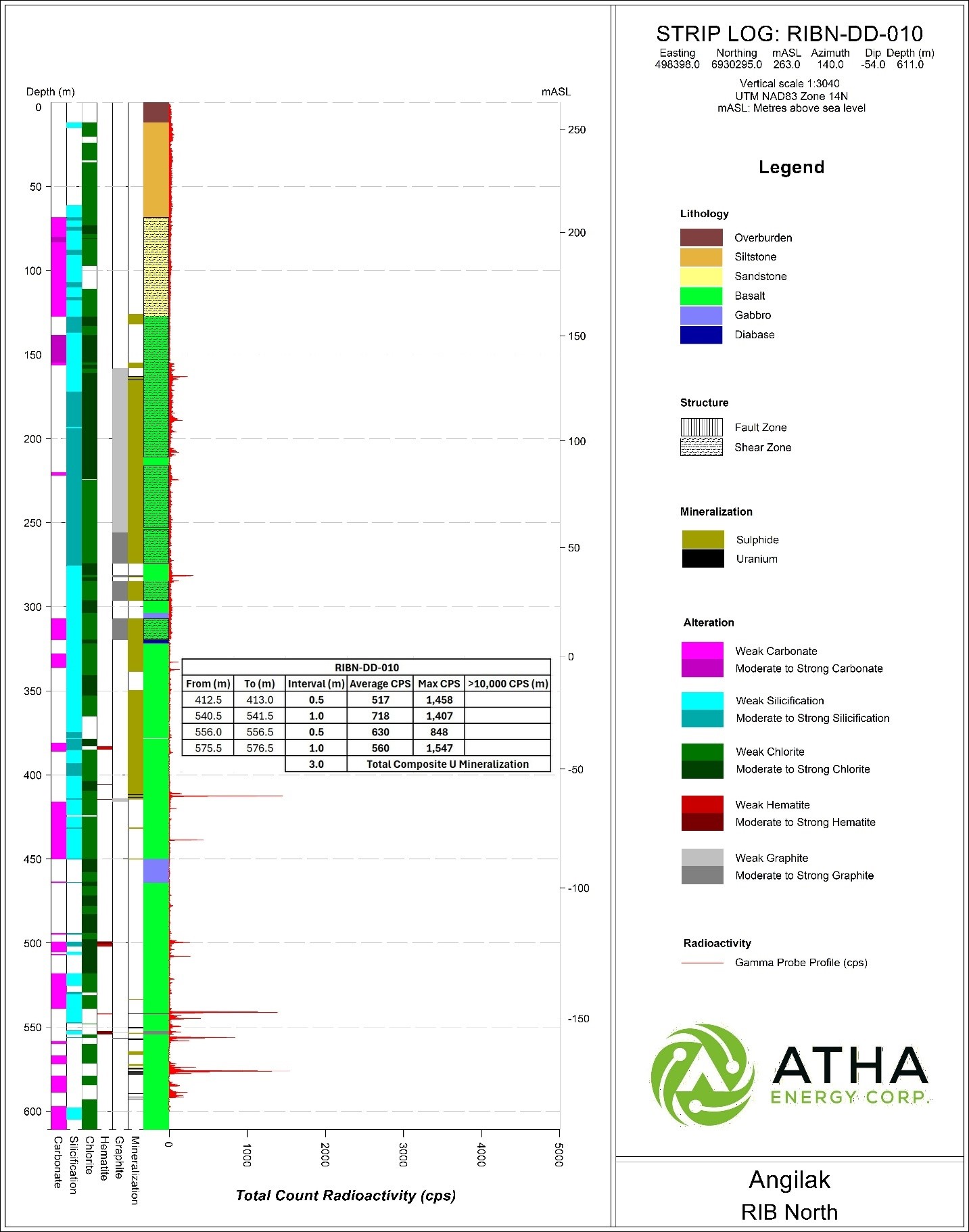
The secondary horizon first discovered by RIBN-DD-008, located on the western limb of the MRC, was followed up with drillhole RIBN-DD-010. RIBN-DD-010, successfully targeted uranium mineralization ~220 m along strike to the southwest from RIBN-DD-008, resulting in the intersection of 3.0 m of total composite uranium mineralization2 over four zones from 412.5 m to 576.5 m. The widest interval resulted in 1.0 m of composite mineralization2 from 540.5 m to 541.5 m with an average reading of 718 CPS1 and a max of 1,407 CPS1, (Figure 7);
The successful follow-up drill results continue to demonstrate ATHA's geological model and the understanding on controls of mineralization at RIB are proving accurate. In turn, over the remainder of the 2026 Angilak Exploration Program, the Company will continue its systematic approach, targeting widely spaced drilling to expand the extent of the mineralized footprint at RIB North;
The Company will continue releasing preliminary results from the 2026 Angilak Exploration Program through the coming weeks.
Troy Boisjoli, CEO commented:" Progressing RIB North from a single discovery hole in 2025 and growing it to a strike length of 1.45 km in 2026 with 16 successful aggressive step outs thus far, is just a snapshot of the potential scale. When pairing those results with the Lac 50 Deposit Corridor, with the newest discovery at Lac 50 Northwest, along with all the other regional and historic showings of uranium mineralization, exemplifies why we see the Angilak Uranium Project as something truly unique and world class.
As nuclear energy continues to dominate discussions on supplying future global energy demands, and Canada focuses on development and security of the north - Angilak will continue to garner recognition as one of the key, future, uranium jurisdictions."
Cliff Revering, VP Exploration added: "A key objective of our 2026 exploration program at the Angilak Project was to demonstrate the scale and uranium potential of the Mineralized RIB Corridor, while building on the RIB North discovery made in 2025. Results to date have exceeded our expectations, extending mineralization at RIB North over a strike length of 1.45 kilometres, with the system remaining open in all directions.
Equally important, our systematic exploration approach, data collection and analysis continue to advance our understanding of the mineralizing system and the key lithological and structural controls across the broader RIB Corridor. These results further strengthen our conviction that the Angikuni Basin has the potential to emerge as a significant new uranium district as we continue to execute our exploration strategy."
ATHA Energy Corp. (TSXV:SASK)(FRA:X5U)(OTCQX:SASKF) ("ATHA" or the "Company"), is pleased to announce preliminary diamond drilling results from the 2026 Angilak Exploration Program at its 100%-owned Angilak Uranium Project in Nunavut, Canada. Today's release details results from an additional seven diamond drillholes, RIBN-DD-010 to RIBN-DD-016A, (See July 8th and July 9th, 2026 for previous results) completed at the RIB North Discovery (Figure 1) - as part of the ongoing 2026 program. The results from the 2025 and ongoing 2026 Angilak Exploration programs have outlined 1.45 km of mineralization continuity (Figure 3) along the primary RIB North structural corridor (Figure 2) - located along the eastern limb of the MRC. Furthermore, the secondary mineralized horizon - located on the western limb of the MRC and first discovered by RIBN-DD-008 - was successfully followed up by drillhole RIBN-DD-010, mineralization has now been traced over approximately ~220 m strike length.
At the RIB North Discovery drilling is focused on widely spaced step-outs, designed to outline the continuity of uranium mineralization at RIB North - the discovery remains open in all directions (Figures 2 & 3). All seven of the additional drillholes released today intersected uranium mineralization with results highlighted by drillhole RIBN-DD-011, which successfully targeted uranium mineralization ~250 m along strike to the northeast from 2025 drillhole RIBN-DD-001. The hole intersected 20.0 m of total composite uranium mineralization2 over fifteen zones from 494.0 m to 700.5 m, including 1.3 m of high-grade mineralization (Figure 4). The highest-grade interval resulted in 1.5 m of composite mineralization from 661.5 m to 663.0 m with an average reading of 8,453 CPS1 and a max of 26,680 CPS1, including over 0.6 m of high-grade mineralization2.
Mineralization at both the primary and secondary mineralized horizons is basement hosted, structurally controlled uranium mineralization, associated with strong albite and hematite alteration, graphitic + sulphide-bearing structures and overprinting silicification. The successful follow-up results demonstrate ATHA's geological model and understanding on controls of mineralization at RIB are proving accurate. In turn, over the remainder of the 2026 Angilak Exploration Program, the Company will continue its systematic approach, targeting widely spaced drilling to expand the strike extent of the mineralized footprint at RIB North.
The 2026 Angilak Exploration Program is the largest to date on the project, comprising two components:
First, diamond drilling with three drills, which commenced on May 1st, 2026, and is scheduled to continue through the end of September. The Company will complete its largest diamond drilling program to date, focusing on expansion and discovery along Angilak's currently identified, mineralized corridors.
Second, aerial geophysics, comprising Expert's MMT survey, which was completed in late July. The Company anticipates receiving 3D Inversion Modeling results in Q4 2026.
With diamond drilling the Company is testing the following target areas:
Mineralized RIB Corridor: Additional discovery potential and expansion, following up on the highly successful 2025 program, which resulted in the four discoveries of uranium mineralization - including RIB North, where the maiden hole intersected 34.7 m of composite uranium mineralization1 with grades up to 8.16% U3O8 over 0.5 m;
Lac 50 Deposit Corridor: Testing recently identified, highly prospective, 3D Inversion targets along strike from the main Lac 50 Deposit area, and expansion of the Lac 50 Deposit mineralization footprint which remains open and unconstrained3.
While the geophysical component of the program is designed to identify and advance additional exploration targets, it will also generate important basin-scale data to further characterize the geological architecture and broader uranium potential of the Angikuni Basin, while strengthening the Company's expanding project portfolio, and consists of:
Angikuni Basin: Acquiring full MMT coverage across the 100% ATHA-owned Angikuni Basin. The resulting survey data will be used to develop a 3D Inversion model of the entire Angikuni Basin, the same highly successful systematic approach ATHA utilized during its 2024 and 2025 campaigns, adding to ATHA's already extensive portfolio of regional targets.
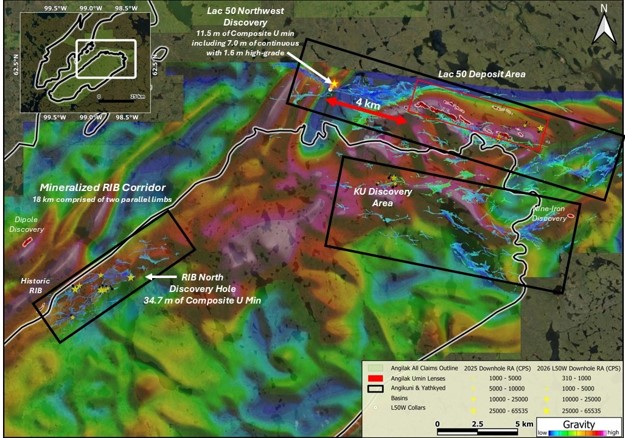
Figure 1: Angilak Project Area - 2026 Exploration Target Area (Black Rectangles), & Mapped Historic Mineralized Showings
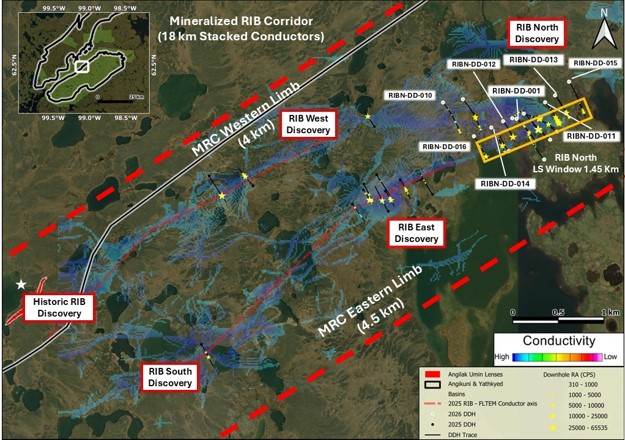
Figure 2: Mineralized RIB Corridor - 2026 Angilak Exploration Program, showing drillhole traces, orange rectangle denotes the LS window displayed in Figure 3.
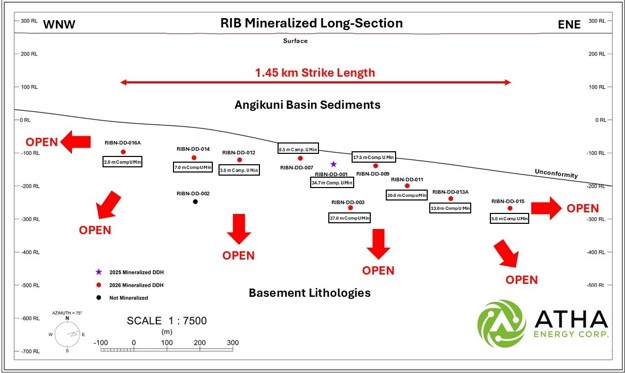
Figure 3: Long-Section schematic along the eastern limb of the MRC within the RIB North Discovery Area. The LS is 500 m in width with circles and stars representing mid-point intersections of drillholes along the LS plane. See disclaimer notes for Comp U Min and HG2 criteria and thresholds. For full details on mineralized intervals see drillhole striplogs (Figures 4 to 10).
Table 1: 2026 Angilak Exploration Program Drill Collar Information
Hole ID | Zone | Azimuth (°) | Dip (°) | Easting (mE) | Northing (mN) | Elevation (m) | Final Depth (m) | |
L50W-DD-001 | Lac 50 | NW Target | 30 | -60 | 511872 | 6941721 | 192 | 528 |
L50W-DD-002 | Lac 50 | NW Target | 30 | -55 | 511985 | 6941918 | 188.5 | 632 |
RIBN-DD-002 | RIB | RIB North | 320 | -70 | 499120 | 6929762 | 262 | 623 |
RIBN-DD-003 | RIB | RIB North | 305 | -65 | 499648 | 6929975 | 261 | 716 |
RIBN-DD-004 | RIB | RIB North | 320 | -60 | 499509 | 6929670 | 261 | 782 |
RIBN-DD-005 | RIB | RIB North | 310 | -50 | 499574 | 6929887 | 261 | 617 |
RIBN-DD-006 | RIB | RIB North | 40 | -70 | 499158 | 6930123 | 261 | 471 |
RIBN-DD-007 | RIB | RIB North | 130 | -60 | 499206 | 6930116 | 258 | 636 |
RIBN-DD-008 | RIB | RIB North | 140 | -58 | 498617 | 6930331 | 262 | 674 |
RIBN-DD-009 | RIB | RIB North | 110 | -55 | 499285 | 6930173 | 262 | 614 |
RIBN-DD-010 | RIB | RIB North | 140 | -54 | 498398 | 6930295 | 263 | 611 |
RIBN-DD-011 | RIB | RIB North | 140 | -65 | 499519 | 6930297 | 261 | 717 |
RIBN-DD-012 | RIB | RIB North | 140 | -60 | 499058 | 6930090 | 261 | 529 |
RIBN-DD-013 | RIB | RIB North | 142 | -65 | 499628 | 6930373 | 261 | 365 |
RIBN-DD-013A | RIB | RIB North | 142 | -65 | 499628 | 6930373 | 261 | 695 |
RIBN-DD-014 | RIB | RIB North | 140 | -57 | 498928 | 6930020 | 261 | 638 |
RIBN-DD-015 | RIB | RIB North | 149 | -57 | 499782 | 6930523 | 261 | 731 |
RIBN-DD-016 | RIB | RIB North | 145 | -60 | 498737 | 6929924 | 261 | 23 |
RIBN-DD-016A | RIB | RIB North | 145 | -60 | 498737 | 6929924 | 261 | 599 |
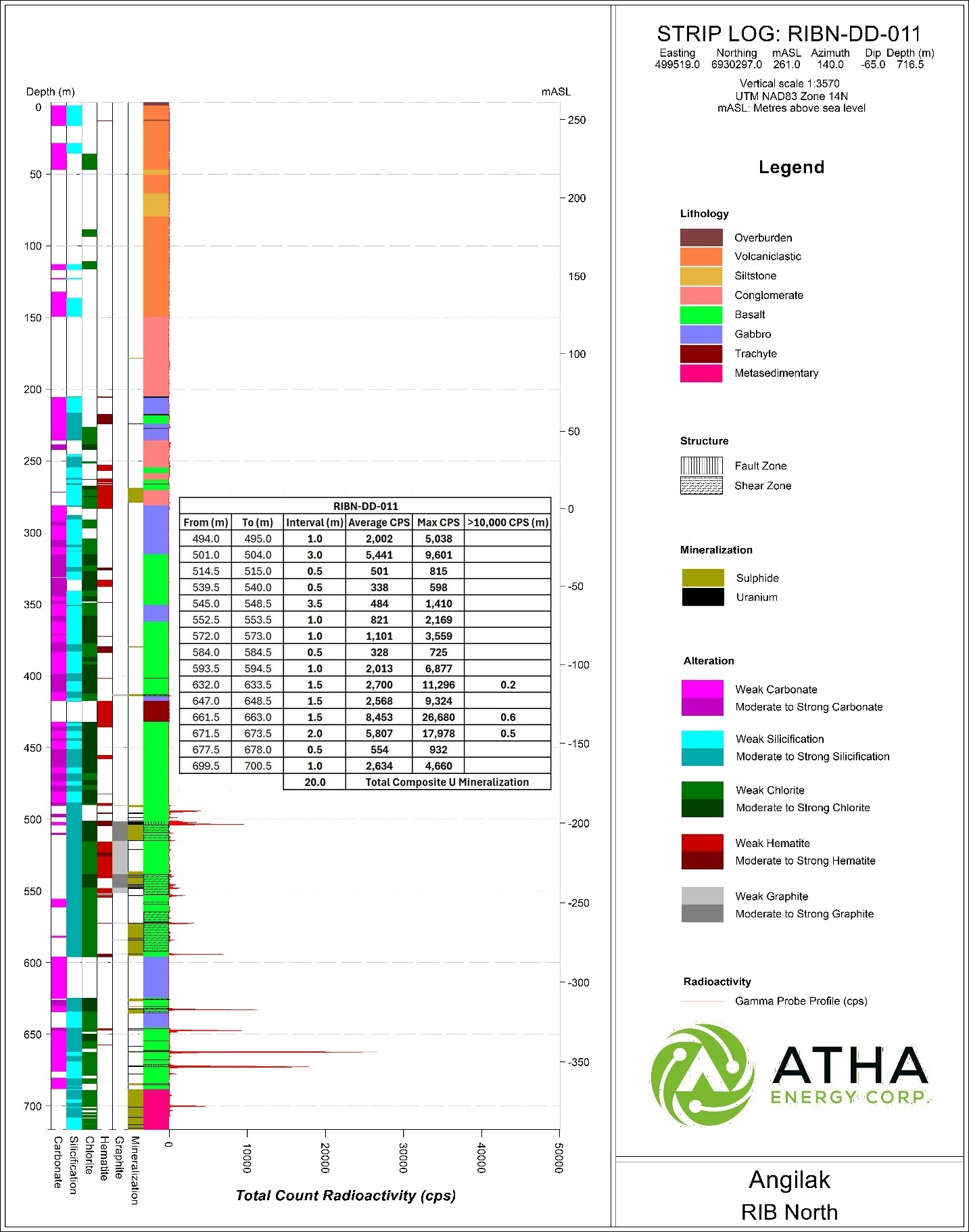
Figure 4: Striplog RIBN-DD-011 showing radioactivity based on 40TGU-1000 Triple Gamma Down Hole Probe1 & 2.
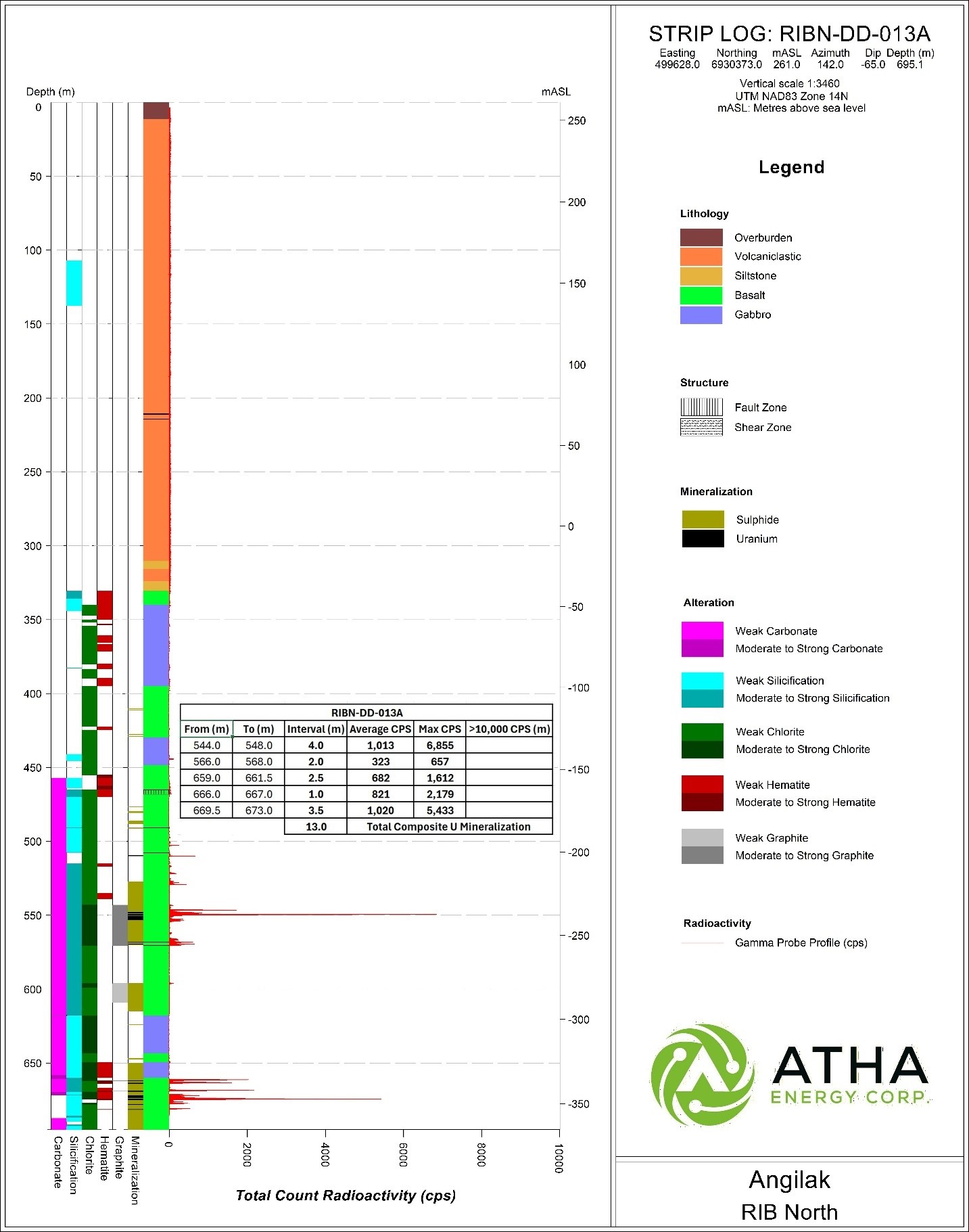
Figure 5: Striplog RIBN-DD-013A showing radioactivity based on 40TGU-1000 Triple Gamma Down Hole Probe1 & 2.
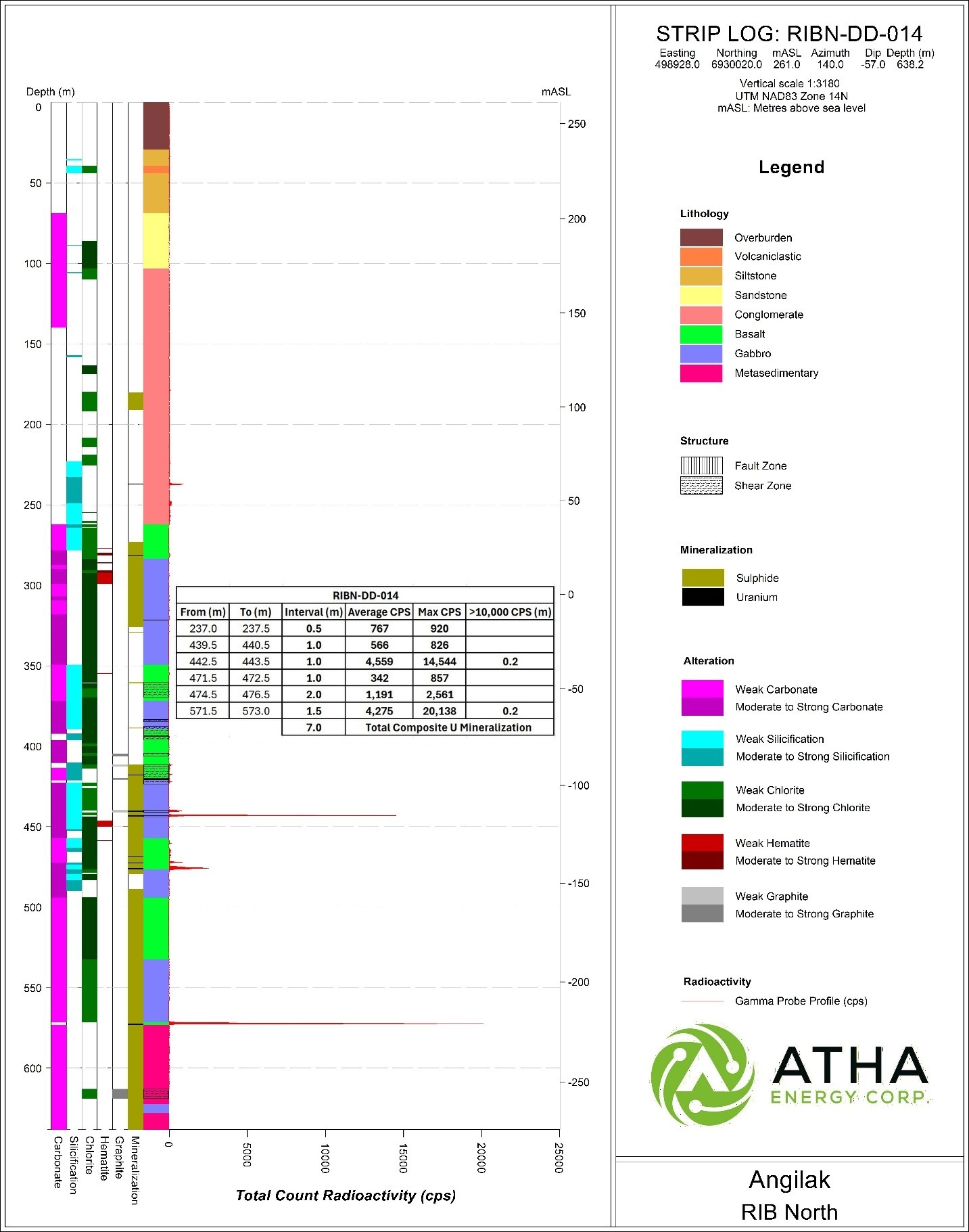
Figure 6: Striplog RIBN-DD-014 showing radioactivity based on 40TGU-1000 Triple Gamma Down Hole Probe1 & 2.